How to Visit Salar de Uyuni
Salar de Uyuni is the world’s largest salt flat - learn when to visit for mirror vs dry season views, how to get there, tour options, and key tips (acclimatization, cash, booking).
Choose your arrival town and the landscapes you want first. A one-day salt-flat trip, a lagoon circuit and a Chile crossing solve different itineraries.
Last updated: September 9, 2026
The Salar de Uyuni is the world’s largest salt flat at 10,582 square kilometers, located in southwestern Bolivia at 3,656 meters above sea level. Most visitors arrive from La Paz by overnight bus (8 hours) or a 1-hour flight, then join a 1-day or 3-day 4×4 jeep tour. The dry season (May to October) gives you the iconic cracked crust and clear skies; the wet season (November to April) produces the famous mirror effect. Book with a reputable operator before arriving in Uyuni, acclimatize for at least 1-2 days before your tour, and bring more cash than you think you need – there are no ATMs beyond the town.
The three-day Uyuni circuit combines the salar with the southern lagoons; meals and lodging are included, while park fees and any Chile transfer cost extra. Check Three-Day Uyuni Dates
Quick Facts: Salar de Uyuni at a Glance
| Location | Daniel Campos Province, Potosí Department, southwestern Bolivia |
| Size | 10,582 square kilometers (world’s largest salt flat) |
| Altitude | 3,656 meters (11,995 feet) above sea level |
| Nearest Town | Uyuni town (3,700m altitude) |
| From La Paz | ~8 hours by overnight bus, ~1 hour by flight |
| Tour Options | 1-day, 3-day, 4-day 4×4 jeep tours |
| Dry Season | May to October (clear skies, cracked salt crust) |
| Wet Season | November to April (mirror effect) |
| Isla Incahuasi Entry | 30 BOB (~$4 USD) – not included in most tours. Historical estimate; confirm the current fee |
| Eduardo Avaroa Reserve | 150 BOB foreigners / 30 BOB Bolivians. Historical estimate; confirm the current fee |
| Currency | Boliviano (BOB). ~7 BOB to $1 USD. No ATMs beyond Uyuni town |
| Best Photo Month | February to early March (peak mirror conditions) |
What Is the Salar de Uyuni and Why Do People Travel So Far to See It?
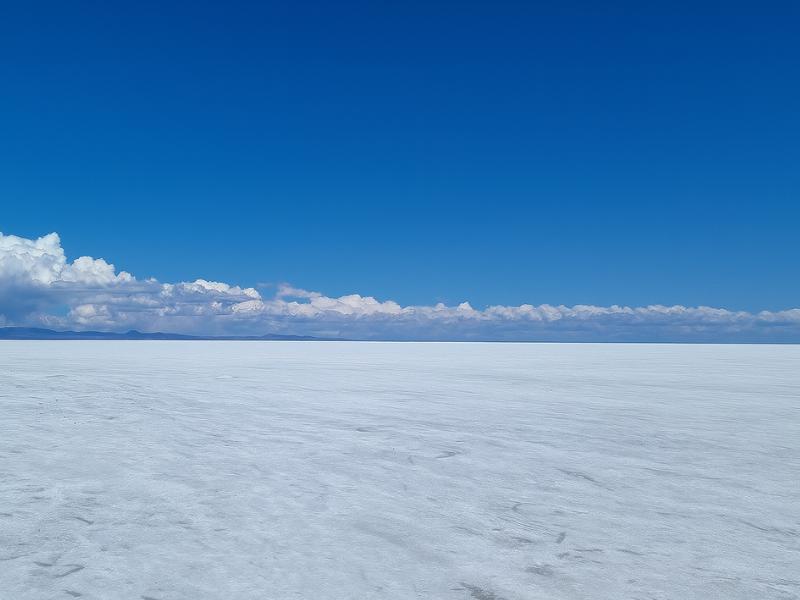
The Salar de Uyuni is the world’s largest salt flat, covering 10,582 square kilometers of the Bolivian Altiplano at nearly 4,000 meters above sea level. It was formed when ancient inland lakes evaporated over thousands of years, leaving behind an immense crust of salt – so flat and so vast that NASA uses it to calibrate satellites. Depending on the season, it is either a blinding white desert or a perfect mirror of the sky. There is genuinely nothing else like it on the planet.
The number that matters isn’t the size. It’s the flatness. The entire surface varies by less than one meter in elevation across its full 10,000-plus square kilometers. When you’re standing in the middle of it, there is no horizon – just white blending into white, sky blending into ground. Your sense of scale collapses. People stop talking. That happens more than you’d expect.
Lithium-bearing brines lie beneath the crust. Lithium-bearing brines occur beneath the salar; that does not establish the origin of any particular battery. The local village of Colchani still harvests salt the old way, by hand, and has for generations. The industrial and the ancient exist in the same place, which says something about Bolivia itself.
The reason people travel so far is harder to explain than it looks in photos. The photos are incredible, but they don’t capture what it feels like to lose your sense of depth entirely, to watch sunrise paint the crust pink before it turns white, to drive for an hour and still see nothing but flat in every direction. It’s disorienting in a way that clears your head completely. That’s what keeps bringing people back.
When Is the Best Time to Visit the Salar de Uyuni?
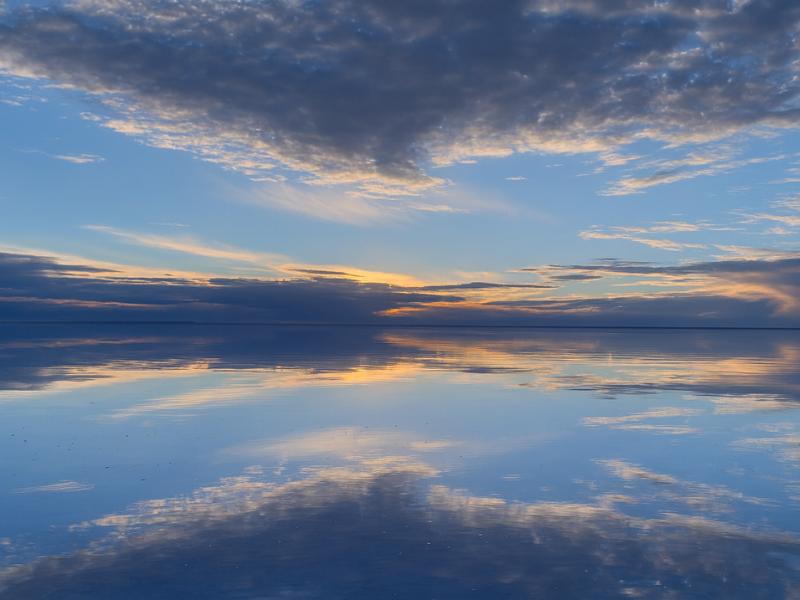
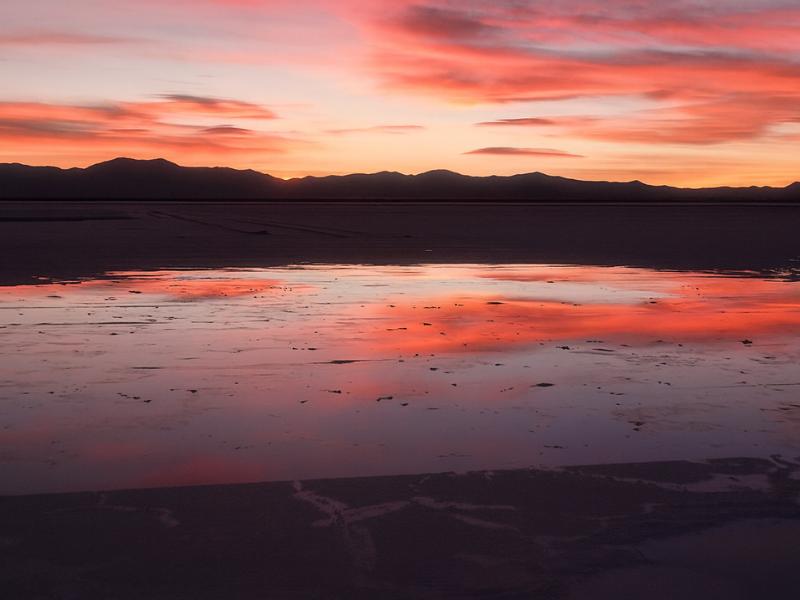
Both seasons offer completely different – and completely valid – experiences. The dry season (May to October) gives you perfect white salt crust, clear skies, and ideal conditions for forced-perspective photography. The wet season (November to April) produces the famous mirror effect, when a thin layer of rainwater turns the entire flat into an unbroken reflection of the sky. Peak mirror conditions fall in January through early March, with February offering the highest probability of seeing it properly.
Most first-timers assume the mirror is guaranteed in wet season. It isn’t. You need recent rain, no wind, and a water layer thin enough to create still reflections – usually between 2 and 20 centimeters. A windy morning ruins it completely. February has the best odds, but the same conditions that create the mirror can flood access routes and cancel tours to Isla Incahuasi entirely.
The transition months, April to May and October to November, are worth serious consideration. You get lighter rainfall than peak wet season, more stable weather than full dry season, and occasional partial reflections that make for moody, atmospheric shots you won’t see anywhere else. The light in October especially does something unusual – long shadows in the late afternoon, dramatic skies, the hexagonal salt patterns still visible beneath a thin shimmer of surface moisture.
| Dry | May-Oct | Clear skies, white crust, hexagonal patterns visible | Perspective photos, stargazing, full island access | Cold nights, can drop to -20°C |
| Wet | Nov-Apr | Thin water layer creates mirror effect | Reflection photography, dramatic sunrises/sunsets | Tour cancellations, Incahuasi inaccessible, unpredictable conditions |
| Transition | Apr-May, Oct-Nov | Partial reflections, stable weather, fewer crowds | All-around balance of conditions and access | Mirror effect not guaranteed |
One thing the guidebooks rarely say: if seeing the mirror is the whole reason you’re going, plan for three or four nights in the area rather than two. Weather windows on the Salar are short. A clear day can follow two days of wind. The people who leave with the photos you’ve seen on Instagram are usually the ones who had an extra day in their schedule.
Wondering when to go? Check out the best time to visit Salar de Uyuni tours – certain months give you the mirror reflection everyone wants while others offer clear salt views and better driving conditions.
How Do You Get to Uyuni, Bolivia?
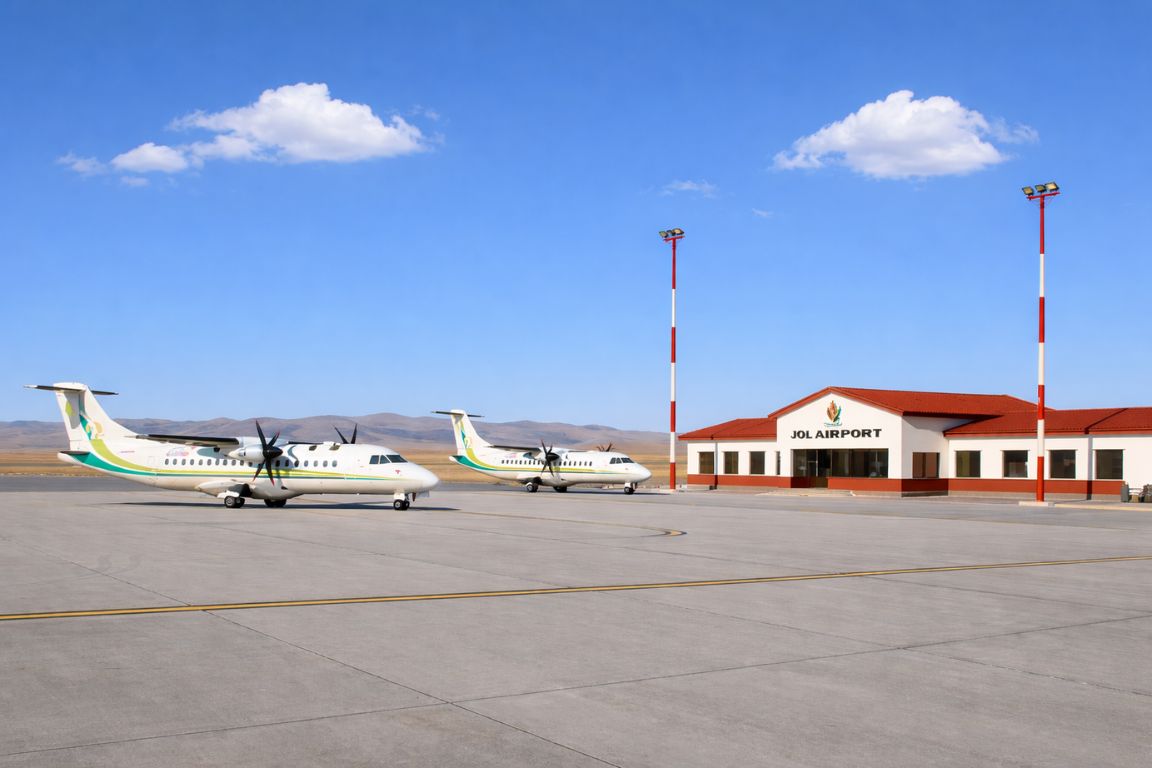 There are three main ways to reach Uyuni: an overnight bus from La Paz (roughly 8 hours), a short domestic flight from La Paz (around 1 hour, considerably more expensive), or a 3-day jeep tour starting from San Pedro de Atacama in Chile. Most budget travelers take the overnight bus. The flight makes sense if your time is genuinely limited. The Chile approach works best if you’re already there and want to travel through to Bolivia.
The overnight bus from La Paz is the standard move for good reason. Bed buses (cama seats) on the better companies recline almost flat, which means you arrive reasonably rested and can jump straight into a morning tour. Todo Turismo is the most frequently recommended company for this route – more expensive than the basic options, but a real difference in comfort. Expect to pay significantly more than the cheapest ticket prices advertised around the terminal.
Flying cuts 7 hours off your journey and costs around $130 USD round-trip. The small airport in Uyuni (Joya Andina, code UYU) handles domestic flights from La Paz through BoA (Boliviana de Aviación). Schedules are not always reliable – flights get cancelled or shifted – so build buffer days into your itinerary if you go this route.
Coming from Chile, the 3-day tour from San Pedro de Atacama is by far the most logical option. The bus across the border is a logistical mess – border crossings, multiple vehicles, hours of waiting. The tour solves all of that and gives you the Atacama plateau, the colored lagoons, and the geysers along the way before landing on the Salar itself. Tours starting in Chile cost more (everything costs more in Chile), and Bolivian regulations require that Bolivian guides conduct all tours of the salt flats, so what’s sold from Chile often gets handed off to a Bolivian operator anyway.
One underused starting point: Tupiza, about 200 kilometers south of Uyuni, sits at 2,850 meters – low enough to actually acclimatize before the tour takes you higher. Fewer tourists start here, which means quieter roads in the early days of the route. If altitude sensitivity is a real concern for you, the Tupiza approach deserves a look.
We’ve detailed Salar de Uyuni tours from San Pedro de Atacama because this cross-border route requires understanding operator quality, nationality restrictions for some tours, and whether the scenic journey justifies the rough conditions.
What Types of Tours Are Available at the Salar de Uyuni?
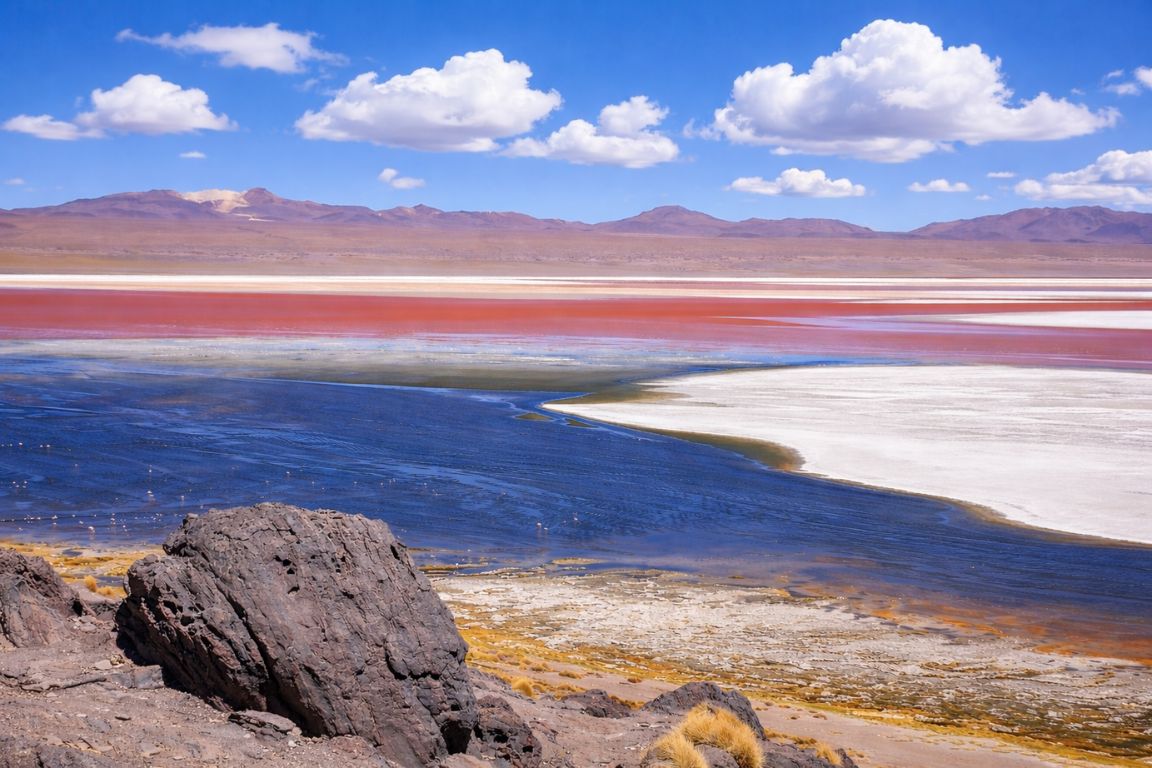 The two main options are the 1-day tour (focused on the salt flat itself) and the 3-day tour (which adds the Eduardo Avaroa Reserve, colored lagoons, geysers, flamingo flocks, and volcanic rock formations). A 4-day version exists for those connecting to or from San Pedro de Atacama in Chile. All tours operate in 4×4 Land Cruisers or Nissan Patrols – older vehicles, by necessity, since the salt destroys modern electronics.
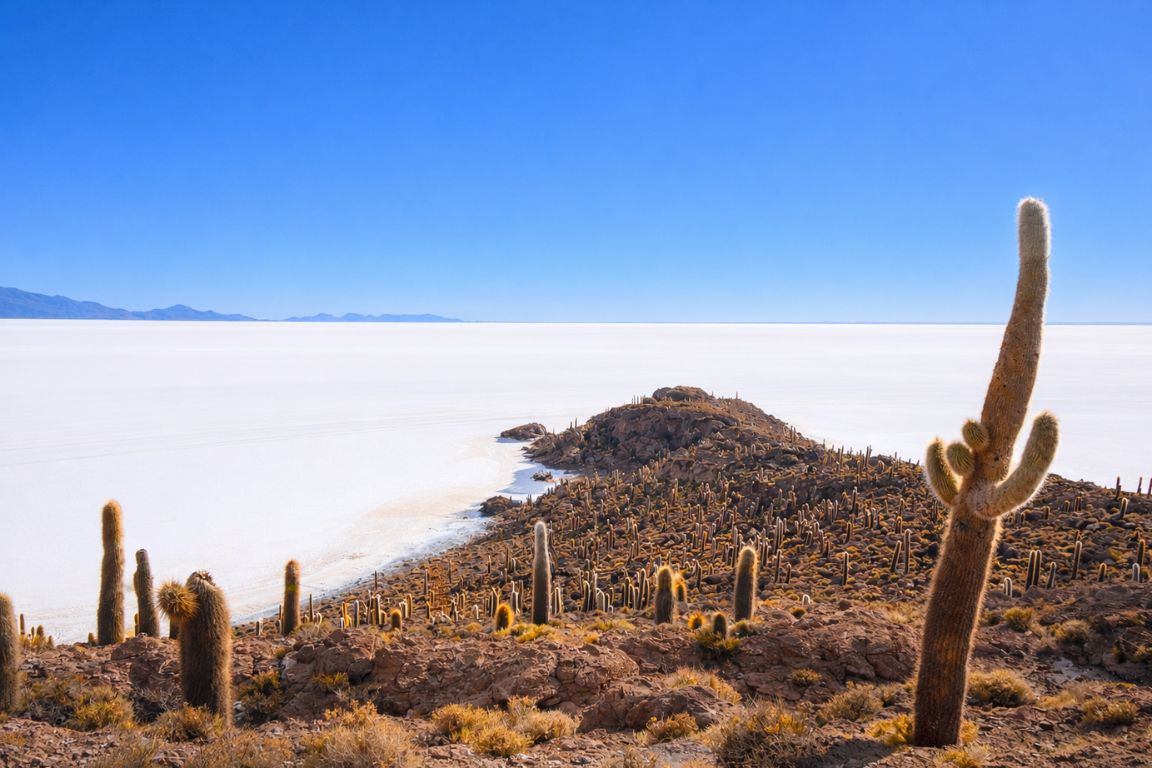
The 1-day tour is a solid option if you genuinely have limited time. You’ll hit the Train Cemetery, the salt processing village of Colchani, Isla Incahuasi (the cactus island with 360-degree views), and the main flat for perspective photos and sunset. You’ll be done by early evening and can catch an overnight bus out the same night. What you won’t get: the colored lagoons of the south, the geysers at Sol de Mañana, the flamingo colonies at Laguna Colorada. Those are worth the extra days.
| 1-Day Tour | ~7 hours | $40-80 USD | Train Cemetery, Colchani, Incahuasi Island, perspective photos, sunset | Very tight schedules, budget travelers |
| 3-Day Tour (loop) | 3 days / 2 nights | $120-190 USD (budget) / $500-800 USD (premium) | All of above + Eduardo Avaroa Reserve, colored lagoons, flamingos, geysers, Arbol de Piedra | Most travelers – the full experience |
| 4-Day Tour | 4 days / 3 nights | Varies – usually slightly higher | Same as 3-day but starts or ends in San Pedro de Atacama | Travelers crossing to/from Chile |
| Private Tour | Flexible | Considerably higher – worth it for families or small groups | Your itinerary, your pace, no sharing a jeep with strangers | Families, couples, photography-focused travelers |
The vehicles matter more than most travelers realize before they go. All tours run old 4x4s – typically Toyota Land Cruisers or Nissan Patrols from the 1990s to early 2000s – because the salt flat’s chemical composition corrodes modern electronics. This is not a sign of a bad operator. It’s how it works. The difference between a good vehicle and a bad one isn’t the age; it’s the maintenance. Ask about that when you book.
Budget tours pack six people into vehicles rated for four, cut corners on food, and occasionally involve drivers who are running on very little sleep across multiple days. Premium tours cost three to four times more, but include fewer passengers, better-maintained vehicles, heated accommodation, and guides who are actually rested. If this is a once-in-a-lifetime trip for you, the math on that upgrade is usually straightforward.
Overwhelmed by tour choices? Check out our Salar de Uyuni tours comparison guide – it breaks down which operators are reliable, which serve decent food, and which have vehicles that actually work at altitude.
How Does Altitude Affect You at Uyuni and What Can You Do About It?
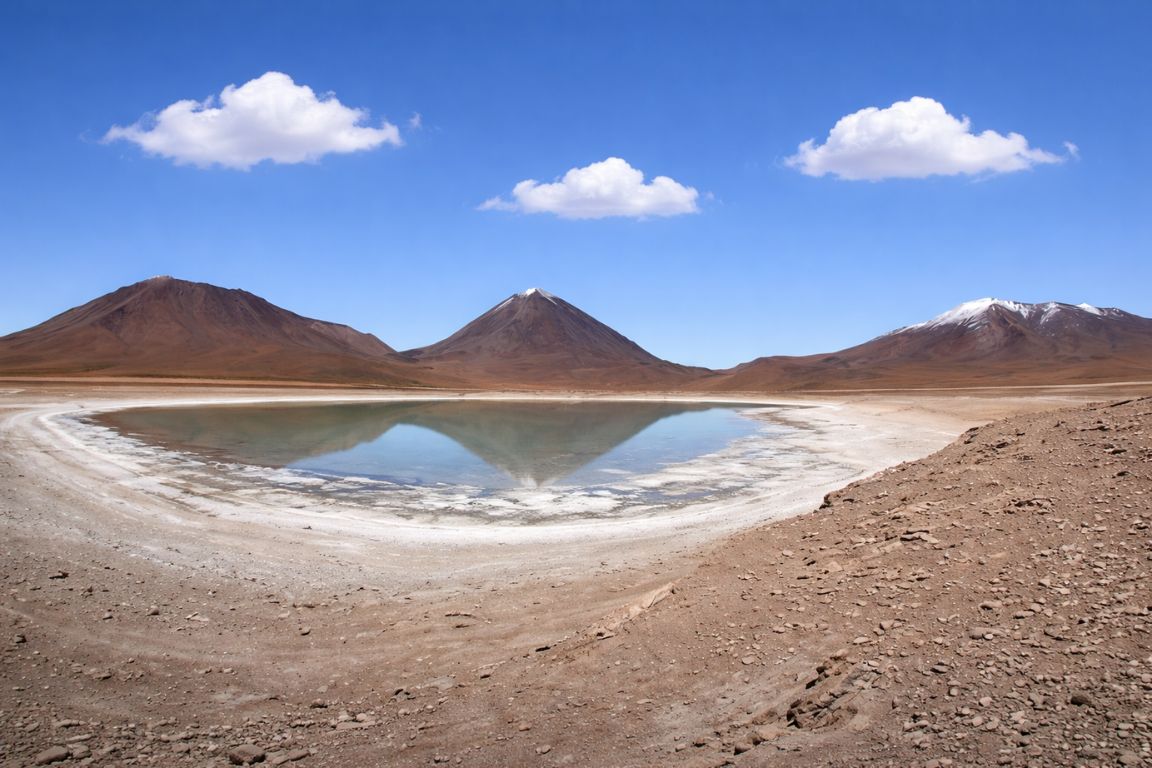 Uyuni town sits at 3,700 meters above sea level. The salt flat itself is at 3,656 meters. On a 3-day tour, the Eduardo Avaroa Reserve takes you above 5,000 meters, where you’re breathing roughly 60% of the oxygen you’d get at sea level. Altitude sickness (soroche) affects around 20% of visitors – regardless of fitness level – and can range from a headache and fatigue to nausea serious enough to end a tour early. The fix is almost always the same: spend 1-2 days acclimatizing before your tour, stay hydrated, and move slowly.
The thing people get wrong most consistently is flying directly into La Paz or Uyuni from a coastal city and then immediately joining a tour. Your body needs time. The rule above 3,000 meters is to increase your sleeping altitude by no more than 500 meters per night, with an extra acclimatization night for each 1,000 meters gained. You can go higher during the day, but you return lower to sleep. Most people who crash badly on the Salar skipped this entirely.
La Paz is a reasonable acclimatization stop, but pay attention to altitude within the city. The airport in El Alto sits above 4,000 meters. The southern districts of La Paz sit closer to 3,200 meters and are better for your first couple of days. Sucre and Cochabamba, both around 2,800 meters, are gentler entry points if you have time to route through them.
Practical things that actually help. Drink enough to avoid dehydration, without forcing excessive water – the dry air at altitude means you’re losing water just by breathing. Avoid alcohol for the first 48 hours; it compounds dehydration and worsens symptoms. Eat light meals rather than heavy ones. Skip the run or the long hike on day one. And coca leaves – the traditional Andean remedy – genuinely take the edge off mild symptoms. They’re available everywhere in Bolivia, usually as coca tea. Every pharmacy in Uyuni sells “sorochi pills” without a prescription; these contain aspirin and caffeine, which help with mild headaches. Acetazolamide (Diamox) is more effective for prevention but needs to be taken two days before arrival and requires a doctor’s consultation beforehand.
On the 3-day tour specifically, day two is often when altitude hits hardest. You’ve left the salt flat and you’re climbing into the reserve, going from 3,700 meters to over 5,000 meters across a single morning. Eat something before you go up. Don’t skip breakfast because you feel fine at 7am – by 10am you’ll be at altitude and an empty stomach makes everything worse.
They walked too much, ate too much, drank wine at dinner. The people who felt the best on the tour were the ones who did almost nothing for the first 24 hours after landing. Rest is genuinely the most effective tool you have.
Worried about the altitude? I’ve put together a complete Salar de Uyuni tours altitude and preparation guide covering acclimatization strategies, altitude sickness symptoms, and what to pack for 3,600+ meters on the altiplano.
What Are the Best Photography Tips for the Salt Flat (Perspective Shots and All)?
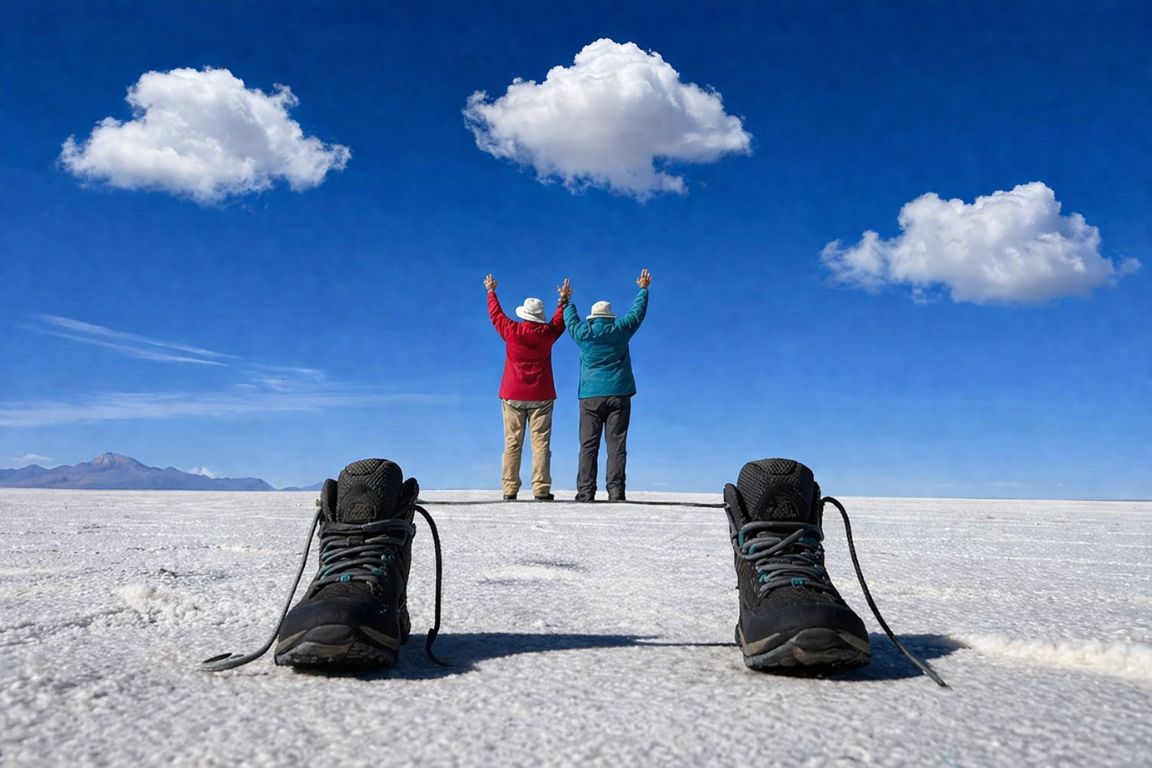
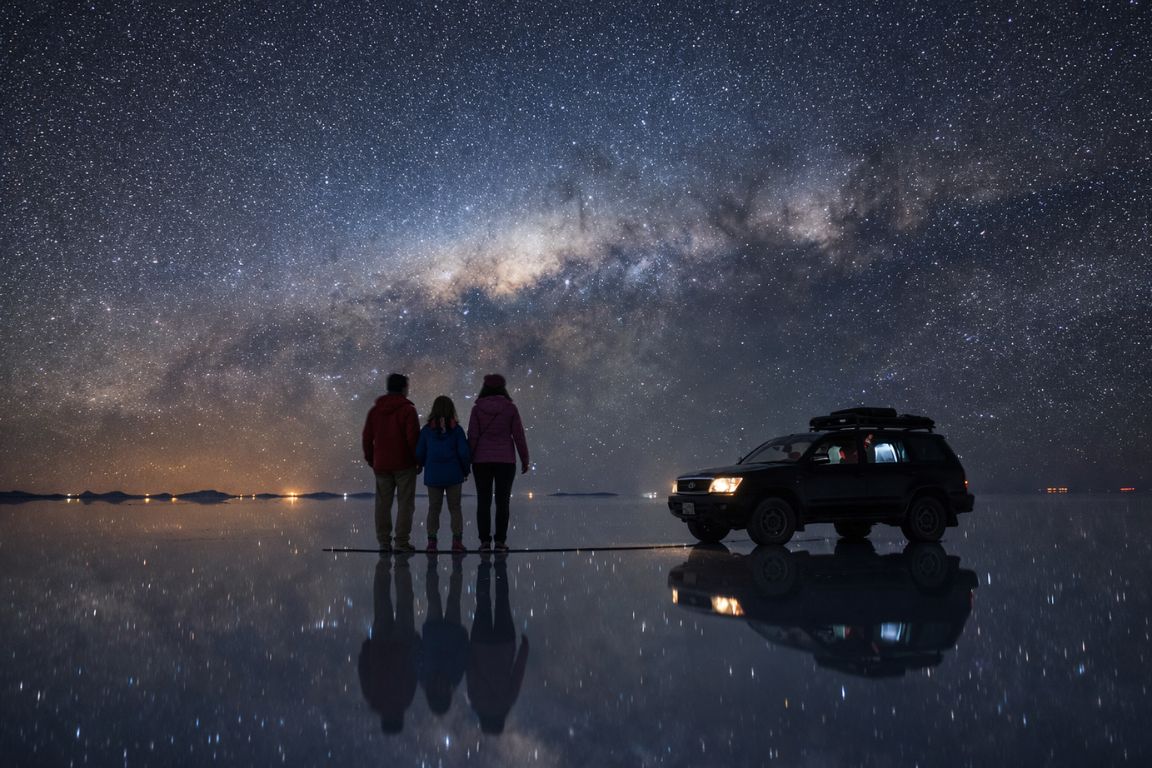 The Salar de Uyuni offers two completely different types of photography depending on the season: forced-perspective shots using the flat white surface and absent visual reference points in the dry season, and mirror-effect reflection photography during the wet season. For perspective shots, the camera must be on the ground – flat on your stomach, not crouching. For mirror shots, shoot at sunrise before wind picks up, use a wide-angle lens, and remove your polarizing filter to let the reflection through.
Perspective shots work because the Salar has no depth cues. Nothing tells your eye how far away something is. A toy dinosaur 30 centimeters from the lens appears to be attacking a person standing 10 meters behind it. The trick is the camera position: almost every beginner holds the camera at waist or chest height and gets a mediocre shot. Get the camera on the ground, lens as close to the salt as physically possible. Use your phone or DSLR propped on a mat, a bag, anything flat. That low angle is the entire difference between a decent shot and a great one.
Prop selection matters more than most people think. Medium-sized objects work better than very small ones – a small prop requires the camera to be almost touching it, which makes focusing on both the prop and the background human subject nearly impossible. Toy dinosaurs, small figures, Pringle cans, wine bottles, hiking boots – things you can buy the night before in Uyuni. The jeep itself is an underused prop. So is the cook’s frying pan.
| Forced Perspective | Dry (May-Oct) | Flat on your stomach, camera on the ground | Medium-sized props, avoid long shadows – align with sun |
| Mirror Reflection | Wet (Jan-Mar peak) | Low angle, close to water surface | Remove polarizing filter, shoot at sunrise before wind |
| Milky Way / Nightscape | Either – best after rain | Tripod required | 30-second exposures, fast wide lens (f/2 or wider), find composition anchor |
| Landscape / Panoramic | Either | Standing for sky emphasis | Shoot at golden hour, wide-angle lens, no polarizer for wet surface |
| Shadow Lines | Dry (late afternoon) | Standing, horizon flat in frame | Group spreads wide, everyone at equal distance, shadows align |
For mirror photography, wind is your enemy. The best shots happen in the first hour after sunrise, before any breeze builds. Afternoon is almost always windier. If your tour doesn’t have a specific sunrise mirror session, ask for one – or book a tour that does. The difference between a glassy mirror and a rippled surface is the difference between the photo you came for and a blurry disappointment.
Bring a polarizing filter for managing glare on the dry crust – but remove it entirely if you’re shooting reflections. The polarizer cuts the reflection almost completely. This trips up a lot of photographers. Also bring a microfiber cloth and a sealed bag for your gear. Salt crystals get into everything. Lenses, memory card slots, battery compartments. Budget cameras and smartphones survive fine; just keep them wiped down and stored when not shooting.
For night photography, the Salar’s combination of little light pollution away from settlements and thin high-altitude atmosphere produces some of the clearest Milky Way views on earth. After a rainy day, when there’s still a shallow water layer but the skies have cleared, you can photograph the galaxy reflected in both directions – above and below. Set your shutter to 25-30 seconds, open the aperture as wide as it goes, and push ISO to the point where you’re still getting stars without too much grain. A remote trigger prevents camera shake. Use the faint glow of a distant town or a lit headlamp as a composition anchor so the image has a focal point.
Need photography tips? Our Salar de Uyuni tours photography guide covers what gear to bring, how to expose for blindingly white salt, and when lighting works best for both mirror reflections and perspective shots.
What Should You Pack and Prepare for the Salt Flat?
 Pack for four completely different environments in one trip: blinding sun, freezing nights, strong wind, and potentially wading through shallow water. The essentials are UV-blocking sunglasses, high-SPF sunscreen, waterproof boots or shoes you’re willing to get salty, a warm sleeping bag (budget accommodation provides thin blankets and no heating), lip balm (altitude air is brutally dry), and enough Bolivianos to cover all additional fees in cash since there are no ATMs beyond Uyuni town.
Sunburn at altitude is faster and more severe than you expect. The sun is intense, the salt reflects it back at you from below, and the thin Altiplano air provides almost no filter. People who sunscreen their face and forget their neck and hands come back looking like they grilled rather than traveled. Bring more than you need. Reapply every two hours on the flat.
Cold at night on the Salar is genuinely cold. Winter nights drop to -20°C. Even in the warmer months, temperatures well below freezing are normal after sunset. Budget accommodations have no heating. The blankets are thin. If you’re doing a multi-day tour and not paying for a premium salt hotel, bring your own sleeping bag rated to at least -10°C and treat it as non-negotiable. Travelers who skip this reliably regret it.
Footwear depends on season. In the dry season, any closed shoe works on the flat. In the wet season, you’ll be wading through anywhere from ankle to knee-deep water at various points – waterproof boots are the right call. If you don’t have them, some Uyuni shops sell cheap options. Going barefoot on the wet flat is a popular choice and actually works well for shorter wading sessions, but the salt crusts are sharp at the edges and will cut your feet if you’re not careful.
Cash. There are no ATMs beyond Uyuni town. None. Bring more than you think you need: entry fees for Incahuasi (30 BOB), the Eduardo Avaroa Reserve (150 BOB for foreigners), toilet fees along the route, tips for your guide and driver, and whatever souvenirs or extra food you want. Carry it all in small bills since change is often difficult to make in remote areas.
Not sure what to pack? I’ve broken down what to wear in Salar de Uyuni tours so you’re prepared for blinding sun on white salt, freezing night temperatures, and brutal UV exposure at 3,600+ meters
What Does It Actually Cost to Visit the Salar de Uyuni?
Budget travelers can do the full 3-day experience for around $150-200 USD all-in. That includes bus, tour, basic accommodation, and fees – but not flights or premium upgrades. The total climbs quickly if you fly, choose private transport, upgrade to a premium tour, or add a night in a proper salt hotel. The real money trap is booking from outside Bolivia: tours bought in Chile or through international platforms are often two to three times the Bolivian price for the same product.
| La Paz to Uyuni Transport | $15-25 (overnight bus) | $30-50 (premium cama bus) | $130+ round-trip (flight) |
| 1-Day Tour (shared) | $40-60 | $60-80 | $150+ (private) |
| 3-Day Tour (shared) | $120-150 | $200-350 | $500-800 (premium) |
| Isla Incahuasi Entry | 30 BOB (~$4 USD). Historical estimate; confirm the current fee | ||
| Eduardo Avaroa Reserve | 150 BOB foreigners (~$21 USD). Historical estimate; confirm the current fee | ||
| Salt Hotel (per night) | Basic salt accommodation included in tour | $60-100/night upgraded | $150+ premium salt hotel |
| Guide/Driver Tip | $10-20 per person for 3-day tour is standard and expected |
The cheapest 3-day tours are around $120. The catch is not the price itself – it’s what gets cut to hit that number. Six people in a four-person vehicle. A cook who is also the mechanic. Accommodation that is technically walls and a roof but not much else. That experience is fine for genuinely flexible budget travelers with extra days to recover. For everyone else, the sweet spot is usually in the $200-350 range for shared tours: smaller groups, better food, proper accommodation.
Planning Takeaways For Your Trip
Choose the itinerary around the experience you want, the time you have and the actual services included. Check the guide language, transport, overnight arrangements and extra costs on the selected listing.
What Are the Biggest Mistakes First-Time Visitors Make?
 The most damaging mistakes are: skipping acclimatization, booking the cheapest tour without researching the operator, arriving in Uyuni without enough cash, underestimating cold at night, and packing for either a desert or a water trip instead of both. A second category of mistakes involves photo regrets – not bringing props, not getting the camera to ground level, not going to the flat at sunrise. The altitude and the operator choice together determine 80% of whether your trip goes well.
Flying from sea level to La Paz or Uyuni and jumping straight onto a tour the next morning is the fastest way to spend three days feeling terrible in one of the world’s most extraordinary landscapes. It’s shockingly common. The people who do it usually know they should acclimatize and assume they’ll be fine. Sometimes they are. Often they’re not. A day of rest costs nothing except time, and time here is cheap compared to what a ruined tour costs.
Booking the cheapest tour in Uyuni without reading any reviews of the specific operator is the second biggest pattern. Uyuni has no shortage of agencies that look legitimate, act friendly, and deliver a poor experience – overcrowded jeeps, drivers who push speed across remote terrain, food hygiene that’s genuinely risky at altitude. The drunk driving problem is real and documented. Asking at your hostel for reviews of people who just returned from a tour is more reliable than any website.
The cash mistake catches almost everyone who hasn’t read ahead. The reserve entrance fees, the island entrance, toilet fees along the route, tips – none of it can be paid with a card. Some travelers get partway through the tour and have to skip Incahuasi because they don’t have 30 BOB on them. Withdraw generously in Uyuni before departure. Small bills preferred.
On the photography side: the single most common regret is not lying flat on the ground for perspective shots. People crouch. Crouching is not the same. The camera needs to be at salt level. Commit to getting dirty. The other regret is not bringing props – any prop. Guides have seen thousands of visitors and usually have ideas, but they’re working off what they always do. Bring something unexpected and you’ll get something more interesting.
How Do You Book a Salar de Uyuni Tour That Won’t Let You Down?
Book with an established operator who has verifiable reviews, not just a friendly face at a street-level booth. Confirm vehicle capacity before paying – maximum four passengers per vehicle is the standard for comfort; six is technically allowed but miserable on a three-day trip across rough terrain. Verify that your guide speaks your language adequately, not just “some English.” And never book a tour from Chile that hasn’t confirmed which Bolivian operator actually runs it – Chilean guides cannot legally guide on the Bolivian salt flat.
The best source of real-time operator quality is other travelers who just got back. Ask at your hostel the evening you arrive. Someone will have returned that day or the day before. Their firsthand report of the driver, the food, the vehicle condition, and the guide is worth more than any online review from six months ago. Tour quality varies not just by company but by which jeep you’re assigned to and who’s driving it that week.
Private tours cost considerably more but solve most of the problems. Your group, your pace, your stops, your time at each location. For families, couples who want a specific photographic experience, or travelers who’ve heard enough horror stories to be done with the budget lottery, the private option is worth serious consideration.
A few practical things to confirm before you pay: Does the price include the Eduardo Avaroa Reserve entrance fee? Often it doesn’t, and it’s 150 BOB extra. Does the tour stop at specific photography spots or does it follow a generic loop? What accommodation are you actually staying in – ask for the name, look it up. And get a clear answer on how many passengers will be in your vehicle. If they won’t give you a number, that tells you something.
Not sure about accommodation? I’ve broken down where to stay in Salar de Uyuni tours so you know what’s available in basic Uyuni town versus unique salt hotels on the flats and what’s included in multi-day tour packages.
Questions before you commit? Read the 3-day tour guide to match tour type to your schedule, budget, and what you want to photograph.
Frequently Asked Questions
Can you visit the Salar de Uyuni independently without a tour?
Technically, yes – a local bus from Uyuni to Colchani crosses the edge of the salt flat and you can ask to be dropped off. But the most interesting areas (Isla Incahuasi, the colored lagoons, the geysers) are too remote to access without a 4×4. Most visitors join organized tours. The flat itself has no visual landmarks and is extremely difficult to navigate without a guide who knows the terrain.
Is the mirror effect guaranteed during wet season?
No. The mirror requires recent rain, no wind, and a specific water depth. Peak conditions occur January through early March. February offers the best odds but also the highest risk of tour cancellations due to flooding. Build extra days into your itinerary if seeing the mirror is the primary goal of your trip.
How long do you need in Uyuni?
Most travelers spend 2-3 days exploring the full area. A 1-day tour is possible for tight schedules. The 3-day tour is the most popular and recommended option for seeing both the salt flat and the surrounding Altiplano landscapes including the colored lagoons and volcanic formations.
Is Salar de Uyuni safe?
The salt flat itself is very safe in terms of crime – theft on the flat is nearly unheard of. The real risks are altitude sickness (very manageable with preparation), extreme cold at night, and vehicle quality on cheaper tours. The bus terminal in Uyuni between 4am and 6am (when overnight buses arrive) requires attention – take a marked taxi rather than walking with luggage in the dark. Book with a reputable operator and the tour itself is very safe.
What is the best time of day for photography on the Salar?
Sunrise offers the best mirror conditions (less wind), the most dramatic light for landscape shots, and far fewer other tourists. Sunset produces warmer colors and is excellent for perspective shots. For Milky Way photography, clear nights after a rainy day – when a thin water layer still covers the flat – produce the most extraordinary results.
Do you need a visa to visit Bolivia?
Visa requirements vary by nationality. Many countries including most EU nations, the UK, Australia, Canada, and the United States currently enter Bolivia visa-free for tourism. Check current requirements with the Bolivian embassy or consulate in your home country before traveling, as requirements can change.
Choose Your Uyuni Experience
Choose the itinerary that fits, then check your travel date before arranging onward transport or separate rooms.
Initial editorial recommendation. No preferences have been entered.
Salt Flats And Colored Lagoons
Combine the salt flats with colored lagoons, meals and an English-speaking driver-guide.
Lodging descriptions conflict on private bathrooms; confirm both nights. Park fees and the optional Chile transfer cost extra.Scheduled dates load automatically. Availability and final price are confirmed on Viator.
No verified tour meets all of these preferences. Adjust the choices below or reset.
Compare Options And Tailor Your Choice
- Salt Flats And Sunset Day Trip (9 hours): A full salt-flat day with lunch, an English-speaking guide and sunset. Rain boots included; Incahuasi entry costs extra. Colchani hotel pickup has a surcharge.
- Private Circuit With Hotel Lodging (3 days): A private salt-flat and lagoon circuit with an English guide, meals, park entries and hotel lodging. Palacio de Sal or Luna Salada and Tayka or similar hotels; confirm exact rooms. Chile transfer excluded. Prior acclimatization required.
- San Pedro To Uyuni, Private Route (3 days): Travel from San Pedro through the lagoons to Uyuni with an English-speaking guide and two nights of lodging. First-night shared six-bed rooms are listed despite private transport. Confirm San Pedro meeting arrangements; park fees and drinks cost extra.
- Four Days From San Pedro And Back (4 days): Cross the lagoons and see sunrise on the salt flats, with transport back to San Pedro on day four. Spanish-speaking guide. Choose shared or private rooms. Entries extra; border or winter delays can affect return time. Booking ages 5–99.
- Sunset And Starlights (4 hours): Watch sunset and stay for the night sky on a four-hour outing from Uyuni. Choose the guide language when booking. Waterproof wellies are listed; skies and reflections depend on conditions. Age eligibility must be confirmed.
Compare Your Complete Quotes
Use the same currency for both totals, including transport, rooms, meals and fees for your whole party.
Affiliate links: we may earn a commission when you book, at no extra cost to you.