Where to Stay in Uyuni
Where to stay in Uyuni? From budget hostels to iconic salt hotels ($100-$200/night), discover your options, and the one detail (heating) that can make or ruin your stay.
Choose whether you need a hotel on its own or lodging within a multi-day tour. The tour options below bundle rooms with an itinerary.
Last updated: September 9, 2026
Accommodation in and around Uyuni falls into four distinct categories: budget hostels in town, mid-range hotels in town, salt hotels on the edge of the flat near Colchani (20-30 minutes from Uyuni), and remote tour-included accommodation out on the 3-day circuit. The salt hotels are the most memorable option and not necessarily the most expensive – a night at Palacio de Sal or Luna Salada runs $100-200 per night and includes breakfast and flat views. Budget hostels in town start around $20-30 per night. The single most important thing to confirm before booking any Uyuni accommodation: whether it has working heating. Not all do, and at 3,700 meters, the difference between a heated room and an unheated one is not a minor inconvenience.
The private hotel circuit includes salt-flat and lagoon touring with named hotels or similar alternatives; confirm the actual properties and rooms before paying. Check Private Uyuni Hotel-Tour Dates
Uyuni Accommodation at a Glance
| Budget hostel / guesthouse | Uyuni town | $15-35 USD | Logistics stops, tight budgets, solo travelers |
| Mid-range hotel in town | Uyuni town | $40-90 USD | Comfort with access to tour agencies, restaurants, transport |
| Salt hotel (Colchani area) | 20-35 min from town | $80-250 USD | Unique experience, flat views, photography, couples |
| Tour-included accommodation | On the 3-day circuit | Included in tour price | Budget 3-day tour travelers – basic but functional |
| Luxury dome glamping | Directly on the salt flat | $800+ per night (all-inclusive) | Honeymoons, bucket-list travelers, special occasions |
What Are the Different Areas to Stay in and Around Uyuni?
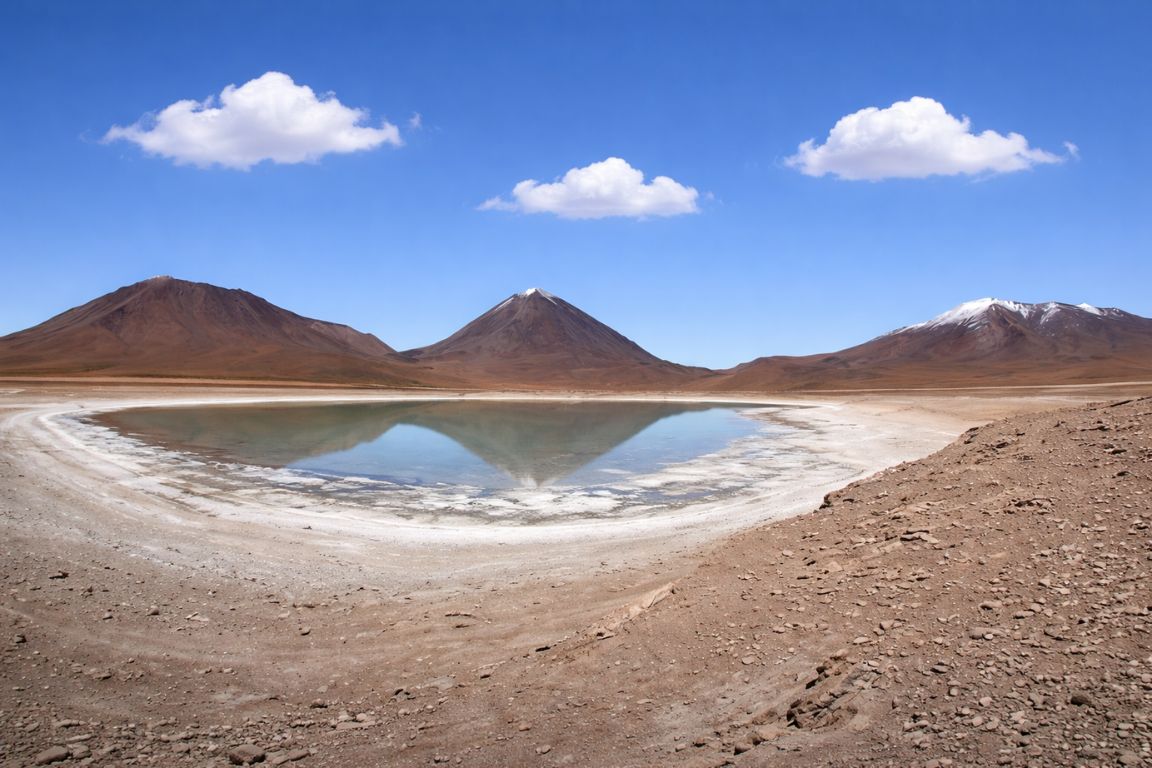 There are three main areas to base yourself: Uyuni town itself, the Colchani area 20 to 35 kilometers from town on the edge of the salt flat, and directly on the flat for those doing luxury overnight experiences. Each serves a different kind of traveler. Town is practical – close to tour agencies, bus terminals, restaurants, and ATMs. Colchani is where the salt hotels sit, meaning you wake up with the flat in your window but need transport to get anywhere. The flat itself is for those staying in dome camps or included tour accommodation, where remoteness is the whole point.
Uyuni town is not a destination in its own right. This is worth knowing before you book three nights there expecting a charming Bolivian hill town. It’s a small, wind-battered plateau settlement – dusty streets, limited dining options, and a functional energy that serves travelers rather than enchanting them. What it does well: everything logistical. The tour agencies are all clustered in town. The bus and train terminals are within walking distance of most hotels. The ATMs (the last ones you’ll see before heading out on a tour) are here. If you arrive late, leave early, or need to sort out bookings in person, town is the right base.
The Colchani area is where the character of the region actually lives. The salt hotels here – Palacio de Sal, Luna Salada, Cristal Samaña, and a handful of others – sit on or near the edge of the flat itself. You open your curtains and the Salar is right there. At sunrise, the light on the white surface is extraordinary even from your room window. The trade-off is distance from town. There’s no restaurant culture around Colchani – you eat where you stay, and those meals cost more than equivalent food in Uyuni. Getting to and from tour pickup points requires a taxi or hotel shuttle, usually 250 BOB ($35 USD) each way.
The third category is accommodation included in multi-day tours – basic salt block lodges on the circuit south toward Eduardo Avaroa Reserve. These are rustic, often cold, sometimes without consistent hot water. They’re not booked independently; your tour operator selects them based on route. The quality varies enormously between operators, which is one reason why choosing your tour company carefully matters as much for your nights as for your days.
Not sure where to start? I’ve put together a complete guide on how to visit Salar de Uyuni tours so you understand tour operators, altitude preparation, and whether to enter from Bolivia or cross from Chile.
What Is Staying in a Salt Hotel Actually Like?
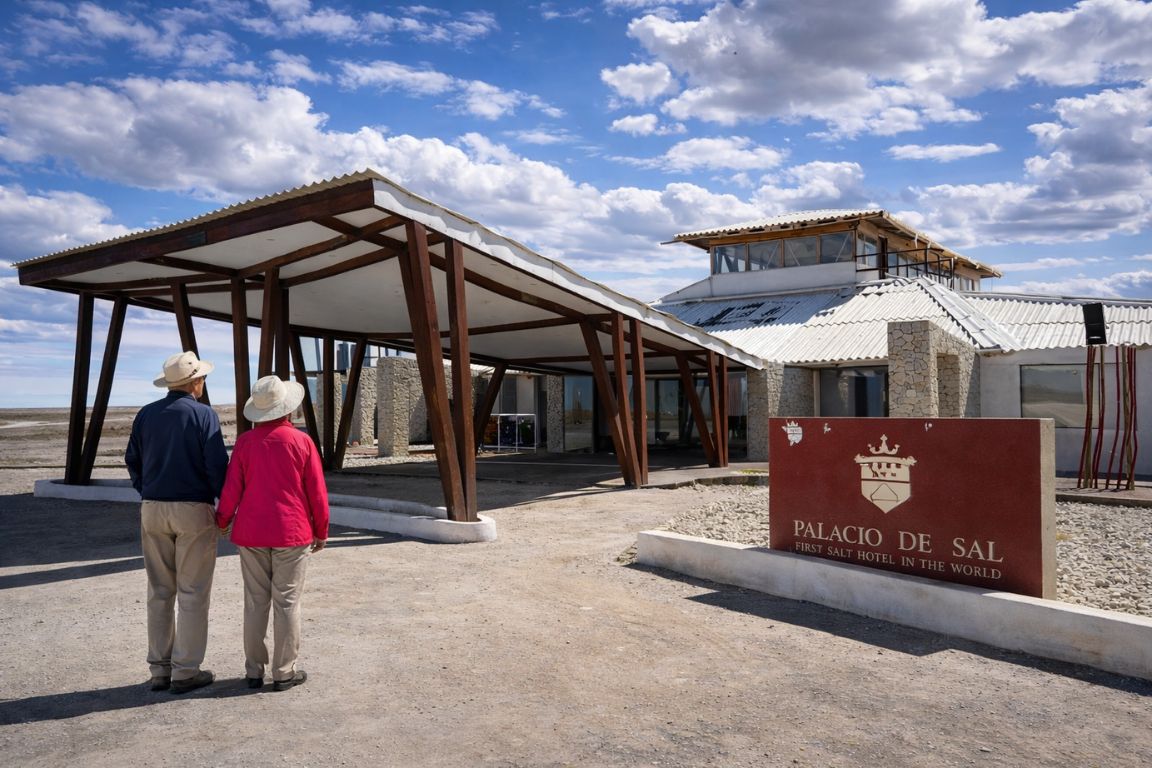 A genuine salt hotel is exactly what it sounds like: walls, floors, furniture, and in some cases even the beds are constructed from compressed salt blocks extracted from the flat itself. The aesthetic is extraordinary – pale white mineral walls, Andean textiles, fireplaces, and complete silence outside. What people don’t always anticipate is that “salt hotel” covers a huge range of quality. The luxury options (Palacio de Sal, Luna Salada) have reliable heating, en suite bathrooms with hot water, and flat-view rooms worth every peso. The basic salt lodges included in budget tours are often cold, sometimes lack hot water, and have walls that look more “rustic mining camp” than “boutique retreat.”
The sensory experience is genuinely unusual. Salt walls have a slight sheen and a faint mineral smell. The texture is rough, not smooth – the blocks are visible, stacked, utilitarian. There’s a specific quality to the silence inside them. The walls are thick enough to muffle external wind, so on a night when the altiplano gusts are hammering outside, the interior is still. That stillness, combined with the alien material surrounding you and the darkness that comes from having no nearby town lights, is something most travelers find unexpectedly affecting.
A word about the floors. The fancier salt hotels use wood or stone over their floors, so you’re not actually walking on raw salt. Some of the more basic lodges do have salt floors, which means a fine layer of mineral dust on everything by morning – your bag, your clothes, your camera equipment. It’s not damaging, just notable. Keep gear in sealed bags if you’re particular about equipment.
WiFi in salt hotels exists but penetrates poorly through thick salt walls. At Luna Salada and Palacio de Sal, signal is available in common areas but often weak or absent in rooms. At the basic circuit lodges, there’s usually no WiFi at all, and no cell signal. Most travelers find this a feature rather than a problem after the first hour – there is genuinely nothing else to do at 9pm on the flat but look at the stars, and the stars are phenomenal.
Hot water timing at salt hotels is worth understanding before you arrive. Many run solar heating systems, which means the water is hottest in mid-afternoon when the panels have been absorbing sun all day. By morning, pressure and temperature drop. Some hotels explicitly tell guests to shower before dinner for best results. Ask about this when you check in.
What Are the Best Budget Accommodation Options in Uyuni Town?
Budget accommodation in Uyuni town runs from $15 to $35 per night for a private room with en suite bathroom. The best options at this price point offer heated rooms, consistent hot water, free breakfast, and helpful staff who can assist with tour bookings. The worst are unheated rooms with lukewarm showers, which at 3,700 meters in winter is genuinely miserable. The price gap between a bad budget option and a good one is often $10-15 per night – worth every boliviano for a warm night before or after a tour.
Heating is the variable that separates a fine budget stay from a terrible one. Not all budget hotels in Uyuni have it, and some that advertise heating provide a small portable electric heater that takes two hours to make a modest dent in a cold room. When booking, ask specifically whether the room has built-in gas or electric heating – not just “is it warm.” Reviews mentioning this issue are easy to find and worth reading before booking. In dry-season months (June to August especially), an unheated room at -10°C outside is a genuinely uncomfortable experience.
A few consistently recommended names in the budget to lower-mid-range tier based on traveler reviews: Hostal La Magia de Uyuni stands out repeatedly for heated rooms, strong hot showers, and a generous cooked-to-order breakfast – an unusual combination at this price point. Eucalyptus Uyuni earns consistent praise for warmth (both in terms of room heating and host personality) and good owner communication. Hotel Jardines de Uyuni is a step up in price but offers rooms with gas heating, a proper on-site restaurant, and proximity to both the bus terminal and tour agencies on the main strip.
One practical tip: if you arrive by overnight bus at 5am or 6am, most hotels won’t have a room ready for you until later in the morning. Leave your bags, acclimatize slowly, have breakfast somewhere warm, and don’t try to arrange your tour booking before you’ve had a coffee. Rushing that first morning is how altitude headaches start.
What Mid-Range and Boutique Hotels Does Uyuni Offer?
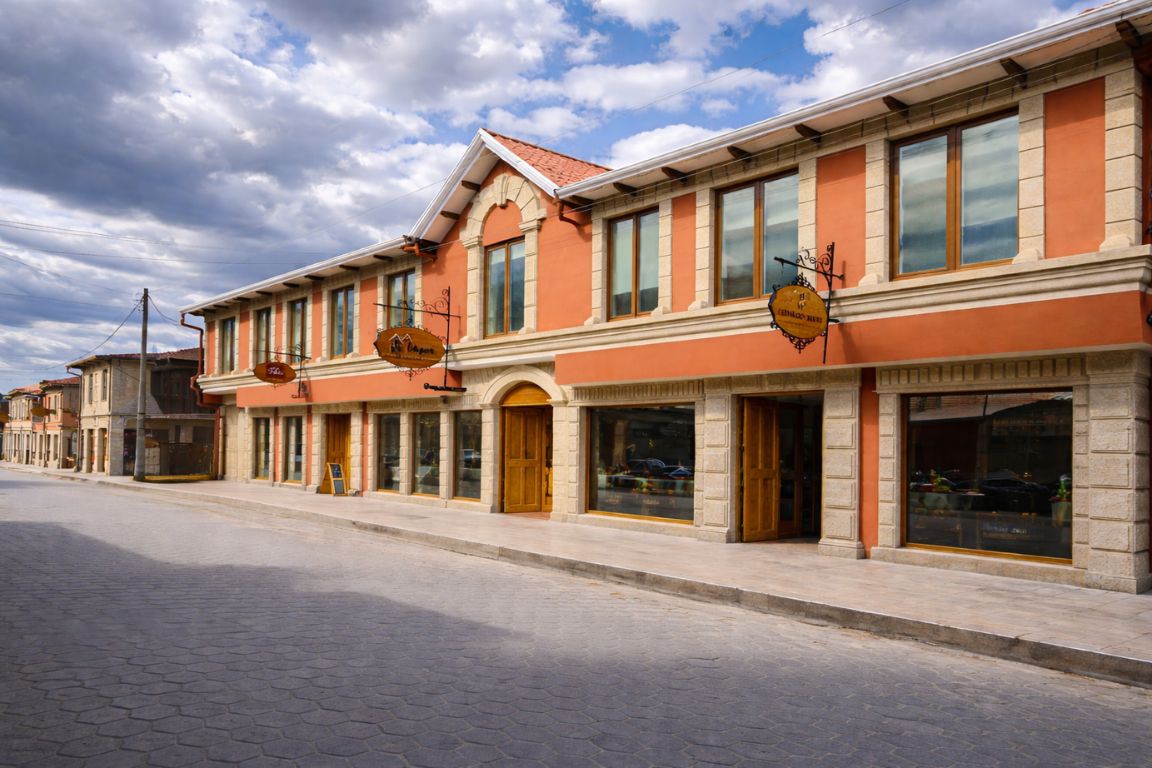 In the $50-120 per night range, Uyuni’s hotel options step up considerably in terms of consistent heating, reliable hot water, en suite bathrooms, and included breakfast quality. The best mid-range properties in town also serve as useful practical bases – their staff can help coordinate tour bookings, airport transfers, and luggage storage for travelers heading out on multi-day tours. At this tier, salt-themed décor (walls incorporating salt blocks, salt sculptures, cactus-wood furniture) starts appearing in town hotels too, bridging the aesthetic gap between standard rooms and the full salt hotel experience.
Hotel Rosario Uyuni Collection and the Tambo Aymara are frequently mentioned in the mid-range tier for clean, comfortable rooms with reliable heating and breakfast included. Casa de Sal in Uyuni town is an interesting option – it incorporates salt architecture into a town-center location, giving you the visual experience of a salt hotel without the logistical complications of being 30 kilometers from the bus station. The rooms are smaller than Colchani’s dedicated salt hotels but the convenience is real.
At the upper end of mid-range, Hotel Jardines de Uyuni offers a sauna and pool (currently suspended – confirm before booking), a proper restaurant with evening service, and a layout that travelers coming back from a 3-day tour find genuinely restorative. Coming back off the circuit cold, tired, and grimy, a hotel with hot water, heating, decent food, and a comfortable bed feels like extraordinary luxury. That’s the right way to think about mid-range Uyuni accommodation – not by comparison to what’s available in La Paz or Sucre, but by comparison to what you’ve been sleeping in for the previous two nights on the tour.
Should You Stay in Uyuni Town or Out on the Salt Flat?
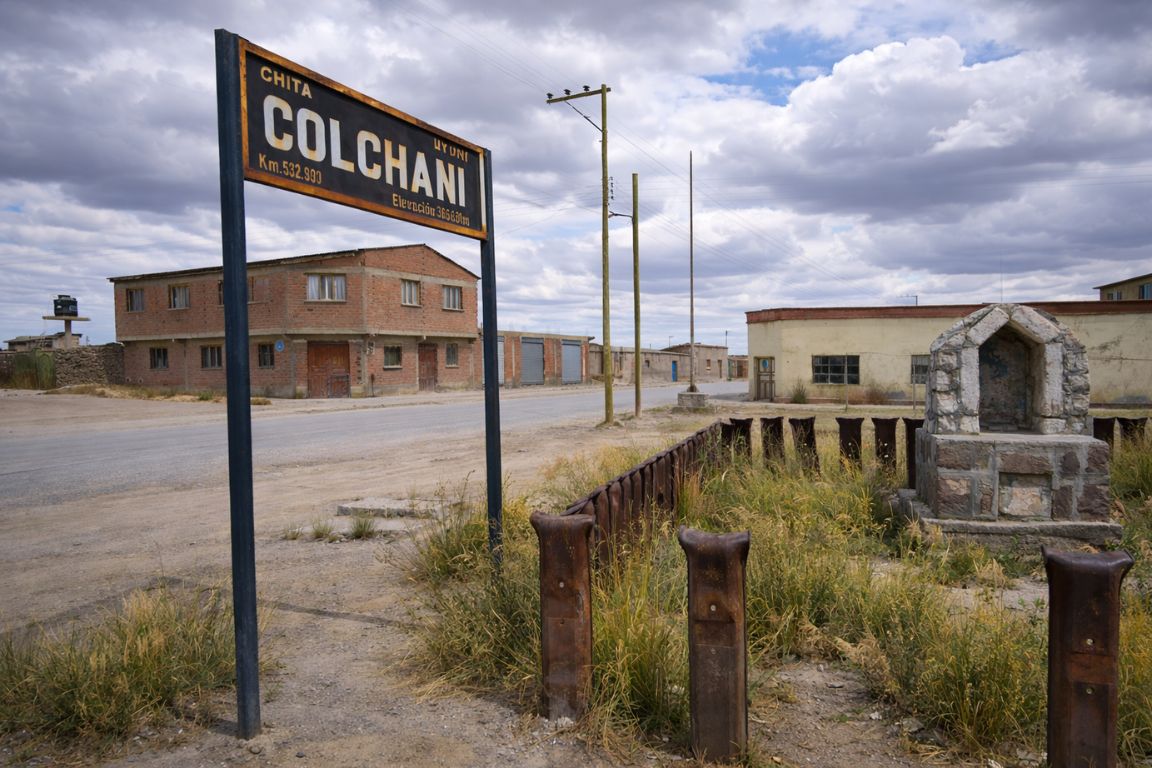 It depends entirely on your priorities. If you’re optimizing for tour logistics, early pickup times, access to agencies and ATMs, and proximity to transport, stay in town. If you’re optimizing for the experience of waking up with the salt flat outside your window, photography at sunrise without needing a jeep, and a truly memorable night in an extraordinary environment, stay at one of the Colchani salt hotels. For most first-time visitors who have at least two nights available, the ideal split is one night in a good town hotel (practical, allows tour coordination and acclimatization) and one night in a salt hotel (memorable, worth the extra logistics).
The logistics disadvantage of Colchani hotels is real and worth planning around. There are no tour agencies, restaurants, ATMs, or shops in Colchani – just the salt hotels and the flat. Most tours depart from Uyuni town, meaning you’ll need a transfer to meet your guide in the morning. The hotels generally organize this shuttle service, but it adds cost (around $35 USD each way) and requires coordination. If your timing is tight – overnight bus arrives at 6am, tour departs at 10am – staying in town simplifies that window considerably.
| Access to tour agencies | Walking distance | Requires taxi/shuttle to town |
| ATM access | Several in town | None – bring cash from town |
| Restaurant options | Multiple in town | Hotel restaurant only – higher prices |
| Morning views | Town views only | Salt flat outside your window |
| Sunrise photography | Requires jeep to reach flat | Walk out from your room |
| Transport to tour pickup | Easy – tours depart from town | Shuttle or taxi required (~$35 USD each way) |
| Overall atmosphere | Functional, dusty, serviceable | Otherworldly, silent, memorable |
| Price range | $15-100+ USD per night | $80-250 USD per night |
One thing the Colchani salt hotels give you that no town hotel can is the ability to photograph the flat at dawn without competition. The perspective photography crowds, the jeeps, the other tourists – none of that exists at 6am when you’re standing 50 meters from your hotel door. That alone justifies the price premium for photographers who have this trip planned around getting the shot.
We’ve detailed walking on the salt flats of Salar de Uyuni tours because it’s stranger than you’d think – the hexagonal patterns crack under your feet differently in wet versus dry season, and altitude affects how much walking you can handle.
What Should You Know Before Booking Accommodation in Uyuni?
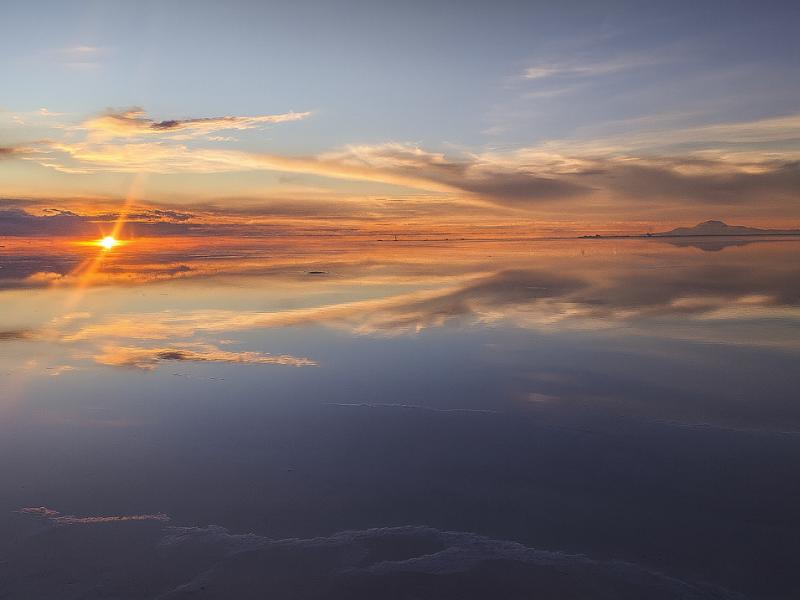
Three things matter more than the hotel’s rating or photos: whether it has functioning heating, whether hot water is available in the morning (not just at peak solar-heating hours), and whether it fills up during peak season. December to March sees significant demand from photographers chasing the mirror effect, particularly from Asian travel groups who book well in advance. July and August see high demand from European and South American visitors in the peak dry season. For either period, booking at least four to six weeks ahead for a Colchani salt hotel is advisable. Two to three weeks ahead for town hotels is usually sufficient outside of peak weeks.
Ask before you book: “Does the room have heating, and does it work?” This sounds obvious, but reviews across TripAdvisor and Booking.com are full of travelers who paid for what was listed as a “heated room” and found either a broken heater, a shared portable unit brought in on request, or nothing at all. In June and July, when nights drop to -10°C or below outside, an unheated room in Uyuni is one of the more memorable miseries available in South America. The problem is specific enough to the destination that asking directly matters.
Luggage storage is worth planning for multi-day tours. Most 3-day tours don’t allow large suitcases in the jeep – roof space is for fuel cans and the cook’s supplies. You’ll pack a small daypack or duffel for the tour days and leave your main bag somewhere. Good hotels in town offer luggage storage as a matter of course; confirm this when you book. Some properties store bags securely at no extra cost for guests who return; others charge a small fee.
Credit cards are accepted at the nicer hotels in town and at the Colchani salt hotels. Most smaller guesthouses and hostels expect bolivianos. Either way, withdraw what you need from town before heading to Colchani. The exchange rate on hotel bills can be unfavorable if paying in USD, and some properties quote in dollars but charge in bolivianos at an unofficial rate. Ask about the exchange rate if paying in foreign currency.
Need the multi-day breakdown? Our 3-Day Salar de Uyuni tours guide walks you through what each day covers, where you stay overnight, and how the full circuit compares to shorter day-trip options.
Planning Takeaways For Your Trip
Choose the itinerary around the experience you want, the time you have and the actual services included. Check the guide language, transport, overnight arrangements and extra costs on the selected listing.
How Does Where You Stay Affect Your Tour Experience?
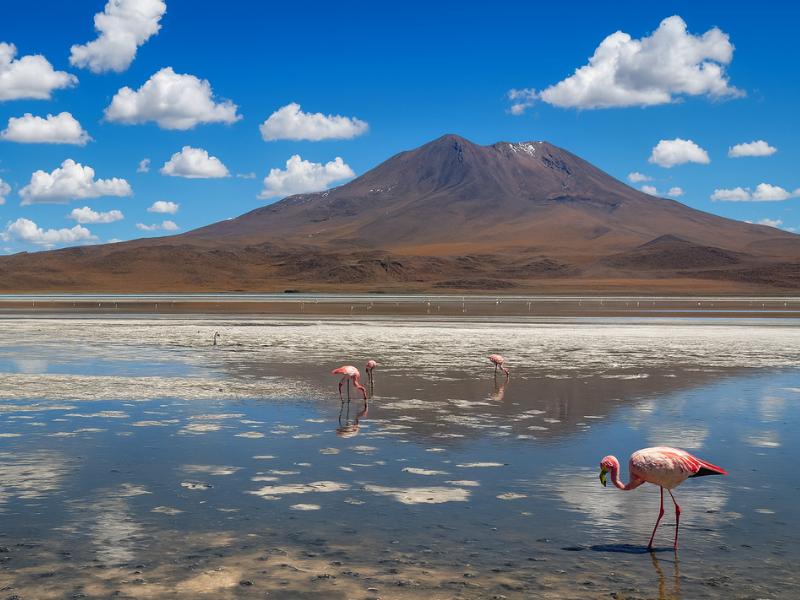
Where you sleep in Uyuni affects your tour experience in ways that most pre-trip research doesn’t cover. A proper night’s sleep before your tour – in a warm room, with a real breakfast – puts you in a completely different physical and mental state than arriving at pickup bleary-eyed from an unheated hostel after a poor night. At 3,700 meters, where altitude already taxes the body, quality of rest matters more than it does at sea level. Beyond that, your accommodation location also affects the quality of your pre-tour photography, your morning logistics, and whether you arrive at the flat already feeling like an explorer or like someone who survived the night.
The pattern we see consistently: travelers who invest in good town accommodation for the night before their tour – warm, quiet, proper breakfast included – report significantly more positive tour experiences than those who cheap out on the pre-tour night. They’re more alert. They’ve eaten properly. They’re not already managing a headache from a cold room and altitude dehydration combined. The tour day is long and physically demanding. It starts at 10am and often ends at sunset. Going into it well-rested changes everything.
Need altitude guidance? Our Salar de Uyuni tours altitude and preparation guide covers how to acclimatize properly, what symptoms to watch for, and what medications and gear actually help at extreme elevation.
For those doing the 3-day tour, accommodation quality on the circuit itself is largely outside your control once you’ve chosen your operator. Budget tours mean basic lodges – functional salt-block rooms, shared bathrooms, sometimes no hot water. Premium tours mean lodges a tier or two above that, with heating and more reliable plumbing. This is one of the clearest arguments for spending more on your tour rather than compensating with a nicer hotel afterward. The accommodations on the route matter as much as the jeep and the guide.
Don’t just book the cheapest tour you find on Uyuni’s main street. This Salar de Uyuni tours comparison guide shows you why operator quality matters enormously – vehicle breakdowns at altitude, food poisoning in remote areas, and inexperienced guides getting lost are real risks with bad companies.
Questions about pairing the right accommodation with the right tour? The combination matters. The 3-day Uyuni tour guide lays out where you sleep each night and how circuit lodging compares, so the rooms on the route match the kind of days you want.
Frequently Asked Questions
Do I need to book accommodation in Uyuni in advance?
For the Colchani salt hotels – yes, especially between December and March (mirror season) and July to August (dry season peak). These fill up weeks in advance. For town hotels and hostels, two to three weeks ahead is usually sufficient, though peak periods can catch travelers out. Arriving without a reservation in Uyuni isn’t disastrous but risks being assigned to unheated rooms or lower-quality options that the better properties have available on short notice.
Are the salt hotels actually made of salt?
Yes, walls, furniture, and decorative elements are built from compressed salt blocks extracted from the flat. Quality salt hotels use wooden floors and Andean textiles for comfort, while basic circuit lodges are more spartan. The luxury options (Palacio de Sal, Luna Salada) have full en suite bathrooms, heating, and flat views. The basic tour-included lodges are functional but rustic.
How do I get from Uyuni town to the salt hotels in Colchani?
By taxi – approximately 250 BOB ($35 USD) each way. Most salt hotels can arrange a hotel shuttle at similar cost. There is no public transport to Colchani. The drive takes 20 to 35 minutes on an unpaved road. If you’re booking a tour, confirm with your operator whether they offer pickup from Colchani or whether you need to return to town for the departure.
What is the most important thing to check before booking a hotel in Uyuni?
Whether the room has functioning heating. In the dry season (May to October), nights in Uyuni regularly drop to -5°C or below. An unheated room at altitude is one of the more memorable discomforts available in South America. Ask specifically – not just “is it warm,” but “does the room have its own heating unit and does it work.” Read recent reviews mentioning cold or heating for the specific property before booking.
Can you stay in accommodation on the salt flat itself?
The Kachi Lodge – six geodesic dome suites positioned directly on the Salar near Tunupa Volcano – was the most famous option for this, but is currently closed until further notice. The Colchani salt hotels sit on the edge of the flat rather than directly on it. Basic overnight accommodation is included in 3-day tour packages. Check with operators for the most current on-flat accommodation options available.
Is it better to stay in Uyuni before or after the tour?
Both. One night in a comfortable town hotel before the tour gives you time to acclimatize, confirm logistics, withdraw cash, and sleep well before departure. If your budget allows, a night at a Colchani salt hotel after the tour provides a memorable close to the experience – you’ve now seen the flat across three days, and waking up to it from a proper room with views feels different than seeing it fresh. Travelers who can manage it report the post-tour salt hotel night as one of the highlights of the whole trip.
Choose Your Uyuni Experience
Choose the itinerary that fits, then check your travel date before arranging onward transport or separate rooms.
Initial editorial recommendation. No preferences have been entered.
Private Circuit With Hotel Lodging
A private salt-flat and lagoon circuit with an English guide, meals, park entries and hotel lodging.
Palacio de Sal or Luna Salada and Tayka or similar hotels; confirm exact rooms. Chile transfer excluded. Prior acclimatization required.Scheduled dates load automatically. Availability and final price are confirmed on Viator.
No verified tour meets all of these preferences. Adjust the choices below or reset.
Compare Options And Tailor Your Choice
- Salt Flats And Colored Lagoons (3 days): Combine the salt flats with colored lagoons, meals and an English-speaking driver-guide. Lodging descriptions conflict on private bathrooms; confirm both nights. Park fees and the optional Chile transfer cost extra.
- Salt Flats And Sunset Day Trip (9 hours): A full salt-flat day with lunch, an English-speaking guide and sunset. Rain boots included; Incahuasi entry costs extra. Colchani hotel pickup has a surcharge.
- Three-Day Circuit With Basic Lodging (3 days): Visit the salt flats, colored lagoons, geysers and hot springs with meals and basic lodging. Choose the English-guide option. Cold basic rooms; sleeping bag included in winter or on request. Entries, water and Chile transfer extra. Not suitable for pregnancy, mobility impairments or pre-existing conditions.
Compare Your Complete Quotes
Use the same currency for both totals, including transport, rooms, meals and fees for your whole party.
Affiliate links: we may earn a commission when you book, at no extra cost to you.