Walking on the Salt Flats of Salar de Uyuni
Walking the Uyuni salt flats feels surreal - crunching underfoot or reflecting the sky. Learn what it’s really like, why the scale is disorienting, and the one safety item you absolutely need.
Jeep tours include time outside the vehicle; choose the season and length of outing around the surface you want to walk on.
Last updated: September 9, 2026
Walking on the Salar de Uyuni is unlike walking anywhere else on earth. The crust crunches underfoot in dry season like packed mineral snow. In wet season it becomes a shallow splash through what feels like an infinite reflecting pool of sky. You can walk freely in any direction from the jeep – there are no fences or barriers but the flat’s scale is deceptive and disorienting in a way that makes straying far from the group genuinely unwise. Sunglasses rated for UV protection are non-negotiable. Reflected sunlight adds to the already high UV exposure, and people have temporarily lost their vision from the reflection without proper protection.
The full-day salt-flat tour includes transport, lunch, sunset and rain boots, with a return to Uyuni the same evening. Check Uyuni Sunset Day-Trip Dates
Walking on the Salar de Uyuni: Quick Facts
| Surface underfoot | Hard white salt crust – crunches with each step | Shallow water over salt – splash with each step |
| Footwear needed | Closed shoes or boots – crust edges can be sharp | Waterproof boots or bare feet – sandals get corroded |
| Water depth | None | Usually 2-20cm; rarely knee-deep in heavy rain periods |
| UV risk | Extreme – salt reflects UV upward | High: direct sunlight and reflections |
| Sunglasses requirement | UV-rated essential – temporary blindness risk without | Same – water reflection intensifies UV |
| How far from jeep is safe | Stay within sight – no landmarks once far out | Same – horizon disappears entirely in mirror conditions |
| Navigation | Guide uses distant mountains as landmarks | Nearly impossible independently – horizon gone |
| Smell | Dry mineral – faint, clean | Wet mineral, slightly brine-like |
| Sound | Crunch underfoot – then total silence | Soft splash – then near-silence |
What Is It Actually Like to Walk on the Salar de Uyuni?
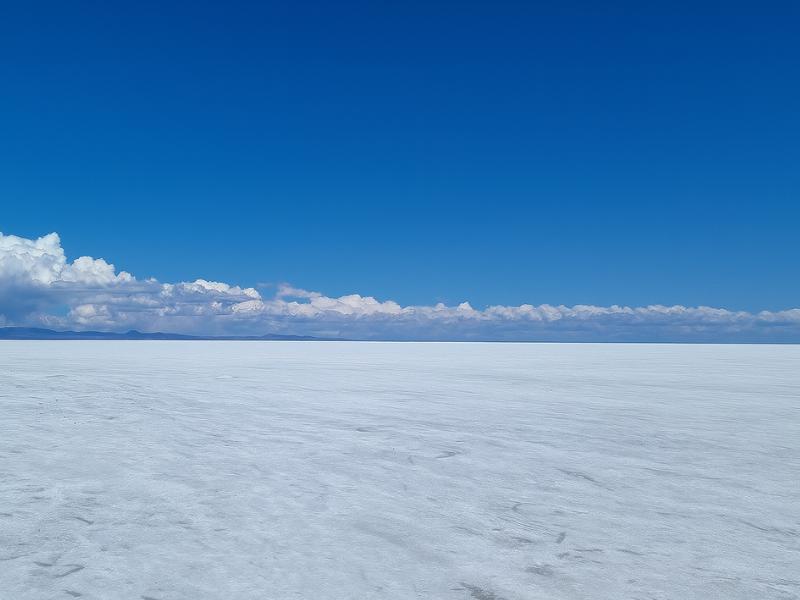
Walking on the Salar de Uyuni in dry season feels like walking across a vast white mineral desert that crunches underfoot with each step – a specific sound unlike any other surface on earth. In wet season, it becomes something completely different: a shallow wade through still water that reflects the sky so completely you lose the horizon and feel, genuinely and physically, like you’re walking through the sky. Both experiences produce the same response in almost everyone who has done it: a disorientation that no photograph or description fully prepares you for.
The dry-season crust underfoot is firmer than most people expect. The salt flat has been compressing its own weight for thousands of years. A few meters deep at the center, the crust can bear the weight of 4×4 vehicles without flexing. Walking on it feels less like walking on sand or earth and more like walking on a very flat, very white pavement that happens to crunch slightly at the surface crust. The hexagonal patterns visible from above – each cell roughly one to two meters wide – are formed by the expansion and contraction of the salt as moisture cycles through it. Their raised edges are what you feel underfoot as a slight texture, a gentle crunch, a subtle ridge separating each hex.
The silence is what catches most people off guard first. Not quiet – silent. Away from the jeeps, with the wind still, there is simply nothing. No traffic, no birds, no ambient noise of any kind. The absence of sound becomes its own presence. Many travelers describe becoming aware of sounds in their own body that are normally inaudible: a pulse, a breath, the blood moving. The crunch of your own footsteps sounds enormous in that context. Then you stop, and it goes completely still again. This silence is part of what makes the experience feel as much psychological as visual.
In wet season the entire sensory register changes. The crunch is replaced by a soft splash. The silence of the dry flat is replaced by a quieter, softer version – the water absorbs sound rather than the dry crust reflecting it. And the visual experience becomes something a camera cannot quite capture. When the sky is reflected perfectly in a thin layer of still water, walking forward while looking down produces a genuine vertigo. Your brain keeps trying to identify which direction is up. Clouds appear beneath your feet. The horizon simply ceases to exist.
Where on the Flat Can You Walk, and Are There Any Restrictions?
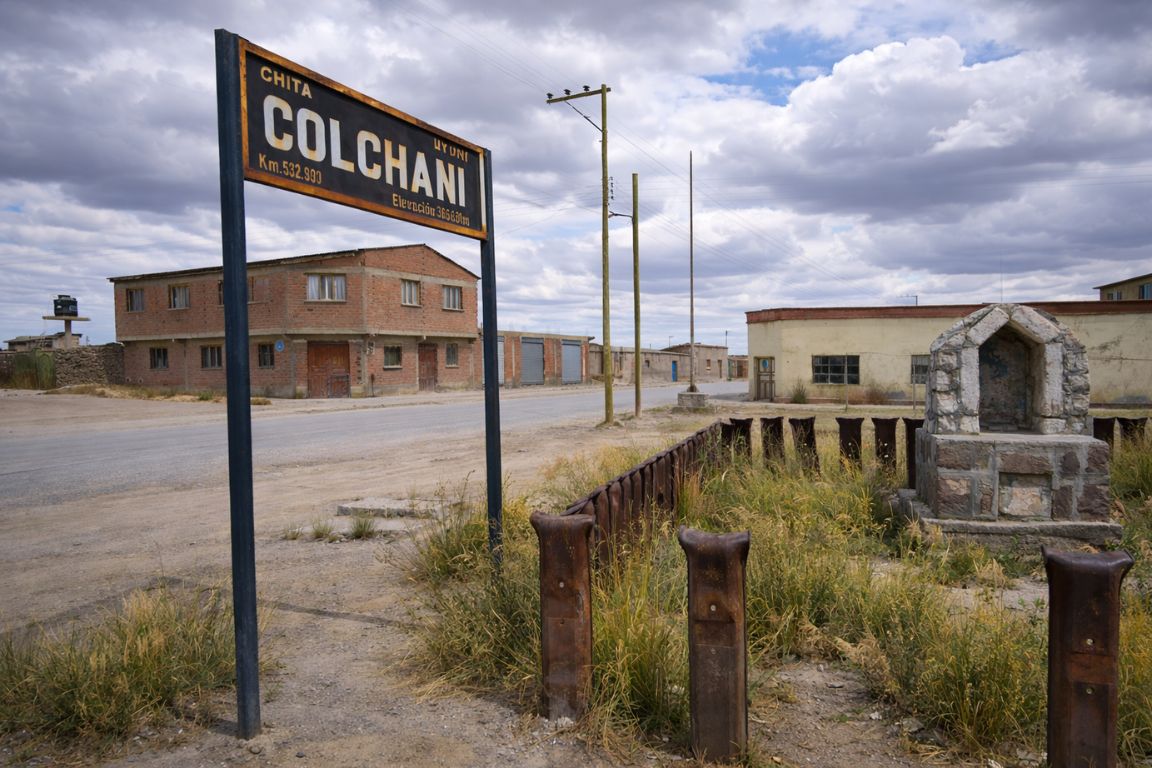 No special permit is required to walk on the Salar de Uyuni. The flat is a natural landscape and not fenced or formally gated. On tours, you are free to walk anywhere around the jeep during stops – guides simply ask that you stay within sight. Independent visitors can access the edge of the flat on foot from Colchani village, about 12 kilometers from the nearest salt hotel. There are no marked walking trails across the flat itself. The main practical restriction is not legal but physical: the Salar is 10,582 square kilometers with no visual landmarks, and navigating it independently is genuinely dangerous.
On a standard tour, the guide stops at designated spots and the group walks freely during each stop. There are no barriers, no fences, no signs telling you to stay within a certain radius. What guides do ask is that you stay within sight of the vehicle. This is not bureaucratic caution – it’s practical safety. In dry season, once you walk 200 meters from the jeep across a featureless white surface, the vehicle looks like a small dark dot. At 500 meters, it’s hard to distinguish from the mirage shimmer on the horizon. In wet season with mirror conditions, the vehicle reflects in the water and doubles, and telling the reflection from the jeep itself becomes genuinely difficult. Guides use distant mountain peaks as navigation reference points. Without that knowledge, the flat offers nothing to orient by.
Independent access is possible and not prohibited. The local bus from Uyuni town to Colchani – a short ride costing around 10 BOB – drops you at the edge of the flat in the village of Colchani. From there you can walk onto the salt freely. The Dakar Monument and the Flag Monument are accessible on foot from Colchani, roughly 12 kilometers out and back. Plan for at least four to five hours round trip. The walk is flat and the surface is good underfoot, but there is no shade, no water, no facilities, and no way to call for help if something goes wrong. Never walk onto the flat alone and never walk in after sunset – jeep drivers cannot see pedestrians in the dark, and the risk of being struck is real.
One informal restriction worth knowing: the guides’ union at the Colchani entrance point sometimes blocks vehicles entering without a licensed guide. This applies to private vehicles rather than pedestrians, and enforcement is inconsistent. If you’re accessing independently on foot, you’re unlikely to be stopped. If you’re trying to drive your own vehicle onto the flat, you may face pushback – particularly in wet season when the union is most active about protecting tour territory and vehicle safety.
Thinking about going solo? Check out our breakdown of can you visit Salar de Uyuni without a tour – the reality involves rental cars, navigation challenges, and safety risks most travelers don’t anticipate.
What Do You Wear and Bring for Walking on the Salt Flat?
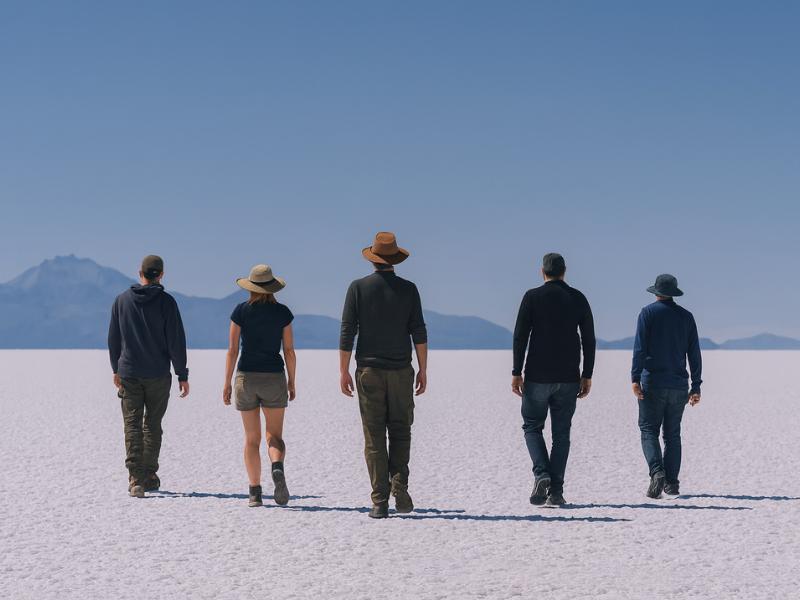
The two non-negotiables for walking on the Salar de Uyuni are UV-rated sunglasses and sufficient water. The sunglasses are not a comfort item – the white salt reflects UV radiation back upward, adding to exposure from direct sunlight. People have suffered temporary blindness from walking on the flat with cheap or non-UV glasses. Bring quality eyewear. For footwear: dry season requires closed shoes or boots (the hexagonal crust edges can be sharp); wet season requires waterproof boots or commitment to going barefoot. Sandals and regular trainers get soaked, salt-corroded, and deteriorate quickly in wet conditions.
The UV situation on the Salar is more severe than most travelers anticipate. At 3,656 meters, the Altiplano’s thin atmosphere provides less UV filtration than at sea level. The white salt below reflects UV back upward – so you’re receiving radiation from two directions simultaneously. Sunscreen needs to be applied to the face, neck, hands, and any exposed skin, and reapplied every two hours. Lip balm with SPF matters here because the dry air combined with the UV causes lips to crack and burn faster than almost anywhere. A hat with a brim is useful but can blow off in wind – secure it or accept that you’ll be spending time chasing it across the white void.
| UV-rated sunglasses | Essential | Essential | Reflected UV from salt and water – temporary blindness risk |
| High-SPF sunscreen | Essential – reapply every 2hrs | Essential – water increases reflection | Direct and reflected UV exposure |
| Lip balm with SPF | Essential | Essential | Dry air at altitude burns lips quickly |
| Closed shoes / boots | Recommended | Not needed (waterproof or barefoot) | Hexagonal crust edges can be sharp at dry-season ridges |
| Waterproof boots | Not needed | Strongly recommended | Salt water ruins unprotected shoes within one session |
| Water (at least 1L) | Essential | Essential | Altitude dehydration; no water sources on the flat |
| Warm layer | Essential for mornings/evenings | Recommended – nights remain cold | Temperature drops rapidly at sunset at altitude |
| Brimmed hat | Useful | Less critical | Top-of-head UV and direct sun management |
| Microfiber cloth | For cameras | For cameras | Salt dust and water splashes damage lenses constantly |
On the footwear question in wet season: going barefoot is a legitimate choice that many travelers make, and some prefer it for the sensation and the lack of waterproof boot management. The water is cold – between 10 and 15°C – and extended barefoot wading gets uncomfortable within 20 to 30 minutes. The salt crust beneath the water has some sharp edges at the hexagonal ridges, though most of these are softened by the water. If you wade barefoot for photography sessions, accept that your feet will be cold and salt-encrusted afterward, and bring a towel for drying. Salt crystals on bare skin sting any existing cuts or abrasions. Flip flops and sandals are the worst choice – they provide neither the waterproofing of boots nor the protection of bare feet, and the salt destroys the straps and adhesive within a single wet session.
We’ve detailed what to wear in Salar de Uyuni tours because the altiplano is brutal – blinding sun reflecting off white salt, temperatures dropping to freezing at night, and UV exposure at 3,600m that burns through sunscreen.
How Far Can You Walk From the Jeep, and Is It Safe to Wander?
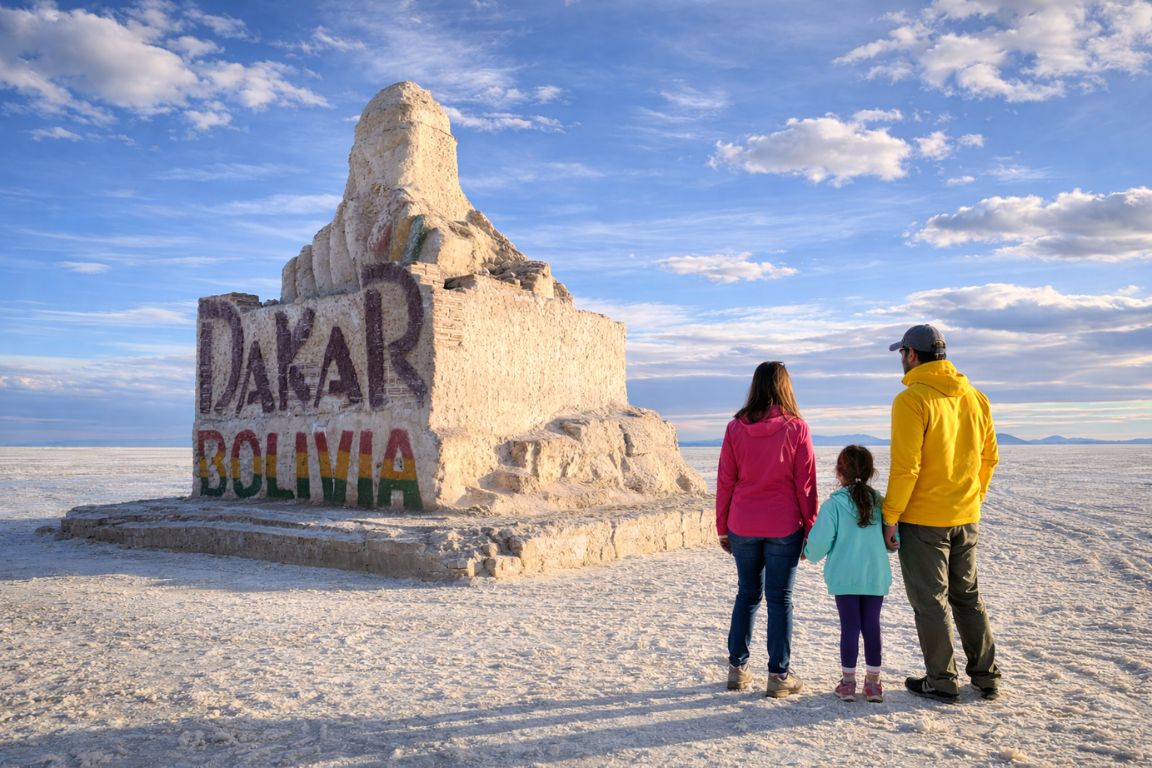 Walking freely from the jeep during tour stops is normal and expected. What’s not safe is walking far enough that you lose visual contact with the vehicle or another fixed reference point. The Salar’s surface is so uniform – white in every direction, flat to every horizon – that spatial orientation breaks down within a few hundred meters. In wet season with mirror conditions, the horizon disappears entirely and directions become meaningless. Stay within clear sight of the jeep. This is not excessive caution; it’s the difference between a 10-minute walk back and a genuine emergency.
The disorientation is hard to appreciate until you experience it. On any other landscape, you navigate by variation: the hill is to the left, the river is ahead, the road is behind. On the Salar, there is no variation. Every direction looks identical. The dry salt flat at 3,656 meters on a clear day presents you with a perfect white circle surrounding you in every direction, with a dome of deep blue sky above. Your brain keeps searching for a landmark and finding nothing. This is part of what makes the place so extraordinary and so visually powerful. It is also why experienced guides use the distant mountain peaks on the flat’s perimeter as navigation references when driving and walking – without those peaks, the flat is effectively featureless.
In wet season this becomes more extreme. When mirror conditions are good, the sky appears both above and below. There is no visible ground to stand on. The jeep, if the mirror is perfect, appears to hover. The mountain peaks on the horizon are reflected into the water, so the horizon itself shows mountains both above the waterline and below it. Walking slowly across this surface while looking around produces a physical sensation – genuinely vertiginous in a way you don’t get from photos – of having lost the ground entirely. Under these conditions, navigating 50 meters from the vehicle and then trying to find it is more disorienting than most people expect.
Wondering when the mirror happens? Check out our guide on the best time to visit Salar de Uyuni tours for the mirror effect – it’s a narrow window and timing wrong means no reflections at all.
Independent walking from Colchani toward the interior is possible but requires thought. There is a roughly 12-kilometer walk to the Dakar Monument and back. Follow the existing vehicle tracks, which are visible in dry season as compressed ruts in the crust. Don’t deviate from them. Start early so you’re never on the flat after dark. Carry more water than you think you need. Tell someone – your guesthouse, the tour operator at the Colchani entrance – that you’re going out and when to expect you back. The flat is not inherently hostile, but it’s large, featureless, and offers no shade, no water, no shelter, and no cell signal. Basic wilderness preparation applies.
What Does the Salt Crust Feel and Sound Like Underfoot?
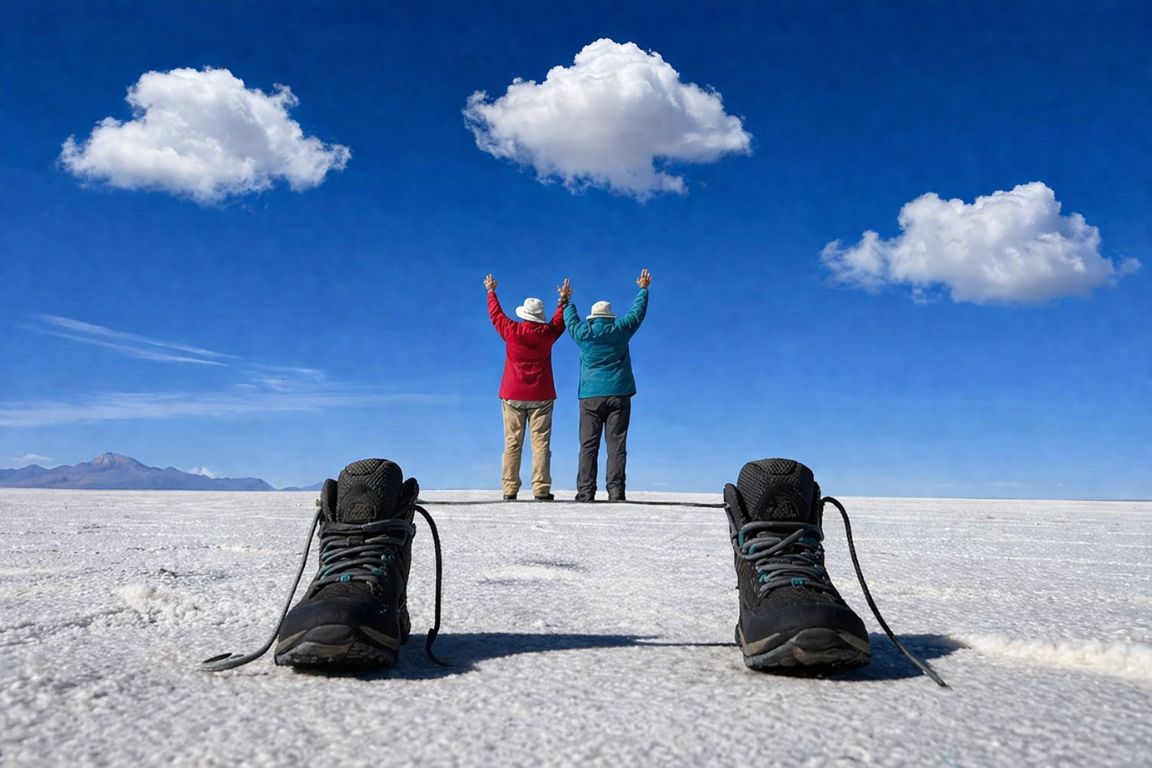 In dry season, each step produces a specific crunch – not the soft crunch of gravel or the muffled crunch of snow, but a crisp, mineral, resonant sound that carries across the flat in the silence. The crust is hard enough to walk on comfortably without sinking, firm enough to support the weight of a loaded 4×4, but thin enough at the surface to break lightly underfoot at the hexagonal ridges. The texture you feel through the sole is subtle – mostly flat with occasional resistance at the edges where one hexagonal cell meets the next. The deeper you push your foot into a soft edge, the more the crust fractures with a satisfying crack.
The sound of the Salar underfoot is one of the things travelers most frequently mention as unexpected. Not the crunch itself, but the way it sounds in context. On the flat with no other noise – no wind, no traffic, nothing – your footsteps are the only sound in the landscape. The crack of the crust. The silence between steps. The crack again. When you stop, the silence settles back immediately. Several travelers who have described the experience to us talk about becoming acutely aware of their own bodies in that quiet – heartbeat, breathing – in a way that’s unusual outside meditation. The flat forces a kind of sensory attention that most environments don’t.
The hexagonal patterns visible in dry season are more than cosmetic. Each hexagon is separated by a slightly raised ridge – the salt expanding upward as moisture in the brine below pushes the crust. Walking across a field of fresh, clean hexagons in the early morning with low-angle light is one of those specific visual experiences that photographs only partially capture. The shadows on the ridge lines shift with every minute as the sun moves. The texture looks different every 10 minutes. Photographers who arrive expecting a flat blank white surface sometimes spend more time shooting the hexagon patterns than anything else.
We’ve created a detailed Salar de Uyuni tours photography guide because shooting the salt flats is tricky – all-white landscapes blow out exposure, reflections require specific conditions, and getting perspective tricks right takes planning.
In the rainy season the texture changes to something much stranger. Instead of the mineral crunch of dry salt, each step makes a quiet splash – the sound of water displaced by your foot against the submerged salt beneath. The water is cold. The salt below it is still firm. But the sensation of walking through a surface you cannot visually distinguish from sky because it’s reflecting sky in every direction – produces a physical confusion that most people don’t anticipate. That stillness, that pause, is something that happens reliably out here and rarely happens anywhere else.
How Is Walking on the Flat Different in Wet Season vs Dry Season?
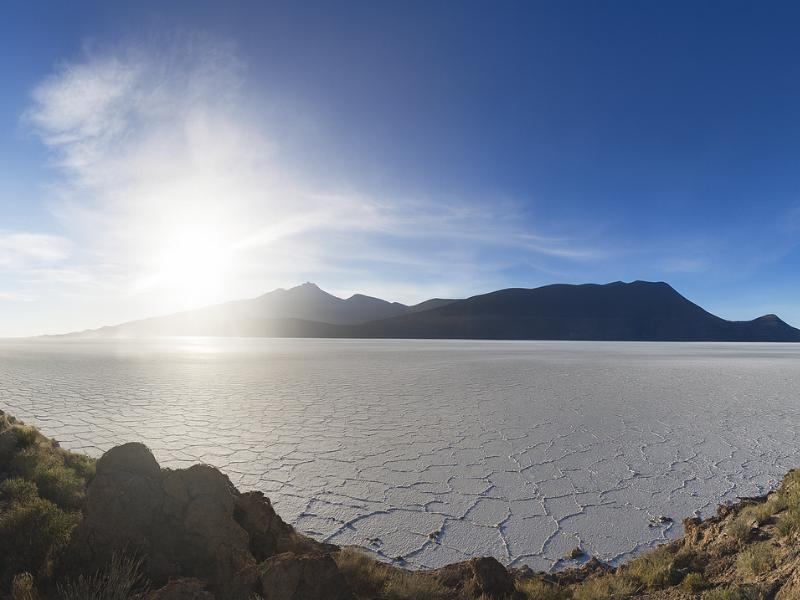
The two seasonal experiences are genuinely distinct – not variations on the same thing but fundamentally different physical realities. Dry season walking is clear-sighted, firm-footed, and disorienting primarily from scale. Wet season walking is visually overwhelming, cold around the feet, potentially deeper than expected, and produces a genuine sensory confusion that the dry flat does not. Dry season is more accessible and less complicated. Wet season is more memorable and more demanding. Both are extraordinary in ways that the other season simply cannot replicate.
In dry season, walking is straightforward. The surface is firm. You can see clearly in every direction. The main sensory challenges are the UV from above and below, the cold if you’re there at dawn, and the disorientation of having no horizon variation. The hexagonal patterns underfoot are their own visual reward. The crunch is satisfying. The silence is profound. You can walk comfortably in any direction for as far as you want to go within sight of the jeep, and the experience is clean and clear in a way that makes photography relatively simple.
In wet season, everything changes. The water temperature is a constant physical presence – cold on the feet and ankles regardless of how warm the air above feels. The mirror surface means looking down is almost as disorienting as looking up. Navigating is harder because the reflected sky removes the normal cues for direction and distance. The jeep may appear to float. The mountains on the horizon appear twice – above the waterline and below it in reflection. Every step splashes and sends rings outward across what looks like the surface of the sky. The sounds are softer. The sensation is stranger.
The footwear decision in wet season matters more than people expect. Waterproof boots let you wade comfortably for extended periods and protect your feet from the cold salt water. Going barefoot is possible and some people prefer the direct contact with the surface, but cold feet after 20 minutes is the consistent report from travelers who try it. What doesn’t work is anything in between – sandals, open trainers, light shoes because the salt water is corrosive to straps and adhesives, and wet socks on feet that are also wet from the outside is genuinely miserable at high altitude in cold air. Bring proper waterproof footwear in wet season or be committed to going barefoot.
There’s a detail about wet-season walking that no standard tour guide covers: the sound changes again at sunset. Something about the cooling air temperature and the water surface tension tightening. The splashes become slightly crisper. The silence between them deepens. It’s a small thing, but the Salar is a place where small things land differently than they do everywhere else.
If you’re flexible on dates, here’s the best time to visit Salar de Uyuni tours based on rainy season flooding, altitude cold, and which visual experience you’re actually after from the salt flats.
What Surprises First-Time Visitors Most About Walking on the Salar?
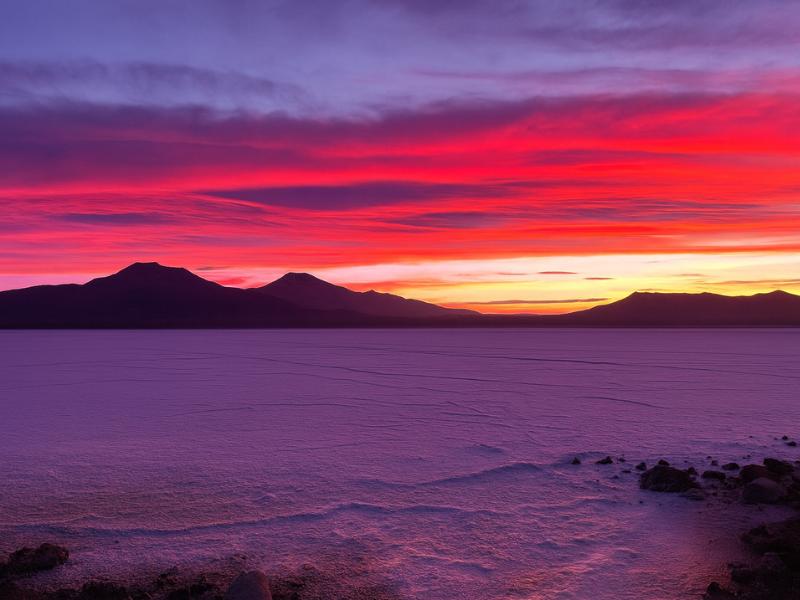
The most consistently reported surprise is the silence. People expect the visual experience – they’ve seen photos, they know the flat is white and large. What no photo conveys is walking out 50 meters from the jeep in dry season, stopping, and hearing absolutely nothing. Not quiet. Not peaceful. Silent. The second most common surprise is how quickly the disorientation builds. Within a few minutes of walking on an absolutely featureless white surface, the brain starts to lose its grip on scale and distance in ways that feel genuinely strange. And third, almost universally: the physical sensation in wet season of feeling like you’re walking on the sky, described by most travelers as something no amount of preparation made real until the moment they stepped in.
The UV surprise catches more travelers than it should, given how often it’s mentioned in travel guides. People read “bring sunglasses” and interpret it as standard travel advice. They bring their regular sunglasses. And then they spend four hours on a surface that reflects UV back at their eyes from below while it hits them from above, and their eyes ache for two days afterward. The warning about UV at the Salar is not boilerplate. It is specific and consequential. Cheap sunglasses without UV rating have caused temporary vision loss on the flat – documented, not anecdotal. Quality UV-rated eyewear is the single item not to compromise on.
The scale surprise is slower to land than the silence surprise but often hits harder. Walking on the flat, looking toward a mountain on the horizon, it appears close. You could walk there in an hour. You walk for 10 minutes and the mountain looks exactly the same size. Twenty minutes. Still the same. The flat removes all the normal visual cues – atmospheric haze, size of familiar objects, foreground variation that tell your brain how far away something is. The mountains around the Salar’s perimeter are often 30 or 40 kilometers away. They look like 15 minutes on foot. The flat is doing something to your perception that photographs cannot convey.
For travelers who visit in wet season, the surprise about the mirror is specific: they expected it to look the way it looks in photos, and when they step into it, the actual experience is different from the photo – not worse, but more physical, more confusing, and in a strange way more real. The photos flatten the experience into a pretty image. The actual sensation of standing on a surface that appears to be sky, with nothing anchoring you to a sense of up or down except your body weight, is something that happens in the body as much as in the eyes. That fear resolves immediately when they focus on something solid. But the moment of it is real, and worth knowing is coming.
First time visiting Bolivia’s salt flats? Here’s how to visit Salar de Uyuni tours so you don’t show up unprepared for the extreme altitude, basic accommodations, or tour operator quality variations.
The response is almost always the same: a pause, a look around, then quiet. Not because they’re disappointed because they’re trying to take in something that resists being taken in quickly.
Planning Takeaways For Your Trip
Choose the itinerary around the experience you want, the time you have and the actual services included. Check the guide language, transport, overnight arrangements and extra costs on the selected listing.
Frequently Asked Questions
Is it safe to walk on the salt crust?
Yes. The salt crust at the Salar de Uyuni is several meters thick at the center and can bear the weight of loaded 4×4 vehicles without flexing. Walk only where the guide has assessed the surface; crust thickness and nearby holes vary. The main safety consideration is not the surface itself but navigation – the flat’s featureless expanse makes it easy to become disoriented if you walk far from your group or vehicle without landmarks.
Do you need waterproof boots for wet season?
Strongly recommended. The shallow water in wet season is cold (10-15°C) and salt water is corrosive to shoes, straps, and adhesives. Waterproof boots protect your feet from cold and keep your footwear intact. Going barefoot is an option for short sessions. Regular shoes, sandals, and sneakers get wet, stay wet, and deteriorate quickly in the salt water.
Can you walk independently on the Salar without a tour?
Yes. No permit is required and the flat is not fenced. From Colchani village, you can walk onto the flat independently. The Dakar Monument is roughly 12 kilometers from the village edge – a 4 to 5 hour round trip on flat ground. Never walk alone, never walk after dark, and follow existing vehicle tracks. The flat offers no shade, water, or shelter and cell signal is absent. Treat it as a remote wilderness walk.
What does walking on the Salar de Uyuni smell like?
In dry season: a faint clean mineral smell – dry, slightly saline, not unpleasant. In wet season: a slightly more pronounced brine smell, still mild. Neither is strong. The Salar has very little organic content and the high altitude dry air means smells are generally muted. Most travelers describe it as neutral to slightly mineral, nothing like the beach or the sea.
Is walking on the Salar de Uyuni difficult at altitude?
The walking itself is easy – the surface is flat and firm. Altitude is the limiting factor for some travelers. At 3,656 meters, exertion that would be trivial at sea level can cause breathlessness. Walk slowly, especially initially. Stop if you feel dizzy or headachy. Don’t push through altitude symptoms – the guide can manage pace and can return to the jeep. Acclimatizing for one to two days in Uyuni town before the flat visit significantly reduces altitude walking difficulty.
What is the most common mistake people make when walking on the Salar?
Wearing inadequate sunglasses. The white surface adds reflected UV to direct sunlight exposure. People who bring regular fashion sunglasses or cheap non-UV glasses consistently report eye discomfort and aching that lasts for a day or two after the flat. Quality UV-rated eyewear is the single most important item to get right before stepping onto the salt.
Choose Your Uyuni Experience
Choose the itinerary that fits, then check your travel date before arranging onward transport or separate rooms.
Initial editorial recommendation. No preferences have been entered.
Salt Flats And Sunset Day Trip
A full salt-flat day with lunch, an English-speaking guide and sunset.
Rain boots included; Incahuasi entry costs extra. Colchani hotel pickup has a surcharge.Scheduled dates load automatically. Availability and final price are confirmed on Viator.
No verified tour meets all of these preferences. Adjust the choices below or reset.
Compare Options And Tailor Your Choice
- Private Salt-Flat Day With Sunset (8 hours): A private salt-flat day with an English-speaking guide, Uyuni pickup and a sunset finish. Booking ages 12–80. Non-refundable. Listed admission inclusions conflict with itinerary exclusions; confirm the full quote and vehicle access.
- Salt-Flat Highlights With Lunch (8 hours): Tour the salt flats and Colchani by shared jeep, with lunch and Uyuni hotel pickup. Spanish-speaking driver. Island admission extra. Not suitable for mobility impairments or wheelchair users; ages not verified.
- Two Days On The Salt Flats (2 days): An overnight salt-flat route with sunset, a hostel stay and an English-speaking driver-guide. Park and museum fees, water and snacks cost extra. Mirror reflections depend on surface water.
Compare Your Complete Quotes
Use the same currency for both totals, including transport, rooms, meals and fees for your whole party.
Affiliate links: we may earn a commission when you book, at no extra cost to you.