Can You Visit Uyuni Without a Tour?
Can you visit Salar de Uyuni without a tour? Yes, but only a small part. Learn what you can see independently, what you’ll miss, and whether it’s worth skipping the full 3-day experience.
Independent access and a guided circuit offer different reach. Compare the transport, meal and route coverage you would actually use.
Last updated: September 9, 2026
Yes, but with real limits that most travelers underestimate. You can reach the edge of the salt flat on foot or by local bus from Colchani (20 minutes and about 5 BOB from Uyuni town), walk freely onto the crust, and spend a full afternoon exploring the area near the Dakar Monument and the salt piles. That experience is genuine and free. What you can’t access without a jeep and guide: Isla Incahuasi, Laguna Colorada, the geyser field at Sol de Mañana, the flamingo lagoons, or any of the Eduardo Avaroa Reserve in Southwest Bolivia. The independent option covers roughly 5% of what a 3-day tour covers. For the salt flat itself – just the flat, the hexagons, the silence, the photos – it’s completely viable. For the broader Uyuni circuit, it isn’t.
The full-day salt-flat tour adds guided transport, lunch and sunset to a day that starts and finishes in Uyuni. Check Uyuni Sunset Day-Trip Dates
Independent vs Tour at Uyuni: What You Actually Get
| Walk on the salt flat | Yes | Yes | Yes |
| Hexagonal crust patterns | Yes (near Colchani edge) | Yes | Yes |
| Perspective photos | Yes (with your own props) | Yes | Yes |
| Mirror effect (wet season) | Yes (from flat edge) | Yes | Yes |
| Isla Incahuasi (Cactus Island) | No | Yes (~80km from edge) | Yes |
| Train Cemetery | Yes (taxi ~10 BOB) | Yes | Yes |
| Sunset on the flat | Yes if bus timing works | Yes | Yes |
| Laguna Colorada (flamingos) | No | No | Yes |
| Sol de Mañana geysers | No | No | Yes |
| Laguna Verde, Siloli Desert | No | No | Yes |
| Salt hotel accommodation | Book independently (Colchani) | Usually included | Usually included |
| Approximate cost | $5–15 USD total | $35–60 USD per person | $150–280 USD per person |
Is It Actually Possible to Visit the Salar de Uyuni Without a Tour?
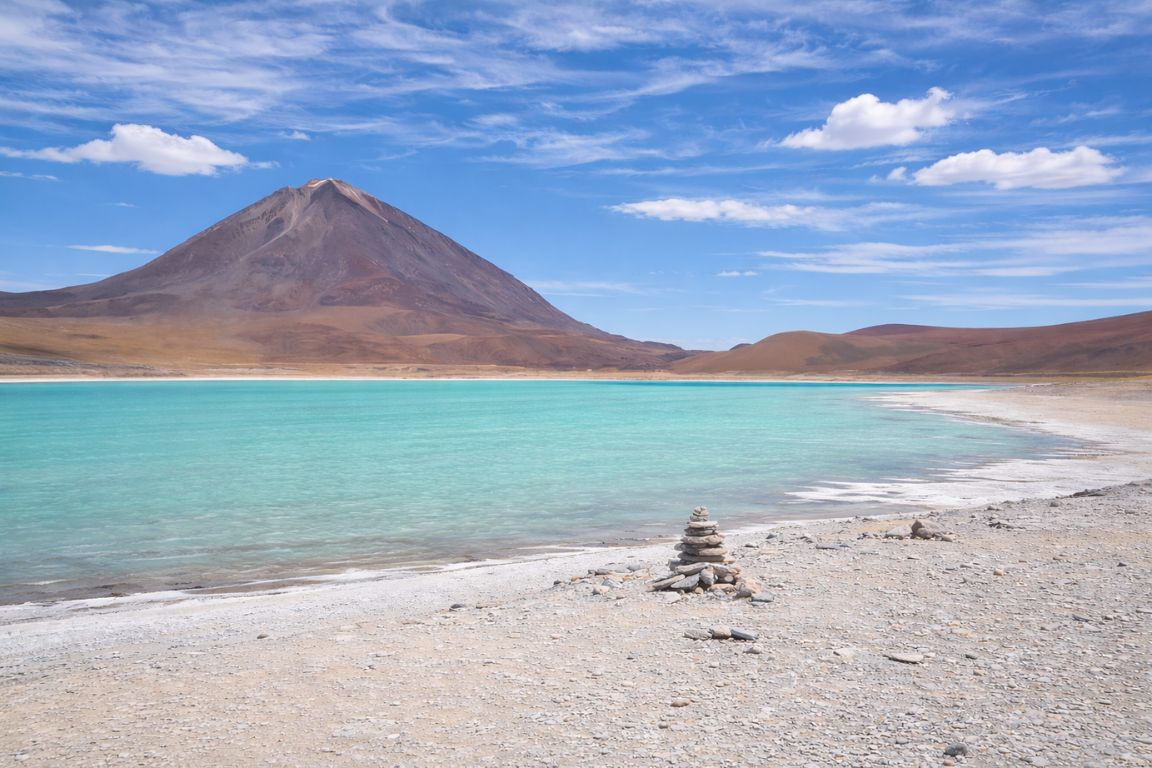 Yes. No permit is required to enter the Salar de Uyuni and there are no fences, checkpoints, or official barriers preventing independent access. You can take a local bus from Uyuni town to Colchani – the salt-mining village on the flat’s edge – for about 5 BOB, walk onto the salt crust from there, and spend as long as you want. What this gets you is the genuine experience of standing on the world’s largest salt flat: the hexagonal patterns, the silence, the white horizon in every direction, the mirror effect in wet season. What it doesn’t get you is any of the destinations that require a 4×4 and several hours of driving across unmarked terrain.
The distinction matters because the internet treats “visiting Uyuni without a tour” as a binary. You either do a 3-day jeep tour or you miss everything. Neither is accurate. The salt flat itself – the visual experience, the photography, the walking, the disorientation – is fully accessible independently from Colchani. The broader Uyuni circuit – Laguna Colorada, Sol de Mañana, Laguna Verde, the Eduardo Avaroa Reserve, the flamingo lagoons and the Salvador Dalí Desert – is not. Those destinations are 200 kilometers and several hours of unmarked driving into Southwest Bolivia. They require a 4×4, a driver who knows the terrain, fuel reserves, and emergency readiness. No public transport goes there.
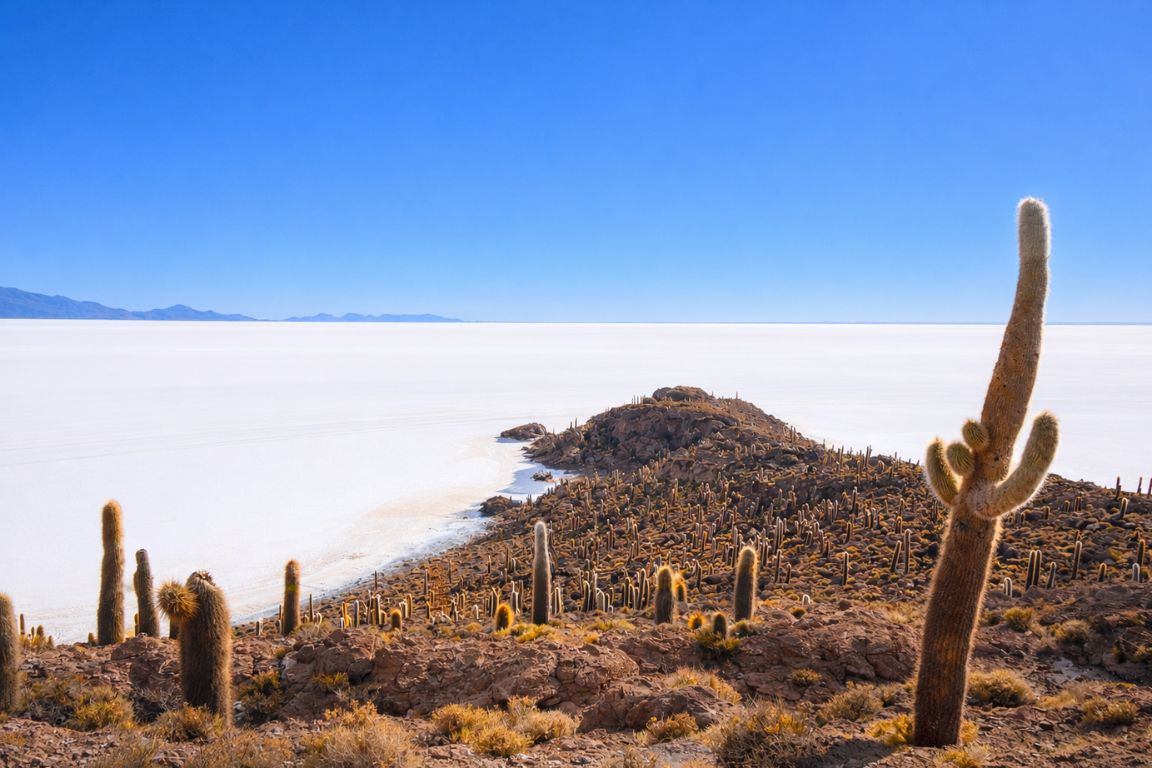
There’s a useful middle ground that doesn’t come up often enough: the 1-day tour. For travelers who want the salt flat experience but have no interest in the multi-day circuit, a 1-day tour from Uyuni covers the train cemetery, Colchani, a drive onto the flat, Isla Incahuasi (Cactus Island), perspective photography, and a sunset on the salt – all in one day, for around $35 to $60 USD per person. For most travelers asking whether they need a full tour, a 1-day tour is the honest answer: not the 3-day circuit, but also not the fully independent bus-and-walk approach.
How Do You Get to the Salt Flat Independently from Uyuni Town?
 The simplest independent route is a local bus or collectivo from Uyuni toward Oruro, asking the driver to drop you at Colchani – a 20-minute journey costing around 5 BOB (under $1 USD). From Colchani, the salt flat begins immediately at the village edge. You walk in. Alternatively, the town of Llica on the far (western) side of the flat is served by a daily bus from Uyuni that actually drives across the salt, departing around midday – if you want to ride across the flat rather than walk from an edge, this is the most unusual and memorable independent option.
Colchani sits about 22 kilometers north of Uyuni town on the main road toward Oruro. The village is the center of the local salt-harvesting cooperative – the distinctive pyramid-shaped salt mounds on the flat’s edge are the cooperative’s drying piles. Colchani also has a small salt museum (5 BOB entry) and a souvenir market that operates when tour groups stop through. There are several basic hostels in the village if you want to spend the night near the flat, which is a real option: staying in Colchani gives you access to sunrise and sunset on the flat without coordinating transport from Uyuni town.
We’ve mapped out where to stay in Salar de Uyuni tours because expectations need adjusting – Uyuni town is rough with limited quality hotels, and even salt hotels are more novelty than comfort at this altitude.
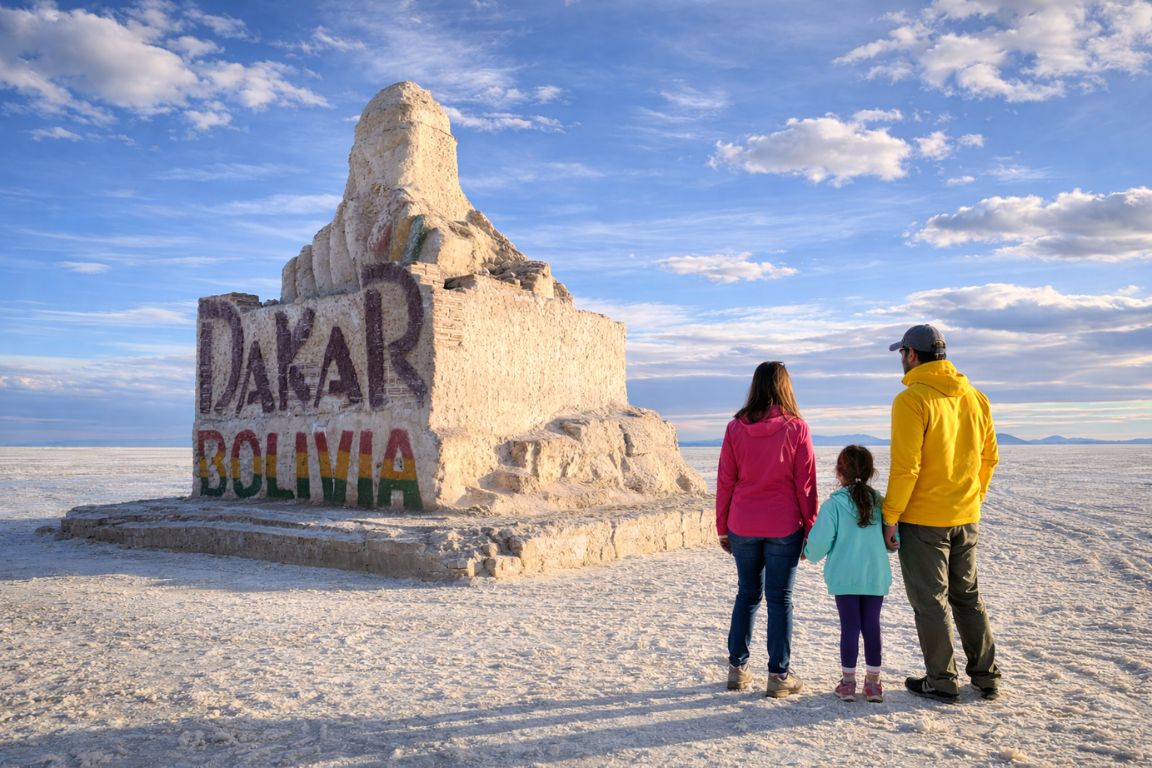
From Colchani, the edge of the crust begins a short walk from the main road. There are no gates or fences. You walk onto the salt. The Dakar Monument – a salt-brick tribute to the Dakar Rally that once passed through the area – stands a few kilometers onto the flat and is reachable on foot in about 45 minutes. The salt piles, the salt hotels along the Colchani edge, and the flat itself for photography and walking are all accessible without any vehicle. The round trip from Colchani to the Dakar Monument is roughly 8 to 10 kilometers on flat, firm ground – easy walking in dry season, shallow wading in wet season.
The Llica bus is a more adventurous option that few travelers know about. A daily service departs Uyuni around midday, crosses the flat to reach the town of Llica on the opposite shore – a journey of roughly three hours across salt. Llica is a small Bolivian town with basic accommodation, completely untouristed, and sits on the edge of the flat with views of Tunupa Volcano. The bus crosses the flat during the day, which means you see the flat from the inside rather than just from its edge. You can stay overnight in Llica and catch a return service the following day. This is about as off-the-beaten-path as Uyuni gets.
Need help with logistics? Check out our breakdown on how to visit Salar de Uyuni tours – from choosing between multi-day operators to handling 3,600+ meter elevation.
What Can You See and Do Without a Guide or Jeep?
 Walking independently from Colchani, you have access to the salt flat itself, the salt piles and cooperative area, the Dakar Monument and flag plaza, the salt hotels along the flat’s edge (including the abandoned Playa Blanca hotel), and a full afternoon or morning on the white crust for photography, perspective shots, and the walking experience. In wet season you get the mirror effect from the flat’s edge. The Train Cemetery just outside Uyuni is also independently accessible – a taxi from the town square costs about 10 BOB and gets you there before the jeep tour crowds arrive in the morning.
The flat near Colchani is fully adequate for every main type of photography. Perspective shots work anywhere on the flat’s surface where the horizon is clear – you don’t need to be 80 kilometers in at Isla Incahuasi to get them. Mirror photos in wet season are available from the flat’s edge near Colchani the same as anywhere else on the flat. Hexagonal crust patterns are visible across the entire dry-season surface. Sunrise and sunset are experienced on the open flat rather than from a jeep window. Independently, you have more control over your time – you can stay at the perspective photo spot for an extra hour without a driver waiting, and you can position yourself exactly where you want to be for light without the group dynamic of a shared tour.
What works particularly well independently: arriving at the flat’s edge in the pre-dawn dark and being there for sunrise without another person in sight. Salt hotel accommodation in Colchani is bookable independently. Spending a night there and walking onto the flat at 5:30am with your camera is a genuinely extraordinary experience – quieter and more personal than any tour sunrise session, where six other people are jostling for the same frame. If the salt flat itself – not the circuit – is the point of your visit, independent access with a Colchani overnight achieves something tours often don’t: completely solitary time on the world’s largest salt flat.
The Train Cemetery near Uyuni town is worth visiting early and independently. Most 1-day tours stop there mid-morning when it’s overrun with jeep groups. Going by taxi from Uyuni before 8am, or in the late afternoon after tours have left, gives you the rusting locomotives and abandoned rail cars to yourself. Admission is free and the site takes 30 to 45 minutes. The salt-encrusted machinery, the open sky, and the eerie quiet of it at off-peak hours is one of Uyuni’s genuinely underrated independent experiences.
If you’re going for the photos, here’s our Salar de Uyuni tours photography guide so you understand camera settings for salt flat brightness, when to shoot for mirrors, and how to set up those forced perspective tricks.
What Are the Honest Limitations of Going Independent at Uyuni?
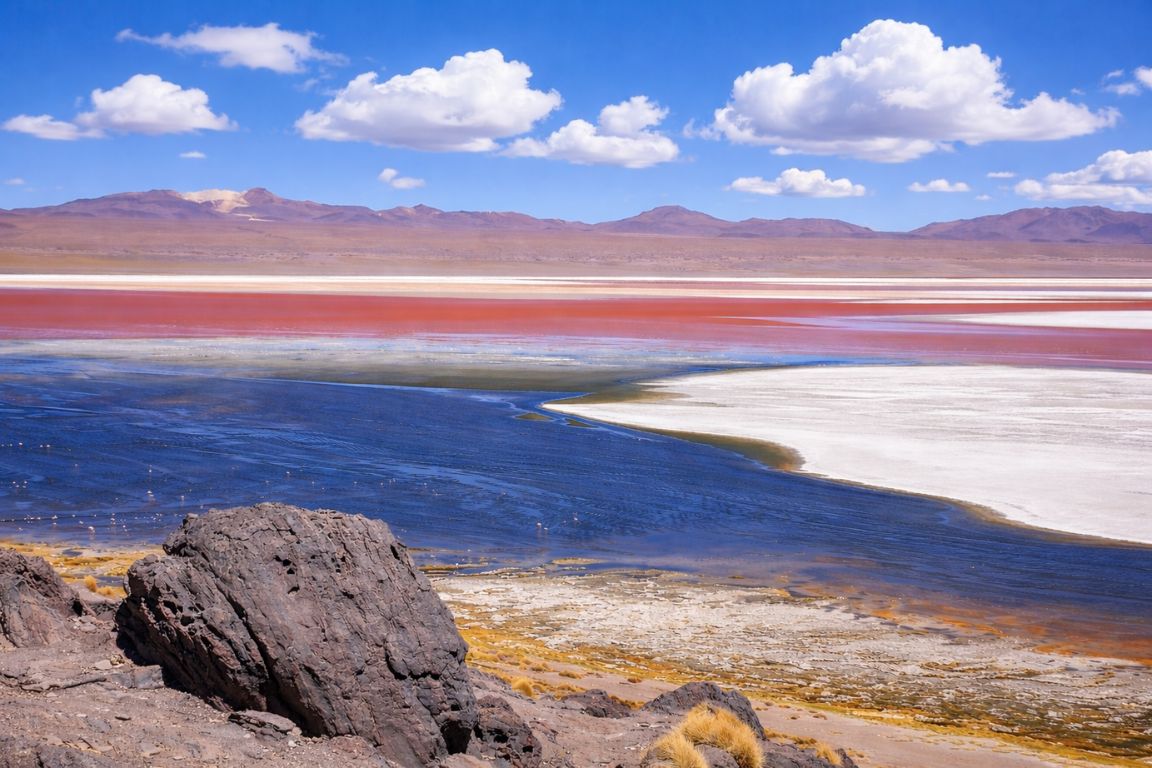 The Salar de Uyuni itself is accessible independently. The Uyuni circuit – the multi-day route through Southwest Bolivia – is not viable without a guided 4×4. The destinations that consistently dominate photos and traveler reviews of Uyuni are not the salt flat: they’re Laguna Colorada with its red mineral water and thousands of flamingos, the Sol de Mañana geyser field at 5,000 meters, the Salvador Dalí Desert, Laguna Verde against its volcanic backdrop. None of these are reachable without a jeep and a driver who knows the unmarked roads. If you’ve been drawn to Uyuni by those images and plan to skip the circuit, you will leave having seen something extraordinary but not the things that made you want to come.
Navigation is the core limitation that makes the full circuit unreachable independently. The Salar has no roads, no markings, no signage. Jeep drivers navigate by distant mountain peaks and by knowing which entry points are solid and which are soft salt that will sink a vehicle. Beyond the flat itself, the route to the colored lagoons is hundreds of kilometers of unmarked desert track through extreme altitude, with no fuel, no phone signal, and no services of any kind. Getting lost on these roads is not a sightseeing detour – it is a survival situation. Even experienced off-road drivers from well-traveled countries have become seriously disoriented in the Southwest Bolivia circuit. It requires local knowledge that cannot be substituted by a GPS app.
Need altitude guidance? Our Salar de Uyuni tours altitude and preparation guide covers how to acclimatize properly, what symptoms to watch for, and what medications and gear actually help at extreme elevation.
Renting a car independently is theoretically possible but practically difficult. There are no car rental companies in Uyuni town – the jeeps belong to tour operators who use contracted drivers. Rentals must be arranged in La Paz or Sucre. The Biz Rent a Car agency in Sucre is the most commonly cited option for travelers who have done it. Expect to pay around $100 USD per day for a 4×4, plus fuel (which in Bolivia requires carrying jerry cans given the ongoing fuel shortage and long queues at pumps). Most rental companies prohibit taking vehicles onto the wet salt flat due to salt corrosion risk – some allow dry season driving with conditions. The total cost for a solo driver doing the 3-day circuit with a rented vehicle frequently exceeds what a private tour costs for a group. It makes economic sense only for overlanders with their own vehicles or for groups of 5 or more splitting the rental cost.
Bolivia’s ongoing fuel shortage is a real operational constraint for anyone going independently in 2026. Tour operators manage this through their supply networks and priority arrangements at fuel stations. Independent drivers face queues that locals report lasting 2 to 3 days at some pumps. Planning an independent drive through Southwest Bolivia without factoring in fuel logistics is a serious preparation gap.
How Does the Cost of Going Independent Compare to Booking a Tour?
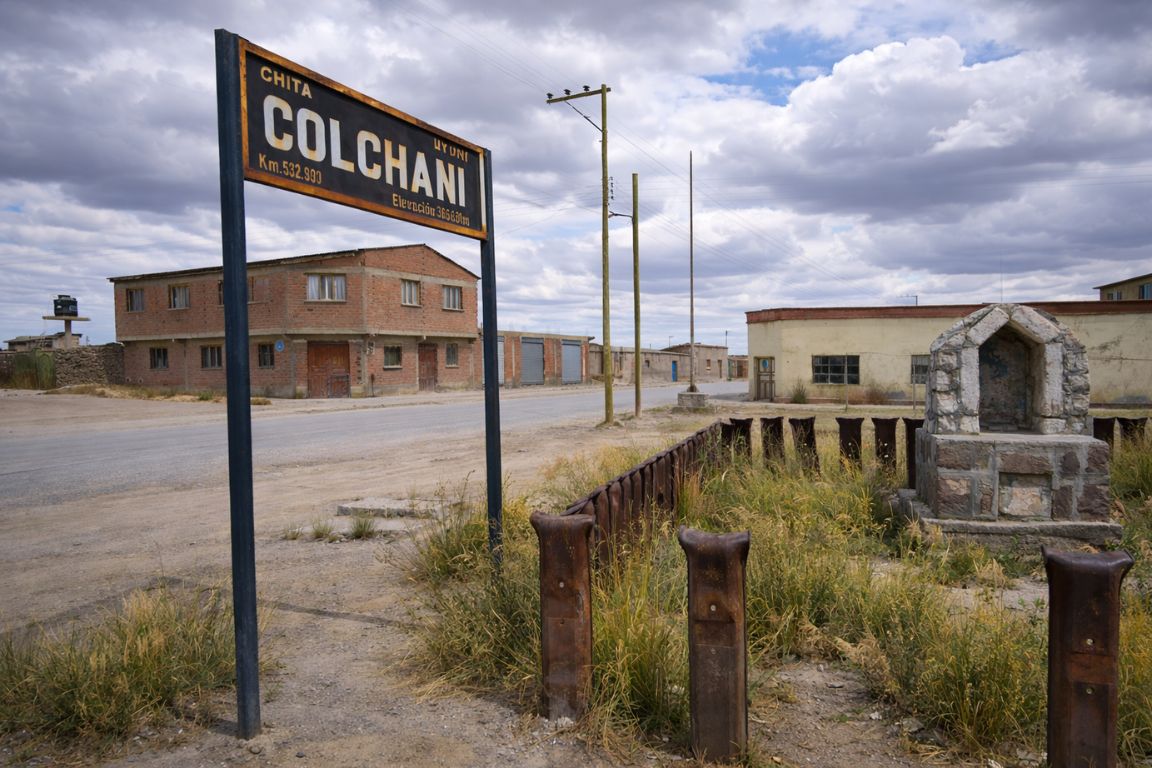 For the salt flat only, independent is dramatically cheaper. Bus to Colchani (5 BOB), walk onto the flat, bus back – total transport cost under $1 USD. Add a night at a Colchani hostel ($15 to $35 USD) and your food, and a two-day independent salt flat visit costs under $60 USD per person. A 1-day tour covering more ground – including Isla Incahuasi, jeep transport, lunch and guide – runs $35 to $60 USD. A 3-day tour covering the full circuit costs $150 to $280 USD per person for shared group tours. For solo travelers, independent is cheapest for the flat; a shared tour is cheapest for the circuit.
The calculation changes significantly based on group size. Budget group tours seat six people per jeep. For a group of five or six traveling together, the per-person cost of a private tour (jeep, driver, food, accommodation) is often comparable to a shared group tour. The flexibility of a private tour – your own timing, your own pace, the ability to stay at a viewpoint until you’ve got the shot – is worth real money to photographers and travelers who know what they want. For two people, private tours are significantly more expensive per person than shared; for five or six, they can approach parity.
| Bus + walk from Colchani | Under $1 USD transport | Salt flat edge, walking, photography | Pure budget; or adding to an existing Uyuni stop |
| Colchani overnight independent | $20-40 USD total | Sunrise/sunset on flat, full day walking | Photographers; travelers wanting time alone on the flat |
| 1-day shared group tour | $35-60 USD | Train cemetery, Colchani, flat, Incahuasi, sunset | Limited time; salt flat focus without multi-day circuit |
| 3-day shared group tour | $150-280 USD | Full circuit including lagoons, geysers, flamingos | Most travelers; best value for the full experience |
| 3-day private tour (group of 5-6) | $200-350 USD pp | Full circuit, private vehicle and guide | Groups who want flexibility and photography control |
| Rented 4×4 self-drive | $100+/day rental + fuel | Anywhere you can navigate to | Overlanders with own vehicles; advanced drivers with Spanish and navigation skills |
Historical estimate; confirm the current fee. Tour prices vary by operator quality, group size, season, and whether accommodation is included. The budget end of the market is real – $150 USD 3-day tours exist but vehicle maintenance and guide experience at that price point is variable. The middle tier ($180 to $220 USD) consistently represents the best value for most travelers.
We’ve detailed walking on the salt flats of Salar de Uyuni tours because it’s stranger than you’d think – the hexagonal patterns crack under your feet differently in wet versus dry season, and altitude affects how much walking you can handle.
What Do You Need to Bring If You’re Going Solo?
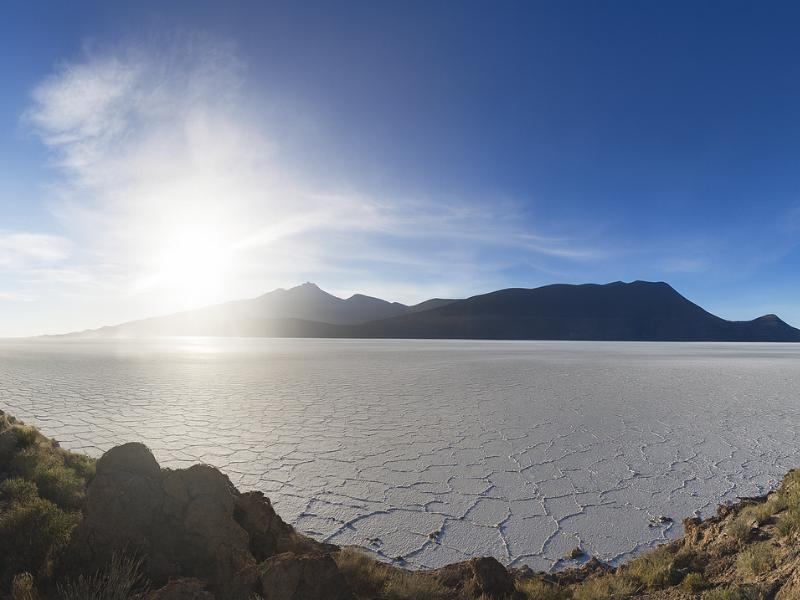
Independent access to the salt flat near Colchani requires: UV-rated sunglasses (non-negotiable), high-SPF sunscreen applied every two hours, at least two liters of water for a half-day walk and more for a full day, food (no services on the flat itself), warm layers for the morning and evening, and waterproof boots if visiting in wet season. Bring props for perspective photos – toy figures, a bottle, whatever you want to use because unlike on a tour, nobody is handing them to you. Tell your accommodation where you’re going and when to expect you back. Never walk onto the flat alone after sunset.
Navigation deserves specific attention for independent walkers. The flat near Colchani is manageable – you can see the village from a considerable distance and the road back is visible if you maintain direction. But the flat’s disorienting quality is real: once you’ve walked 30 minutes in one direction, the village shrinks to a dot and the horizon looks identical in every direction. Keep a GPS point marked at the Colchani entrance before you walk in. If visiting in wet season with mirror conditions, the disorientation intensifies significantly – the horizon disappears entirely and visual navigation becomes unreliable. The Dakar Monument is reachable from Colchani in about 45 minutes walking in a roughly straight line, but download an offline map (Maps.me with Bolivia downloaded works well) and mark your return point before leaving the village edge.
Salt damage to footwear in wet season is faster and more complete than most people expect. Salt water destroys adhesives, fabric, and rubber soles within a single wading session if gear isn’t rinsed promptly. Bring waterproof boots or be committed to going barefoot. Rinse anything that contacts salt water before it dries – once salt crystals form in seams and fabric, the damage compounds. This applies to camera gear too: wipe down every surface after any time on the wet flat.
Not sure what to pack? I’ve broken down what to wear in Salar de Uyuni tours so you’re prepared for blinding sun on white salt, freezing night temperatures, and brutal UV exposure at 3,600+ meters.
Who Should Go Independent and Who Should Just Book a Tour?
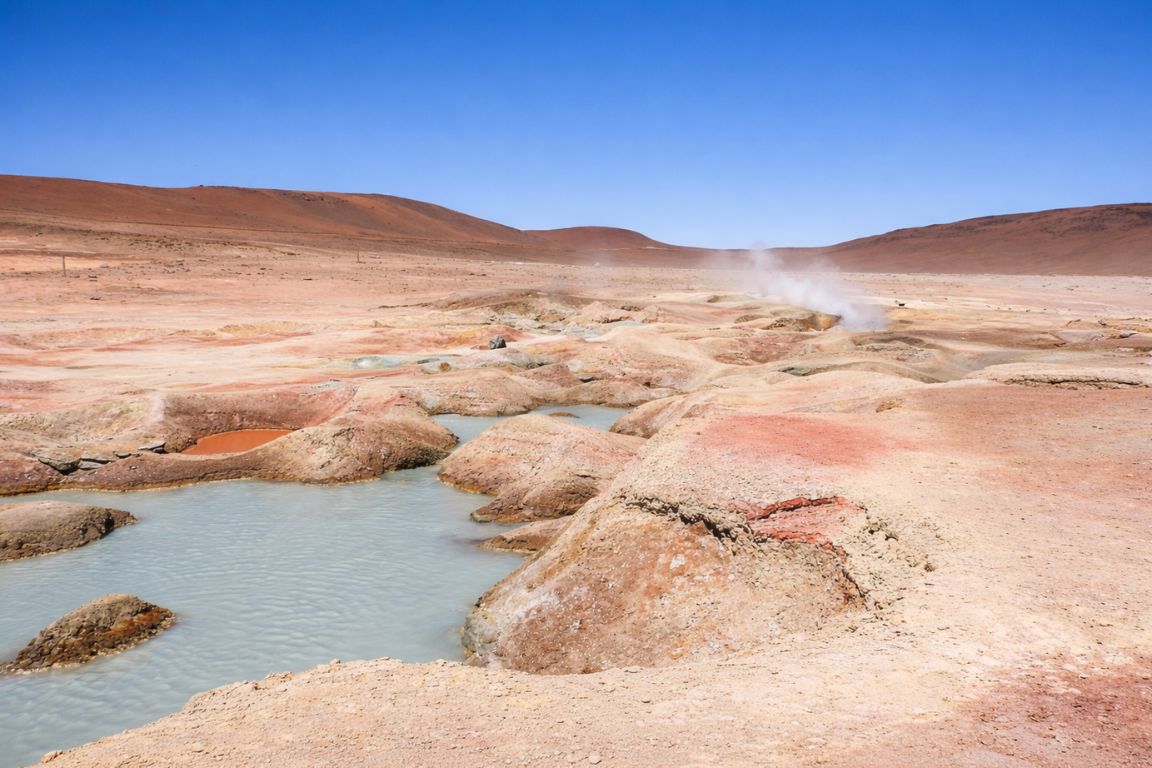 Go independent if: you have 4 hours or less in Uyuni, your primary interest is the salt flat itself rather than the Southwest Bolivia circuit, you’re traveling solo on a very tight budget, or you specifically want time alone on the flat without a group dynamic. Book at least a 1-day tour if: you want to reach Isla Incahuasi, you want a driver who knows the best perspective photo spots, or you want a guide to manage the logistics. Book a 3-day tour if: you want to see Laguna Colorada, the flamingo lagoons, Sol de Mañana, or anything else in Southwest Bolivia because none of that is reachable any other way.
The traveler who benefits most from going independent is usually one of two types. First: the person arriving in Uyuni on a bus at noon who wants to see the flat before catching an evening bus onward. A taxi to the Train Cemetery in the morning, a local bus to Colchani at noon, a few hours walking on the flat, and a return bus from Colchani to Uyuni by 5pm – this covers the essential experience without booking anything. Second: the photographer who wants the flat completely to themselves at dawn. Staying overnight in Colchani, walking onto the flat at 5am with a tripod, and having the sunrise mirror shot to themselves before any tour jeep arrives is something a standard group tour simply cannot provide.
The traveler who should not try to go independent is anyone whose reason for coming to Uyuni involves Laguna Colorada, flamingos, or the geyser field which describes the majority of people whose Uyuni photos end up on Instagram. Those images come from the 3-day circuit into Southwest Bolivia, not from the salt flat edge near Colchani. There’s no independent route to those destinations that doesn’t involve either a rented 4×4 with substantial preparation or joining a tour. Trying to reach Laguna Colorada by public bus is not possible – there are no buses on those roads.
For most first-time visitors to Uyuni, the honest recommendation is a 1-day tour minimum. Not because the flat is inaccessible independently, but because a 1-day tour costs $35 to $60 USD, includes Isla Incahuasi, delivers you to the best perspective photo spots, feeds you lunch, and gets you back to Uyuni by sunset – all without the logistics of figuring out buses, navigation, and on-flat walking alone. The independent option is best for travelers who’ve thought through exactly what they want and are comfortable in remote, navigational environments.
Planning Takeaways For Your Trip
Choose the itinerary around the experience you want, the time you have and the actual services included. Check the guide language, transport, overnight arrangements and extra costs on the selected listing.
Frequently Asked Questions
Can I walk onto the Salar de Uyuni from Colchani for free?
Yes. There is no entry fee for the salt flat itself at the Colchani access point. You pay the bus fare (around 5 BOB) from Uyuni and walk onto the crust freely. Isla Incahuasi, located about 80km across the flat, charges a 30 BOB entry fee but reaching it requires a jeep, so it’s not practically accessible independently on foot.
Is there a bus that crosses the Salar de Uyuni?
Yes. A daily public bus from Uyuni crosses the flat to reach the town of Llica on the opposite side. It departs around midday from Uyuni’s Avenida Arce bus street (Trans Zulema or Trans Asunción). The crossing takes about three hours. Llica has basic accommodation. This is the most unusual independent transport option available and one of the few ways to experience the interior of the flat without a tour jeep.
Can I rent a car and drive the Uyuni circuit independently?
Theoretically yes, but it’s genuinely challenging. Car rentals must be arranged in Sucre or La Paz – there are none in Uyuni. Expect around $100 USD per day for a 4×4. Most companies prohibit wet-season flat access. Fuel availability is constrained by Bolivia’s ongoing shortage. The Southwest Bolivia circuit requires navigation skills, off-road experience, Spanish language ability, and mechanical self-sufficiency. For a group of five or six splitting costs, a private guided tour is often comparable in price with far less logistical burden.
What does a 1-day Uyuni tour include?
A standard 1-day tour from Uyuni (approximately $35 to $60 USD) covers: Train Cemetery, Colchani village and salt museum, a drive onto the flat, perspective photography session, Isla Incahuasi (Cactus Island, with entry fee usually included), lunch, and a sunset viewing on the flat. The tour runs roughly 10am to 6pm and starts and ends in Uyuni. It includes jeep transport, driver, and basic guiding – everything except the Laguna Colorada circuit, which requires the multi-day tour.
What do you miss if you only visit the salt flat and skip the 3-day tour?
The Laguna Colorada and the surrounding flamingo lagoons, the Sol de Mañana geyser field at 5,000 meters, Laguna Verde, the Salvador Dalí Desert, the Arbol de Piedra rock formation, vicuñas and Andean foxes across the Altiplano, and the Eduardo Avaroa National Reserve. These are in Southwest Bolivia, 200 or more kilometers from the salt flat edge, and require jeep transport on unmarked roads. They’re also what most travelers who “fall in love with Uyuni” describe as their actual highlight.
Can I see the mirror effect independently?
Yes. The mirror effect occurs across the entire flooded salt flat during wet season (December to April). From Colchani, in good conditions, you walk onto a surface with an inch or two of water and the sky reflects below your feet. The effect is not location-specific – it happens anywhere on the flat with still water. Independent visitors at Colchani can experience the mirror in the same conditions as tour participants anywhere else on the flat.
Choose Your Uyuni Experience
Choose the itinerary that fits, then check your travel date before arranging onward transport or separate rooms.
Initial editorial recommendation. No preferences have been entered.
Salt Flats And Sunset Day Trip
A full salt-flat day with lunch, an English-speaking guide and sunset.
Rain boots included; Incahuasi entry costs extra. Colchani hotel pickup has a surcharge.Scheduled dates load automatically. Availability and final price are confirmed on Viator.
No verified tour meets all of these preferences. Adjust the choices below or reset.
Compare Options And Tailor Your Choice
- Private Salt-Flat Day With Sunset (8 hours): A private salt-flat day with an English-speaking guide, Uyuni pickup and a sunset finish. Booking ages 12–80. Non-refundable. Listed admission inclusions conflict with itinerary exclusions; confirm the full quote and vehicle access.
- Salt-Flat Highlights With Lunch (8 hours): Tour the salt flats and Colchani by shared jeep, with lunch and Uyuni hotel pickup. Spanish-speaking driver. Island admission extra. Not suitable for mobility impairments or wheelchair users; ages not verified.
- Salt Flats And Colored Lagoons (3 days): Combine the salt flats with colored lagoons, meals and an English-speaking driver-guide. Lodging descriptions conflict on private bathrooms; confirm both nights. Park fees and the optional Chile transfer cost extra.
Compare Your Complete Quotes
Use the same currency for both totals, including transport, rooms, meals and fees for your whole party.
Affiliate links: we may earn a commission when you book, at no extra cost to you.