What to Wear in Uyuni
What to wear in Uyuni? You’ll face extreme sun and freezing nights. Learn the 3-layer system, must-have gear (UV protection), and the one item travelers regret not packing.
Pack for the route you book: a day on the salar, four evening hours and two cold nights on the lagoon circuit need different kit.
Last updated: September 9, 2026
Clothing at the Salar de Uyuni solves two opposite problems at once: intense UV radiation reflecting off white salt from above and below during the day, and temperatures that drop to -15°C on the 3-day circuit at night. The answer is a three-layer system – thermal base, mid-layer fleece, windproof outer – plus UV400 sunglasses that are non-negotiable, SPF 50+ sunscreen reapplied every two hours, and waterproof boots in wet season or sturdy closed shoes in dry season. Cotton is the enemy at altitude. The item most often left at home and most regretted on the circuit is the sleeping bag liner for night two near Laguna Colorada. Pack a swimsuit for the Polques hot springs on day three.
For the full circuit, the three-day tour arranges transport, meals and lodging; confirm bedding and rental equipment before packing. Check Three-Day Uyuni Dates
What to Wear in Uyuni: Quick Reference by Day and Situation
| Salt flat midday (dry season) | 10-20°C | Thermal base + mid-layer; remove outer if warm; UV400 sunglasses, SPF 50+, hat | UV from above and reflected below; sunburn and eye damage within hours |
| Salt flat midday (wet season) | 12-18°C | Waterproof outer layer essential; waterproof boots; same UV protection | Saltwater ruins regular shoes permanently; feet cold and soaked without waterproofing |
| Evening/sunset on the flat | Drops fast below 10°C | All three layers on; gloves, hat, scarf for wind | Temperature drops 10°C in 30 minutes after sunset at altitude |
| Salt hotel (night 1, ~3,700m) | Varies; often cold inside | Thermal base to sleep in; sleeping bag liner recommended | Salt hotels have minimal heating; sleeping cold affects next-day alertness |
| Laguna Colorada area (night 2, ~4,300m) | -10°C to -15°C outside | Full thermal system; sleeping bag liner non-negotiable; headlamp for bathroom runs | Most travelers are unprepared for how cold night 2 actually gets |
| Sol de Mañana geysers (day 3, 5,000m, 5am) | -5°C to -10°C with wind | Everything on before stepping out of jeep: all layers, gloves, hat, scarf | Highest and coldest point of the circuit; wind amplifies cold severely |
| Polques hot springs (day 3) | ~10°C air; ~30°C water | Swimsuit under clothes; towel in daypack; flip flops for changing area | Most forgotten item; no swimsuit means missing one of the circuit’s best moments |
Why Is Clothing So Important at the Salar de Uyuni?
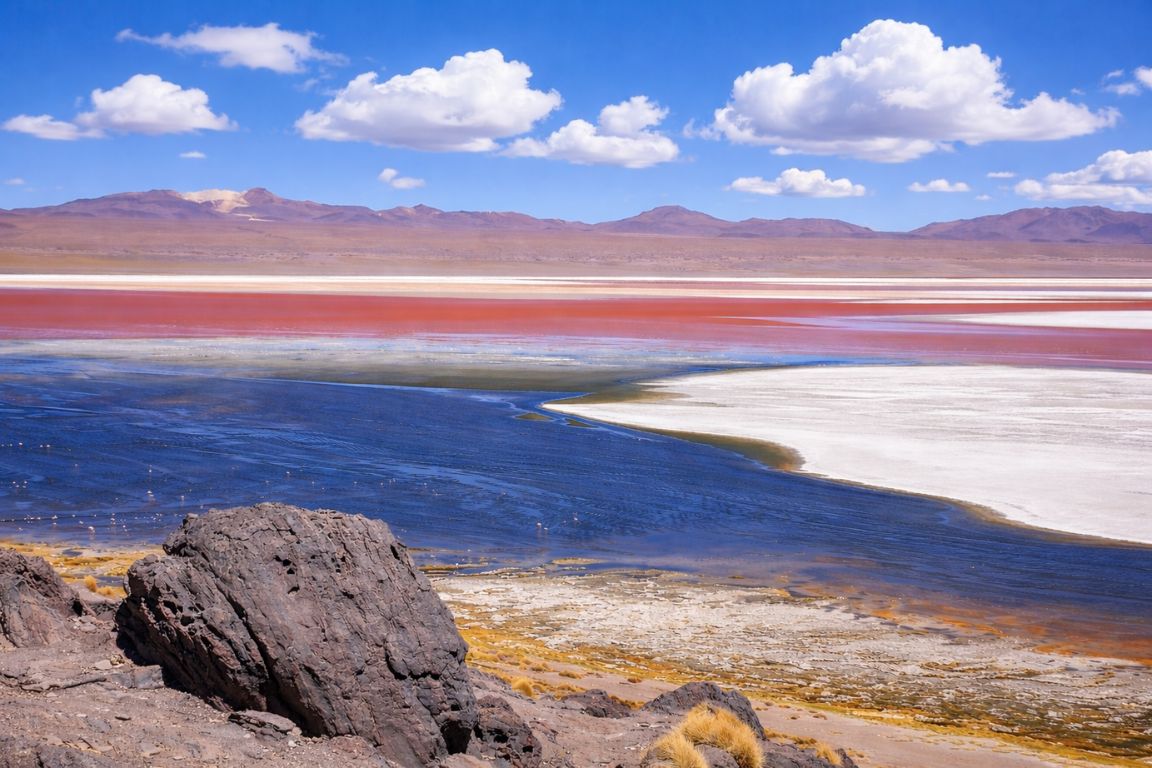 Clothing at the Salar de Uyuni solves two simultaneous and opposite problems. During the day on the salt flat, you are exposed to some of the most intense UV radiation of any tourist destination on earth – at 3,656 meters, with white salt reflecting UV upward from below while the sun drives it downward from above, the combined exposure can cause sunburn and corneal damage within a few hours without protection. At night, particularly on the 3-day circuit near Laguna Colorada at 4,300 meters, temperatures fall to -10°C or lower with no meaningful heating in the accommodation. Getting either problem wrong makes a significant portion of the trip genuinely unpleasant. Getting both right costs almost nothing extra to prepare for and makes the difference between discomfort and an extraordinary experience.
The environment at Uyuni is extreme in both directions simultaneously, which is what catches travelers off guard. People who research “Bolivia weather” and see temperatures of 12 to 20°C during the day arrive in t-shirts with a light jacket and suffer badly at the geyser field at 5am. People who research “cold Andes nights” pack enormous down jackets but forget sunglasses and end up with corneal burns from a full day on the reflective flat. The preparation isn’t complicated – it’s a three-layer system on the cold side, UV400 eyewear and SPF 50+ on the sun side but it requires thinking through both ends of the temperature range before you pack.
The circuit also changes significantly between seasons – dry season (May through November) and wet season (December through April) – and footwear decisions in particular differ completely between them. A traveler arriving in July needs different shoes than one arriving in February. Clothing guidance that doesn’t distinguish between seasons gives the same advice for both and is useful for neither. This guide separates the two where it matters.
What Should You Wear on the Salt Flat During the Day?
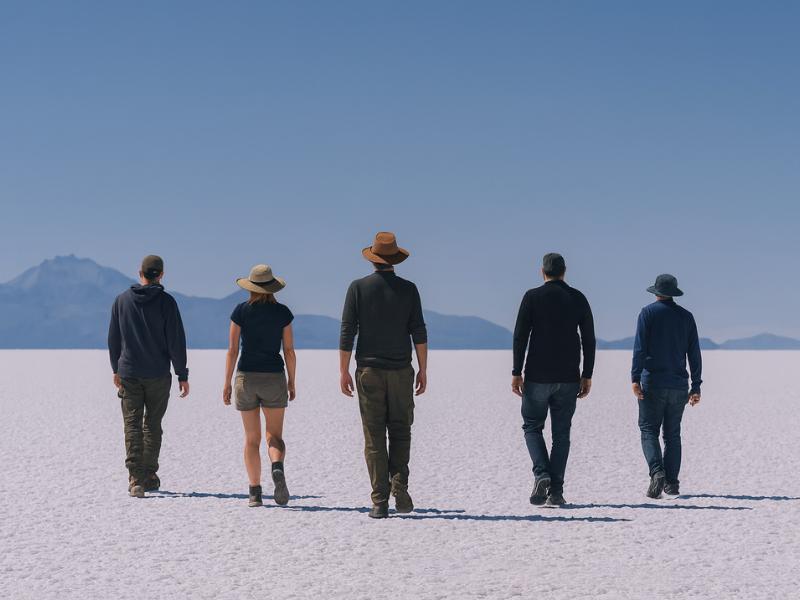
On the salt flat during the day, the primary clothing priorities are UV protection for skin and eyes, and a layering system that handles the roughly 10°C temperature swing between early morning arrival and peak midday sun. The base layer goes on first and stays on all day: a thermal or moisture-wicking long-sleeved top, not cotton. The mid-layer fleece comes on for the cooler hours and comes off when the sun peaks. The windproof outer layer stays available for the gusts that cross the flat with nothing to block them. On top of all of this: UV400 sunglasses, SPF 50+ sunscreen applied before leaving the jeep and reapplied every two hours, a wide-brimmed hat or cap, and lip balm with SPF.
The UV situation on the salt flat deserves more than a standard “bring sunscreen” note. At 3,656 meters, UV intensity is already meaningfully higher than at sea level – UV exposure increases by roughly 10 to 12% per 1,000 meters of altitude, which at Uyuni’s elevation means roughly 40 to 50% more UV than at sea level. Then the white salt reflects UV back upward from below. You receive UV from both directions simultaneously: downward from the sun, upward from the surface. This is the same mechanism that causes snow blindness in alpine environments, and it operates here even when the sky is partly cloudy. UV passes through thin cloud cover.
The eye risk is the part travelers most consistently underestimate. Photokeratitis – essentially a sunburn of the cornea – is a painful temporary condition that can develop within a few hours of UV overexposure without proper eye protection. It causes intense pain, light sensitivity, and temporary vision loss. It has happened to visitors on the salt flat. The protection is straightforward: UV400 sunglasses that block 100% of UVA and UVB. Not fashion sunglasses. Not cheap gas-station sunglasses with dark lenses but no UV rating. UV400 rated lenses. Wraparound styles provide additional protection by preventing UV from reaching the eye from the sides. If you wear prescription glasses, bring clip-on UV400 lenses or get prescription sunglasses before the trip – the flat is not a reasonable place to rely on standard clear lenses.
Colors on the salt flat matter more than people expect. Light-colored clothing reflects some heat and is more comfortable at midday. Dark clothing absorbs more heat but provides better UV protection for the skin underneath. The practical solution most guides use is light-colored outer layer that can be removed as the day warms, with a UV-protective mid-layer if significant time will be spent walking. For perspective photos – which can involve 30 to 60 minutes standing in open sun – applying sunscreen to the back of your neck, your ears, and under your chin matters, because the reflected light comes from below at angles that standard sun habits don’t account for.
If you’re wondering about exploring on foot, here’s everything about walking on the salt flats of Salar de Uyuni tours so you understand when tours stop for walks, what the surface is like, and how mirror season affects where you can step.
What Do You Need for Cold Mornings and Nights on the Circuit?
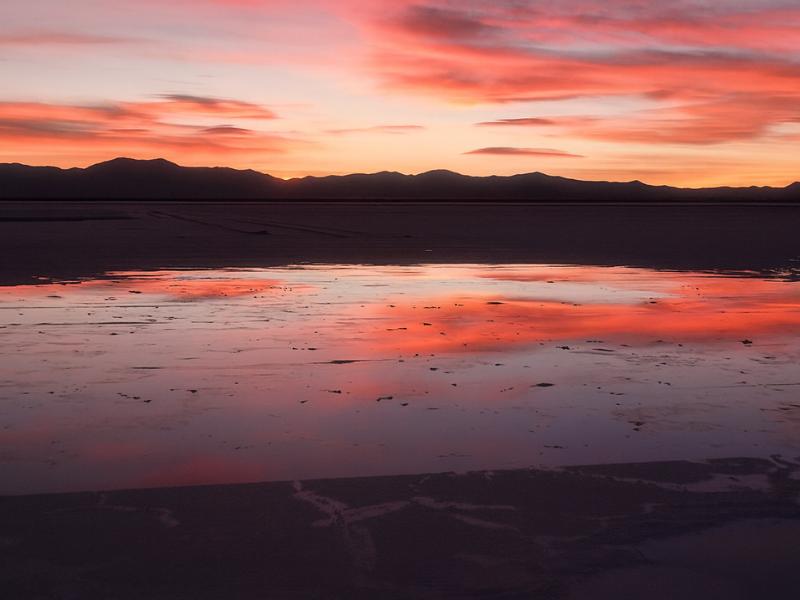
For cold mornings and nights on the 3-day circuit, the system that works is three distinct layers used together: a thermal base layer (merino wool or synthetic, never cotton) worn against the skin, a mid-layer fleece for insulation, and a windproof and waterproof outer layer as a shell. This system works because each layer does a specific job – the base wicks moisture, the mid-layer traps warm air, the shell blocks wind and precipitation – and because the combination can be adjusted as conditions change across the day. Add to this: wool or synthetic gloves, a warm hat that covers the ears, a scarf or neck gaiter that doubles as dust protection on rough roads, and a sleeping bag liner for the nights on the circuit.
The case against cotton is absolute at altitude and worth stating plainly. Cotton absorbs moisture – from sweat, from the air, from wet season precipitation – and holds it against the body. Wet cotton loses almost all insulating value and stays cold. At 4,300 meters on a -10°C night with no heating in the accommodation, wet cotton clothing is a genuine safety concern, not a discomfort issue. Merino wool is the best base layer material for this environment: it wicks moisture, insulates even when slightly damp, doesn’t develop odor quickly (useful on a 3-day trip with limited washing options), and is comfortable against skin. Synthetic base layers work well and cost less. Either is correct. Cotton is not.
The sleeping bag liner for night two near Laguna Colorada at 4,300 meters is the single item most consistently regretted when left at home. The refugio accommodation provides blankets – typically one or two thick blankets per person. For most travelers coming from sea level or temperate climates, this is not enough insulation when the outside temperature is -10°C to -15°C and the building has no central heating. A liner may add warmth but does not replace a suitably rated sleeping bag and weighs almost nothing. Some operators provide or rent sleeping bags; confirm when booking. If renting bothers you, a personal liner is the minimal-weight solution that makes night two genuinely comfortable rather than something to endure.
The 5am departure for Sol de Mañana on day three is the coldest moment of the circuit. At 5,000 meters, with winds that move across the Altiplano with nothing to stop them, and an air temperature of -5°C to -10°C, stepping out of the jeep in anything less than all three layers plus gloves and hat produces immediate, sharp cold. The guide’s standard instruction is to put everything on before opening the door. This is good advice. The geyser field is extraordinary but the 20 to 30 minutes you spend walking among the vents are not a moment to be uncomfortable. The wind-amplified cold at 5,000 meters in the early morning is in a different category from what you experienced on the salt flat the day before.
We’ve created a detailed Salar de Uyuni tours altitude and preparation guide because altitude sickness at 3,600+ meters is a real risk – proper preparation and acclimatization can prevent serious problems and ruined trips.
What Footwear Works Best for Dry Season vs Wet Season?
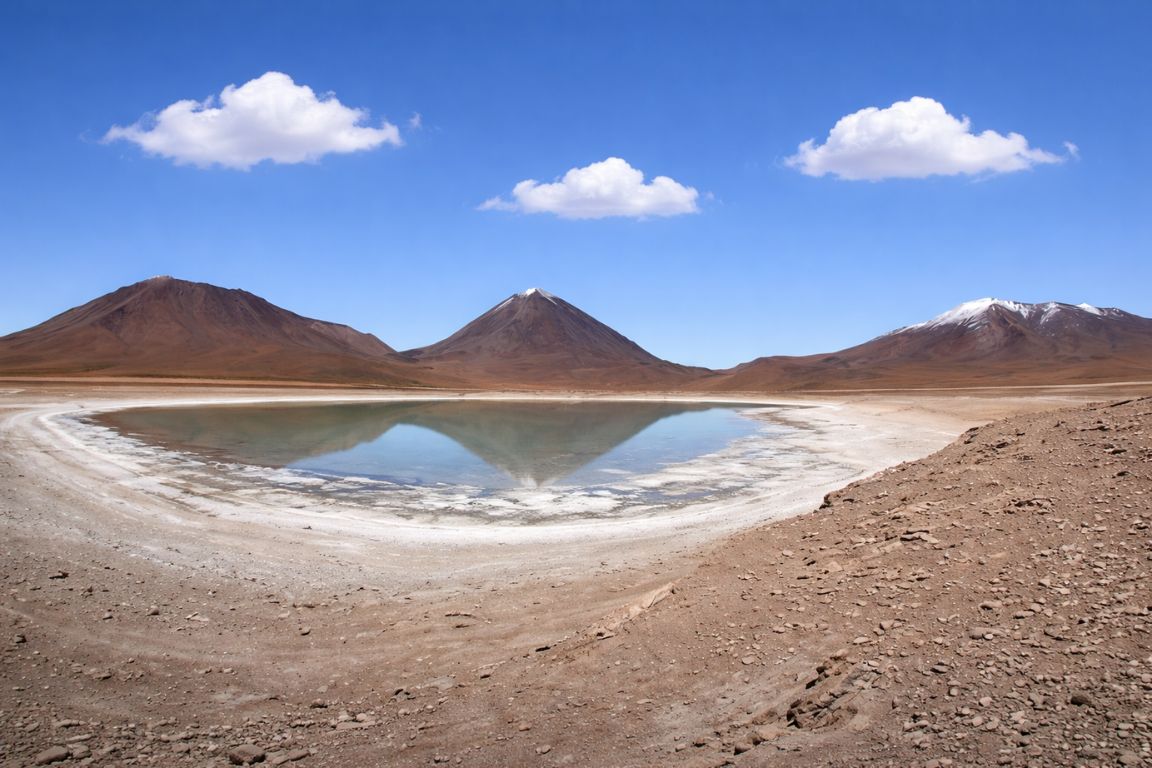 Dry season footwear (May through November) should be sturdy closed-toe shoes or ankle boots with good grip – hiking boots are useful but not essential, since the salt flat itself is flat and firm. What matters more is protection from the sharp salt crust at the flat’s edges and the rocky terrain of the Eduardo Avaroa Reserve on days two and three of the 3-day circuit. Wet season footwear (December through April) is a completely different requirement: waterproof boots that reach above the ankle are non-negotiable, because the flooded salt flat puts water 10 to 30 centimeters deep across most of the surface and saltwater permanently destroys non-waterproof shoes, adhesives, and soles within one day of exposure.
In dry season, the salt flat surface is firm and level, which makes the shoe decision straightforward. Basic trail runners or sturdy sneakers with closed toes handle the flat well. The sharp case for proper footwear comes on day two of the 3-day circuit, where the terrain around the lagoons is rocky volcanic desert with loose scree, and on Isla Incahuasi’s path to the summit, which involves climbing over coral and rock. Hiking boots with ankle support earn their weight on these sections even if the flat itself doesn’t require them. Whatever shoes you bring, accept they will be coated in salt. Pack an old pair that you’re willing to sacrifice or a pair you can thoroughly clean after the trip.
In wet season, the flat is covered with saltwater – brine that is corrosive to adhesives, rubber, fabric, and stitching. Regular sneakers, canvas shoes, leather shoes, or anything without genuine waterproof protection will be soaked through within minutes of walking on the flat. The salt crystallizes as shoes dry and degrades materials rapidly. Travelers who walk the flooded flat in regular footwear sometimes find their shoes have begun separating at the sole by that evening. Rubber boots (wellies) are sold in Uyuni town for modest prices and are a practical wet-season solution if you haven’t brought waterproofed hiking boots. For the flat surface, dedicated rubber boots work as well as expensive waterproof hiking boots – the flat is flat. For day two and three terrain on the circuit, ankle-supporting waterproof hiking boots are genuinely better.
| Waterproof hiking boots (ankle height) | Best overall choice | Essential | Works for all terrain on the circuit across both seasons |
| Sturdy trail runners or sneakers | Acceptable for day 1 | Not suitable – will be destroyed | Fine on the dry flat; less good on rocky day-2 terrain |
| Rubber boots (wellies) | Unnecessary | Good for the flat; less good for rocky terrain | Available to buy in Uyuni town; affordable wet-season option |
| Sandals or flip flops | Hostel and shower use only | For brief shallow-water walking on flat; not for day 2-3 terrain | Some travelers wade barefoot or in flip flops in wet season for short flat sessions |
| Regular sneakers or canvas shoes | Workable but will be salt-stained | Will be damaged or destroyed | Saltwater corrodes adhesives and fabric within hours |
Pack flip flops regardless of season. They serve two purposes: shower footwear at the basic refugio accommodation on night two (where bathroom floors are often wet and unclean), and an option for brief flat walking in wet season if you prefer not to soak waterproof boots in brine. They weigh almost nothing and remove any hesitation about hostel bathrooms on the circuit.
Timing completely changes what you see. The best time to visit Salar de Uyuni tours depends on whether you want the famous mirror effect from wet season flooding or the endless white expanse of dry season salt crust.
What Sun Protection Do You Actually Need at Uyuni?
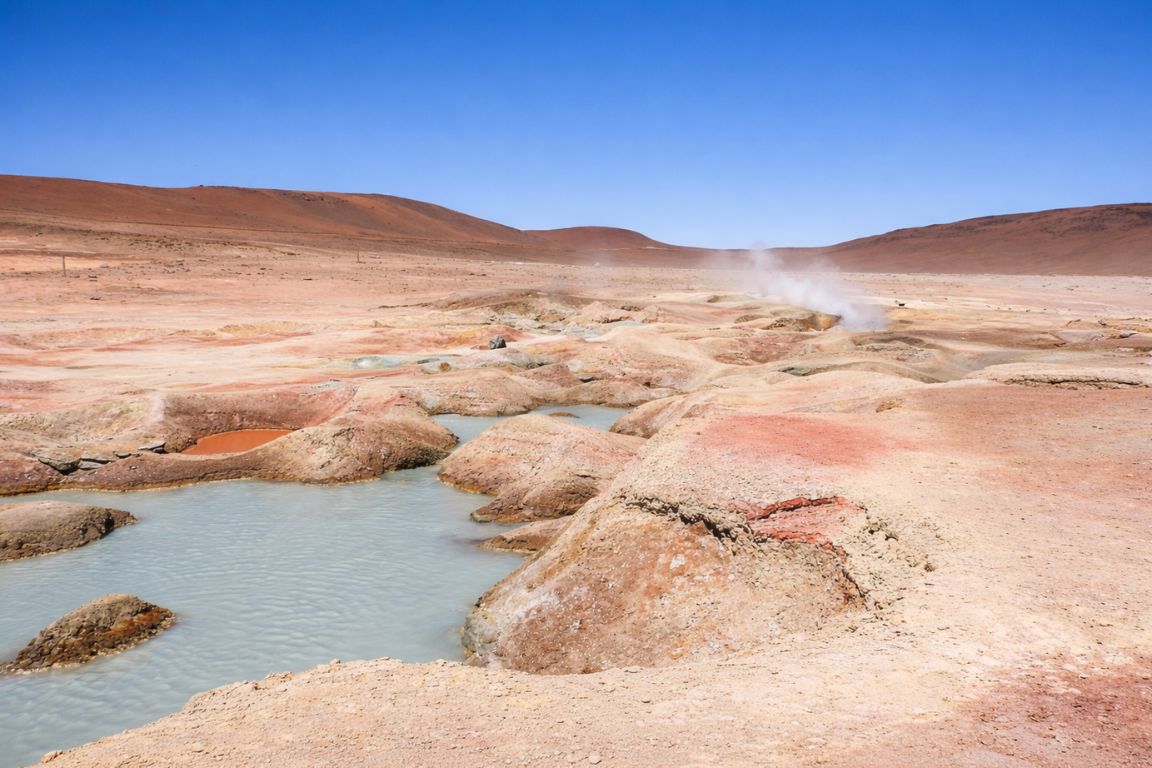 At the Salar de Uyuni, you need UV400-rated sunglasses, SPF 50+ broad-spectrum sunscreen reapplied every two hours, a hat with a brim, and lip balm with SPF. These four items work together to address the specific UV conditions of the salt flat where UV comes from above at altitude-amplified intensity and from below as reflection off white salt. UV400 sunglasses are not optional. Corneal burns (photokeratitis) causing temporary vision loss have occurred on the flat without proper eye protection. No other tourist destination in a standard South American itinerary creates this level of combined UV risk.
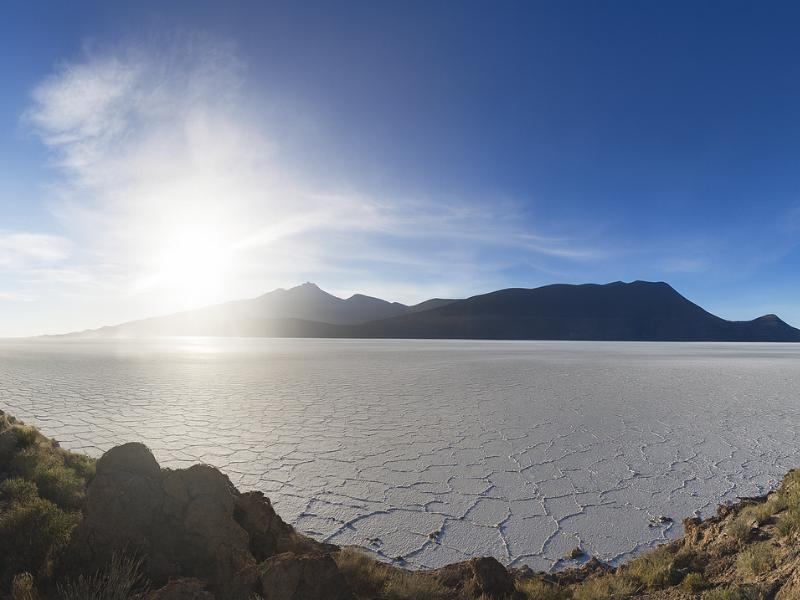
The physics behind the UV situation is worth understanding. For every 1,000 meters of altitude above sea level, UV exposure increases by approximately 10 to 12%. At Uyuni’s 3,656 meters on the flat, that means roughly 40% more UV from above than at sea level before any surface reflection is considered. White salt reflects UV similarly to snow, which can reflect up to 80% of incident UV radiation back upward. The combination means you’re receiving significantly amplified UV from the sky while simultaneously receiving a substantial dose reflected from the ground. The effect is similar to alpine snow blindness conditions, in a landscape that looks like a warm day rather than a mountain environment, which is precisely what makes it easy to underestimate.
Sunscreen at altitude needs to be applied more generously and reapplied more frequently than at sea level. The dehydrating effect of dry high-altitude air means the skin loses moisture faster, which reduces the effectiveness of the protective film. Apply SPF 50+ minimum to all exposed skin – face, neck, back of hands, ears, and the area under the chin (which receives reflected UV from below and is often missed). Reapply every two hours on the flat without exception. The high-altitude UV index makes sunscreen degradation faster than at sea level. If you’re doing the perspective photo session on the flat, which can involve 30 to 60 minutes standing in open sun, apply before getting out of the jeep rather than after arriving.
Lip balm with SPF is mentioned in almost every Uyuni packing list and almost always forgotten. The dry Altiplano air desiccates lips quickly at altitude, and UV exposure compounds the damage. Chapped, cracked, and burned lips are a very common complaint on the circuit, and entirely avoidable with a single item that costs almost nothing. Apply it at the same time you apply sunscreen, every two hours.
What Should You Pack for the Jeep Ride Between Stops?
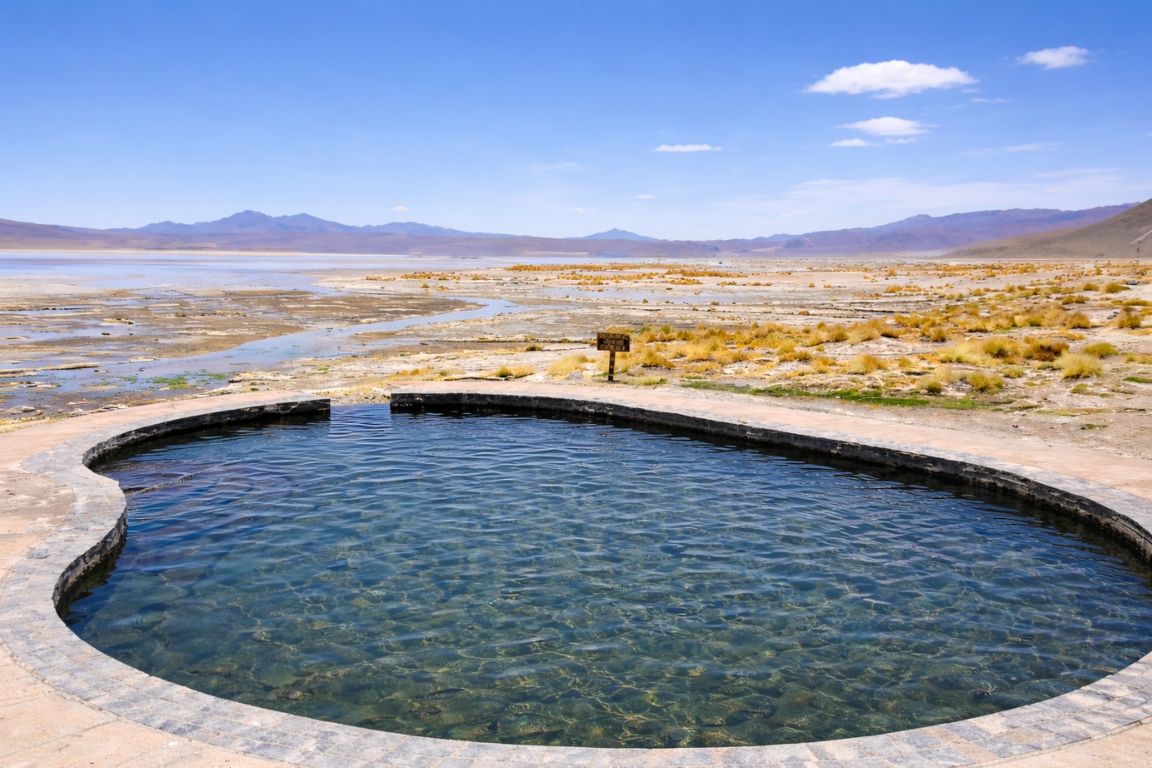 For the jeep ride between stops – which is most of your time on the 3-day circuit – pack your daypack with the items you’ll need accessible without stopping the vehicle: sunscreen, lip balm, water, snacks, camera gear, medication, and at least one warm layer you can add quickly when the jeep stops at a high-altitude location. Your main bag goes on the jeep’s roof under a tarpaulin and is inaccessible while driving. Everything you might need between waking up and reaching the night’s accommodation goes in the daypack in the cabin. The specific clothing consideration for the ride: dress in layers you can add or remove without undressing, because the jeep will stop at locations ranging from warm midday sun to the -10°C geyser field within the same day.
The roads between stops – particularly on day two through the lagoon circuit and day three after the geyser field – are unpaved desert tracks with significant vibration. The dust on dry-season roads is fine and penetrating; a scarf or neck gaiter pulled up over the nose and mouth reduces the amount you inhale on particularly dusty stretches. The same scarf doubles as a warm layer when the jeep stops at exposed locations. It’s the most versatile item in the pack and takes almost no space.
Long pants are the right choice for jeep days regardless of how warm it looks at the stop you just left. The Altiplano sun can make midday feel like 20°C on the flat, and the next stop at 4,500 meters in wind can feel like 5°C. Shorts for the flat, long pants for everything else, and the ability to transition quickly is the practical approach. Compression leggings under shorts give you the option of both warm and cool without a full clothing change in the jeep.
Keep the swimsuit for Polques hot springs in your daypack, not the roof bag. This is the item most frequently discovered in the roof bag at the Polques stop, when it’s too cold to retrieve it and change without rushing. The hot springs come on day three after the geyser field – pack the swimsuit and a towel in the daypack before leaving the night-two refugio in the dark at 5am. The water at Polques is roughly 30°C, the air outside is close to freezing, and the soak is one of the genuinely pleasurable moments of the circuit. Don’t miss it because of a packing error.
What Are the Biggest Clothing Mistakes Travelers Make at Uyuni?
The biggest clothing mistake at Uyuni is bringing cotton base layers. Cotton holds moisture and loses insulating value when damp – at altitude and in cold accommodation, a traveler in damp cotton loses body heat in a way that merino wool or synthetic materials don’t allow. The second biggest mistake is bringing sunglasses that have dark lenses but no UV400 rating. Dark lenses without UV protection cause the pupil to dilate – letting more light in – while providing no protection against the UV that causes corneal burns. Both mistakes are easy to make and genuinely costly on the circuit. Both are straightforward to avoid.
Not bringing a sleeping bag liner for night two is the third most common regret. We’ve mentioned it in nearly every article in this series because we see it on every tour. The pattern is consistent: travelers who know the circuit, who have read packing lists, who thought about it – and then decided the liner was unnecessary extra weight. The refugio near Laguna Colorada at 4,300 meters on a winter night (June to August) is cold enough that one blanket is insufficient for most people. Two blankets is borderline. Confirm the bedding and bring a sleeping bag suitable for the forecast; a liner alone may be inadequate. There are no shops on the circuit, no rental options at that location, and no way to fix this mistake once it becomes apparent at 10pm in the dark.
Bringing regular non-waterproof shoes for wet season is a mistake that damages equipment and costs money. Saltwater corrodes adhesives, stitches, and synthetic materials faster than freshwater. Travelers who walk the flooded flat in running shoes sometimes find the soles separating or the shoes unwearable by day two. Replacing shoes in Uyuni town is possible but limited in selection and sizing. Rubber boots are available cheaply in Uyuni’s market if you arrive without appropriate wet-season footwear – buy them before the tour leaves.
Forgetting the swimsuit for Polques hot springs is the fourth most commonly mentioned clothing regret. The circuit runs 3 days and 1,000 kilometers before reaching Polques on day three, and the hot springs are one of its most pleasant moments. The swimsuit is a small item. It goes in the daypack, not the roof bag. Some travelers improvise – going in in shorts, or skipping the soak entirely – but the experience of sitting in 30°C thermal water at 4,000 meters with flamingos visible across the lagoon while the temperature outside is near freezing is not something you want to skip over a packing error.
Overpacking is the final mistake worth naming. The 3-day circuit involves significant driving on rough roads with bags strapped to the jeep’s roof. Luggage weight limits recommended by most operators are around 15 to 18 kilograms for the roof bag. Heavy luggage makes strapping to the roof harder, makes retrieval at each accommodation more cumbersome, and adds nothing to the experience. The clothing system described in this guide – thermal base layers, mid-layer fleece, windproof outer, warm accessories, appropriate footwear for your season, UV protection, swimsuit, and sleeping bag liner – fits comfortably within 8 to 10 kilograms of clothing weight. For a month-by-month picture of the circuit before you pack, use the 3-day Uyuni tour guide.
Wondering about the classic tour length? Check out our 3-Day Salar de Uyuni tours guide – it covers what you actually see across three days, how basic the overnight stops are, and whether it’s worth the commitment.
Planning Takeaways For Your Trip
Choose the itinerary around the experience you want, the time you have and the actual services included. Check the guide language, transport, overnight arrangements and extra costs on the selected listing.
Frequently Asked Questions
Can I buy warm clothing in Uyuni town if I arrive unprepared?
Yes, to a point. Uyuni town has market stalls and small shops selling wool hats, gloves, scarves, alpaca sweaters, and basic thermals – often Bolivian-made and reasonably priced. Quality is variable. For base layers, the town selection is limited. Rubber boots for wet season are available and affordable. UV400 sunglasses are available but quality varies. La Paz has far better selection if you’re passing through before Uyuni – the market district around Calle Sagarnaga is a good source for alpaca wool items, thermal layers, and outdoor accessories at reasonable prices.
Do I need hiking boots or will regular shoes work?
In dry season: sturdy closed-toe shoes or trail runners handle the salt flat and most stops. Hiking boots add value on day two’s rocky desert terrain around the lagoons and on the Isla Incahuasi path. They are useful but not essential. In wet season: waterproof footwear is essential on the flooded flat. Rubber boots work for the flat. Waterproof hiking boots are better for day two and three terrain. Regular shoes should not be worn on the wet salt flat – saltwater destroys them.
What should I wear for the perspective photos on the salt flat?
For perspective photos: UV400 sunglasses (essential – you’ll be in open sun for 30 to 60 minutes), SPF 50+ on all exposed skin including ears and under the chin, a hat, and layers you can adjust as the session runs into the warmer midday hours. Brighter-colored clothing tends to photograph better against the white salt – red, orange, or bright blue stands out more than white, beige, or grey. Bring props in your daypack: small toys, bottles, or figures for the scale illusions.
Is it cold on the 1-day Uyuni tour or just on the 3-day circuit?
The 1-day tour stays at 3,656 meters on the salt flat. Mornings can be cool to cold (8 to 12°C), midday reaches 15 to 20°C, and the sunset session drops again quickly. You’ll need layers for the 1-day tour too, but you return to your Uyuni hotel at the end of the day. The extreme cold – nights at -10°C to -15°C and the 5am geyser stop at 5,000 meters – only occurs on the 3-day circuit. The 1-day tour does not require a sleeping bag liner or the heaviest cold-weather preparation.
What do I need specifically for the Sol de Mañana geyser stop?
Everything on before you open the jeep door. All three layers (thermal base, mid-layer fleece, windproof shell), gloves, wool hat covering the ears, and a scarf or neck gaiter. The geyser field is at 5,000 meters at approximately 6am, with wind. It is the coldest moment of the circuit. The stop lasts 20 to 30 minutes. You will not regret being overdressed here.
Choose Your Uyuni Experience
Choose the itinerary that fits, then check your travel date before arranging onward transport or separate rooms.
Initial editorial recommendation. No preferences have been entered.
Salt Flats And Colored Lagoons
Combine the salt flats with colored lagoons, meals and an English-speaking driver-guide.
Lodging descriptions conflict on private bathrooms; confirm both nights. Park fees and the optional Chile transfer cost extra.Scheduled dates load automatically. Availability and final price are confirmed on Viator.
No verified tour meets all of these preferences. Adjust the choices below or reset.
Compare Options And Tailor Your Choice
- Three-Day Circuit With Basic Lodging (3 days): Visit the salt flats, colored lagoons, geysers and hot springs with meals and basic lodging. Choose the English-guide option. Cold basic rooms; sleeping bag included in winter or on request. Entries, water and Chile transfer extra. Not suitable for pregnancy, mobility impairments or pre-existing conditions.
- Salt Flats And Sunset Day Trip (9 hours): A full salt-flat day with lunch, an English-speaking guide and sunset. Rain boots included; Incahuasi entry costs extra. Colchani hotel pickup has a surcharge.
- Sunset And Starlights (4 hours): Watch sunset and stay for the night sky on a four-hour outing from Uyuni. Choose the guide language when booking. Waterproof wellies are listed; skies and reflections depend on conditions. Age eligibility must be confirmed.
- Private Circuit With Hotel Lodging (3 days): A private salt-flat and lagoon circuit with an English guide, meals, park entries and hotel lodging. Palacio de Sal or Luna Salada and Tayka or similar hotels; confirm exact rooms. Chile transfer excluded. Prior acclimatization required.
Compare Your Complete Quotes
Use the same currency for both totals, including transport, rooms, meals and fees for your whole party.
Affiliate links: we may earn a commission when you book, at no extra cost to you.