Salar de Uyuni with Kids
Is Salar de Uyuni kid-friendly? Yes, but with real limits. Learn which tours work best for families, how altitude affects children, and the one upgrade that makes the trip much easier.
Start with the children’s actual ages and a pediatric altitude plan. Tour booking age bands and room layouts need checking separately.
Last updated: September 9, 2026
Yes, families visit the Salar de Uyuni with children regularly, and many describe it as one of the most memorable travel experiences of their lives. But the trip requires honest preparation. The altitude affects children at roughly the same rate as adults, with AMS symptoms reported in around 28-34% of children ascending rapidly to 3,000 meters or above. Acclimatization matters as much for kids as for adults. The 1-day tour is the most practical format for families with young children. The 3-day circuit adds extreme altitude (about 5,000m at the geysers, usually on day three from Uyuni), basic communal accommodation, and very early starts which work for older children but can be genuinely difficult with kids under seven or eight. Private tours solve most logistics problems and are the single biggest upgrade a family traveling with young kids can make.
The day-trip option includes lunch and a return to Uyuni; enter every traveler’s age below to check the published booking bands rather than assuming all children qualify. Check Uyuni Sunset Day-Trip Dates
Uyuni with Kids: Quick Reference by Age
| Under 1 year | Not recommended | Not recommended | Risk of subacute infantile mountain sickness at sustained altitude – consult pediatrician |
| 1-3 years | Possible with preparation | Not recommended | Cannot communicate symptoms; altitude signs may appear as unusual fussiness or poor feeding |
| 4-7 years | Good – manageable | Possible with private tour and good acclimatization | Long jeep days can be hard; private tour flexibility is essential; geyser altitude is very high |
| 8-12 years | Excellent | Good with proper prep | Altitude risk similar to adults; acclimatize properly; old enough to report symptoms clearly |
| 13+ years | Excellent | Excellent | Manage like adults; altitude preparation, gear, and acclimatization apply |
Is the Salar de Uyuni Safe and Suitable for Children?
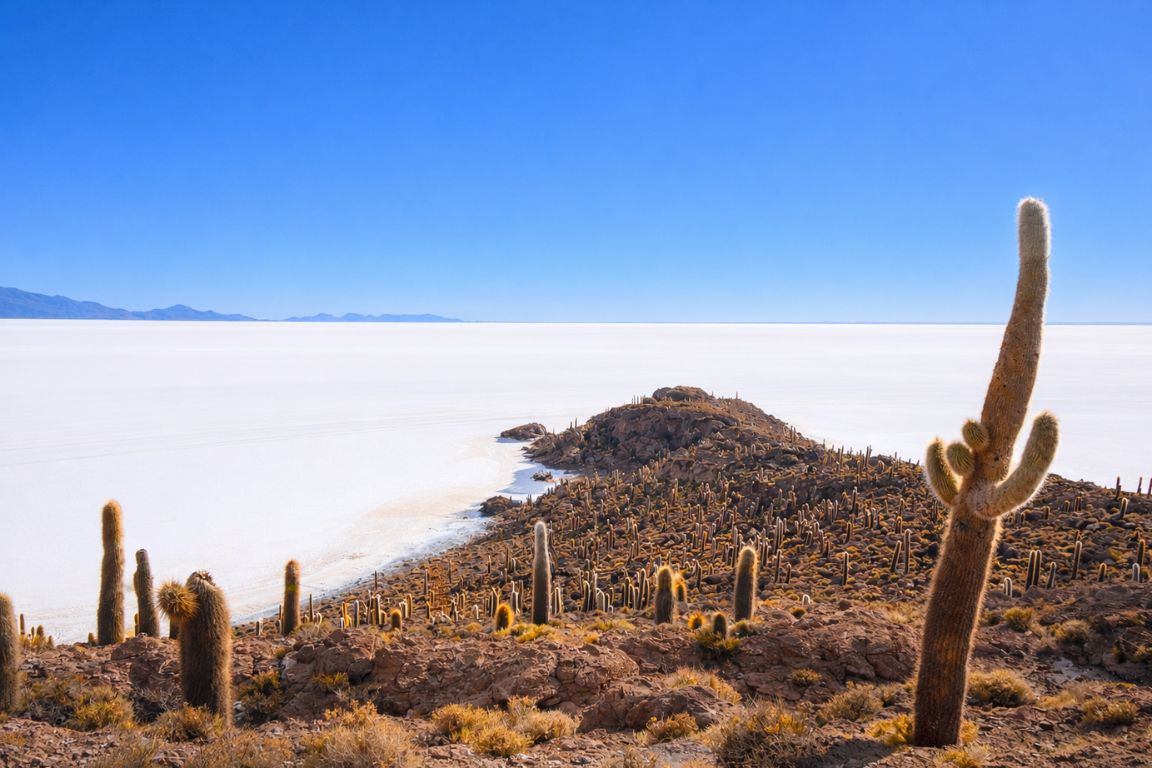 Yes, with preparation and honest assessment of your children’s ages. Families visit the Salar de Uyuni with kids every year and many describe it as the single most memorable travel experience of a family trip through South America. The flat itself is physically safe: vehicles, sharp salt, uneven ground and exposed stops still require close supervision. The real variable is altitude. At 3,656 meters, and pushing 5,000 meters on the 3-day circuit – altitude sickness is possible in children at roughly the same rate as in adults, and pre-verbal or very young children cannot reliably communicate symptoms. Preparation, acclimatization, and tour format matter far more than the destination’s inherent danger.
The Salar de Uyuni’s physical environment is in many ways unusually well-suited to family travel. The jeep handles all distance between stops – children are not walking long distances or carrying weight. Stops are manageable in length: the train cemetery, the perspective photo session on the flat, Isla Incahuasi, the flamingo lagoons. None of these require serious physical exertion from children. The flat’s signature activity – running across the white crust, playing with perspective photos, splashing through the wet-season water – is one of those rare experiences that lands the same way for a six-year-old as for an adult. Kids understand the visual magic intuitively. The train cemetery in particular draws a consistent reaction from children: the rusted locomotives are interesting to see but have sharp metal and unsafe climbing surfaces.
The environmental hazards require specific preparation rather than avoidance. UV radiation is severe – the white salt reflects light upward, adding reflected exposure. Children’s skin burns faster than adults’ at altitude. UV-rated sunglasses for every child in the group are essential, not optional. The cold that descends after sunset on the Altiplano can be startling for children who were sweating at noon – temperature swings of 20°C between midday and evening are not unusual. The remoteness of the 3-day circuit means that minor ailments that would be a taxi ride from help at home are half a day from a clinic. Being prepared with a complete kit – fever medication, antiemetics, rehydration salts, altitude awareness – is more critical here than in most family destinations.
We’ve mapped out how to visit Salar de Uyuni tours based on what actually matters – choosing reliable operators, preparing for altitude, and deciding between 1-day, 3-day, or border-crossing tours.
What Age Is Realistic for a Uyuni Tour with Kids?
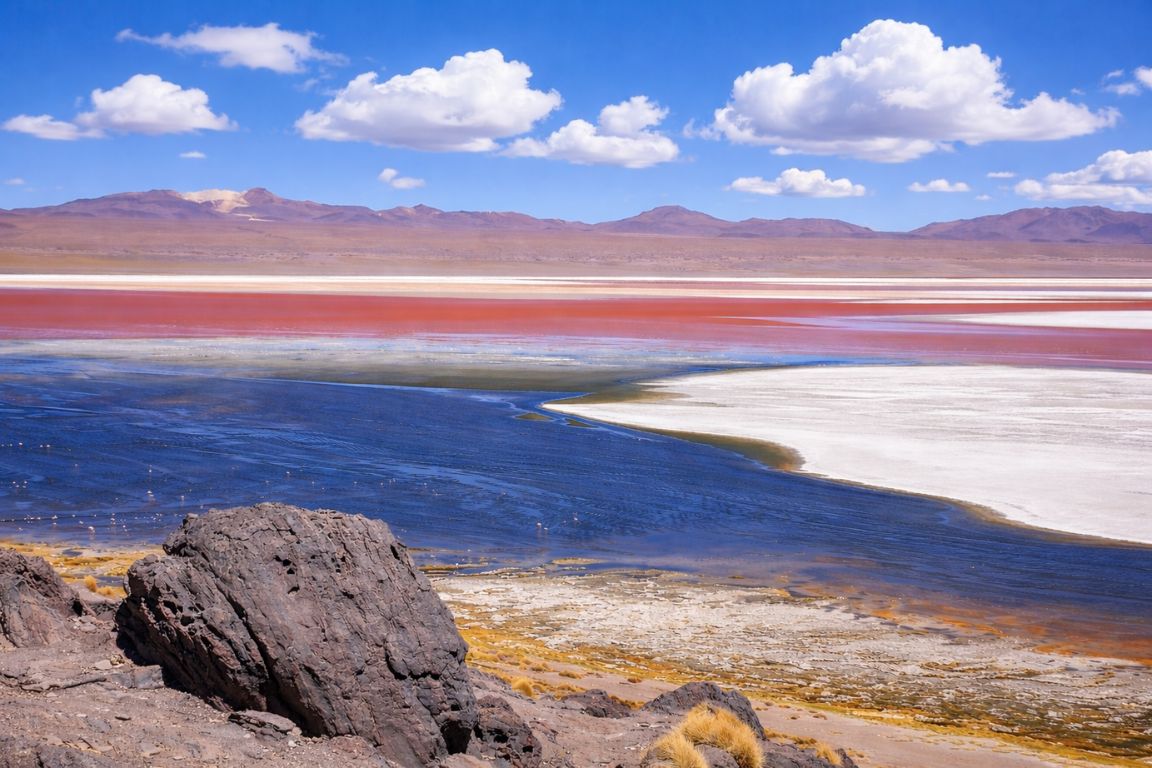 For a 1-day tour of the salt flat, children from around four years old upward are realistic – the day is roughly seven hours including jeep travel, the stops are varied and engaging, and younger children can sleep in the jeep between stops. For the 3-day circuit, eight years old is a more practical lower limit for most families, primarily because of the 5am geyser start on day three at 5,000 meters of altitude and the very basic shared accommodation on night two. The 3-day circuit is absolutely doable with younger children in a private tour with upgraded accommodation but it requires more preparation and realistic expectations about difficult moments.
Infants under twelve months present a specific and serious concern at altitude. Prolonged exposure to high altitude in infants born at or acclimatized to low altitude carries a risk of subacute infantile mountain sickness – a condition characterized by pulmonary hypertension that can be fatal in a small percentage of cases. This is not a reason to never travel to high altitude with an infant, but it is a reason to consult a pediatrician specifically before planning a Uyuni trip with a baby. The 3,656 meters of the salt flat and the 4,300 meters of Laguna Colorada are sustained exposures that deserve medical guidance, not casual planning.
Children between roughly four and seven present the most variable experience. Some love every minute and keep up energetically. Others find the jeep travel exhausting by day two, the cold unmanageable at night, and the early starts non-negotiable battles. The age range is right; the individual child matters. Parents of this age group generally report that a 1-day tour is reliable and a 3-day circuit requires knowing their specific child’s threshold for travel disruption. The perspective photos – where children can be used as giant figures holding miniature family members – are consistently the highlight for this age group, and a good guide who plays into the game makes an enormous difference.
They’re old enough to understand what they’re seeing at Laguna Colorada, old enough to communicate altitude symptoms clearly, and physically robust enough for the days. They also have the capacity to genuinely engage with the landscape – the flamingos, the rock formations, the geysers – rather than just tolerating the journey between stops. Teenagers often describe the 3-day circuit as one of the most extraordinary experiences of their lives. The combination of extreme landscape, novelty, and the road-trip quality of the jeep days hits differently at that age than at any other.
How Does Altitude Affect Children at Uyuni?
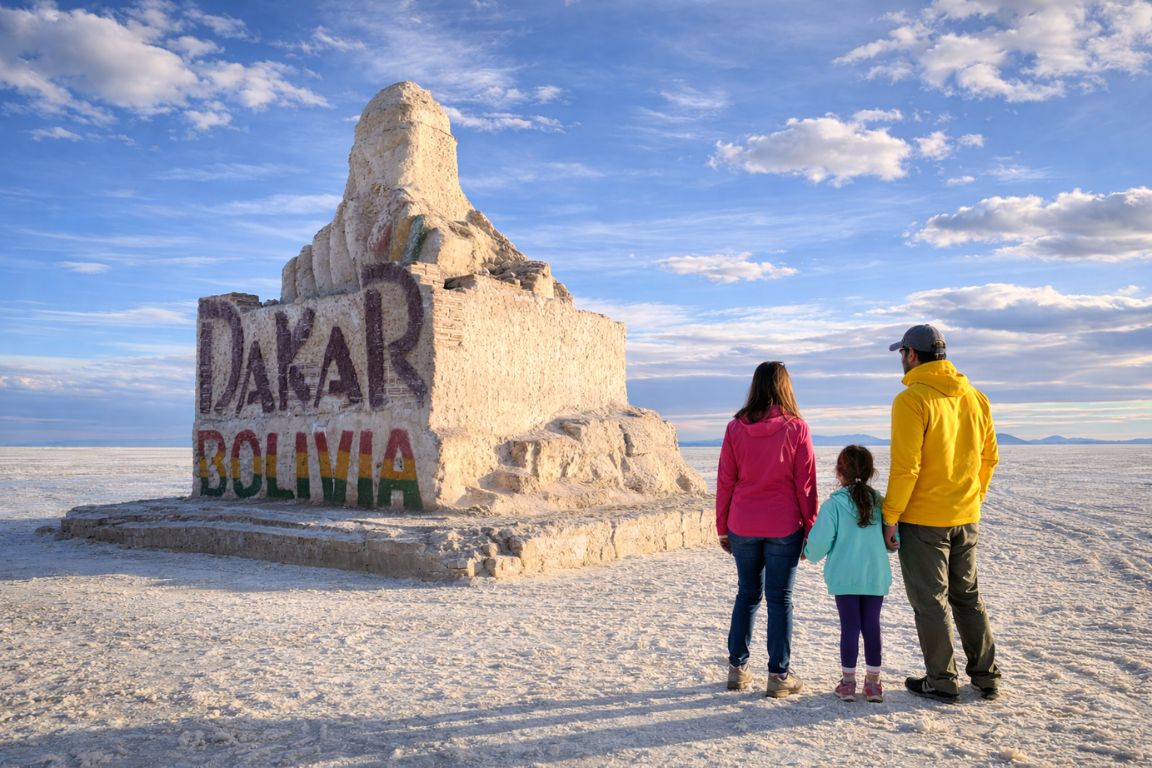 Children experience acute mountain sickness at roughly the same rate as adults, according to multiple peer-reviewed studies. Research at 2,835 meters in Colorado found about 28% of children aged 9 to 14 developed AMS symptoms. At higher elevations like those on the 3-day Uyuni circuit (up to 5,000 meters), rates are higher for all ages. The critical difference with children is recognition: younger children cannot reliably describe a headache or nausea, and AMS in pre-verbal children may appear as unusual irritability, loss of appetite, poor sleep, or excessive fussiness without an obvious cause. Parents must watch behavior, not just listen for complaints.
The physiological response to altitude in children is broadly similar to adults. The body begins adjusting oxygen delivery to tissues as partial pressure of oxygen drops. Headache is the most common early symptom. Nausea, fatigue, loss of appetite, and sleep disruption follow. In very young children, these translate to crying without clear cause, refusing to eat, extreme sleepiness punctuated by gasping awakenings at night, or pallor and listlessness during what should be active times. Parents who know to watch for these behavioral signals in altitude-naive young children are far better positioned to respond early than those waiting for a child to say “I have a headache.”
If a child becomes unwell after ascent, tell the guide, stop ascending and seek medical advice. Worsening symptoms require descent. Breathlessness at rest, confusion or loss of coordination require urgent descent and emergency care. Use medicines only according to the child’s clinician or appropriate product instructions.
Acclimatization works for children just as it does for adults, and staged altitude exposure before the tour is the most effective prevention. Spending 2 to 3 days in Sucre at 2,750 meters before arriving in Uyuni gives both children’s and adults’ bodies meaningful preparation for the jump to 3,700 meters in Uyuni town, and better preparation still for the 4,300 meters of the lagoon circuit. This investment of time consistently reduces family altitude problems on tour. Families arriving directly from sea level and beginning the 3-day tour the morning after reaching Uyuni are taking the highest risk profile.
Acetazolamide (Diamox) for altitude prevention: use in children should be discussed with a pediatrician. The drug is sometimes prescribed for children in situations of unavoidable rapid altitude gain, but pediatric dosing is specific and the decision belongs to the child’s doctor, not a travel article. Do not give adult acetazolamide to children without medical guidance.
Worried about the altitude? I’ve put together a complete Salar de Uyuni tours altitude and preparation guide covering acclimatization strategies, altitude sickness symptoms, and what to pack for 3,600+ meters on the altiplano.
What Do Kids Actually Think of the Salt Flat Experience?
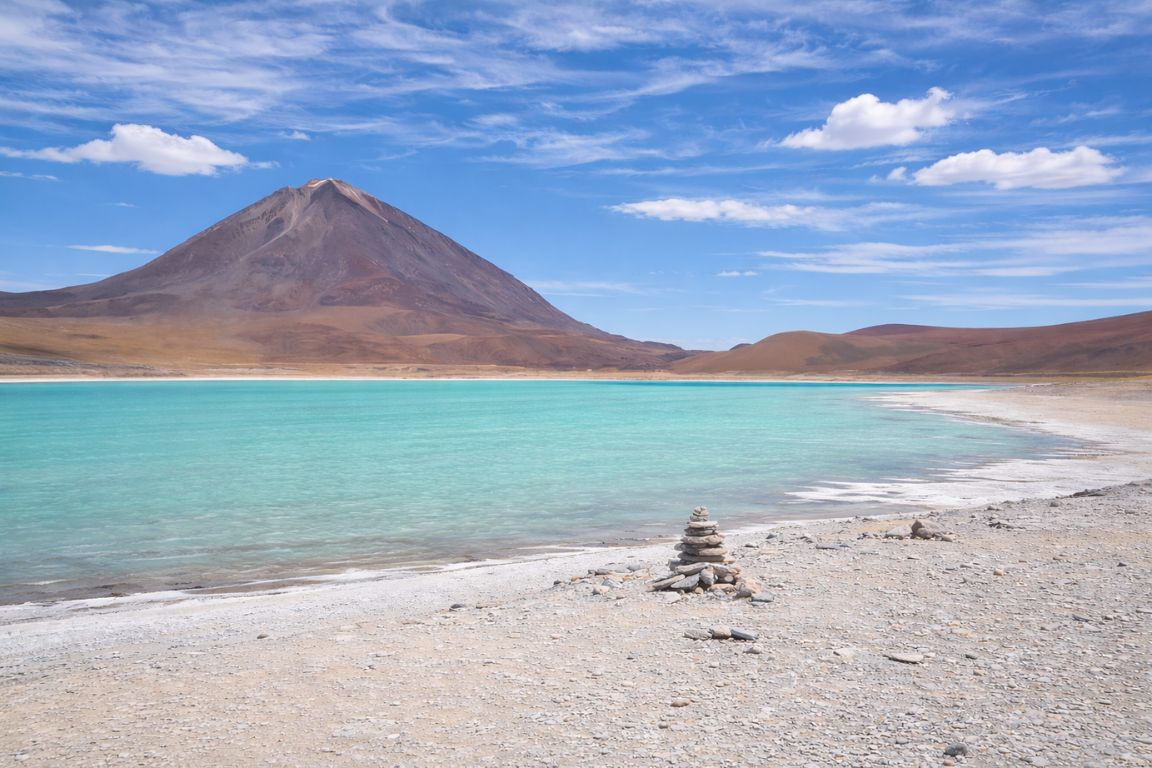 Children consistently respond to the Salar de Uyuni with immediate, uninstructed delight. The train cemetery can fascinate children, but rusted metal is not playground equipment; supervise closely and avoid climbing unsafe structures. The salt flat itself, especially in wet season, produces what families describe as unscripted joy: kids splashing through mirrored water, looking down at their own reflections in the sky, running across the endless white. The perspective photography session is the most reliably successful planned activity – children grasp the game intuitively and are often better models than adults, willing to hold positions and try ideas without self-consciousness.
The train cemetery near Uyuni town lands particularly well with primary-school-age children. Most tours stop here first, which means children are fresh and energetic when they encounter what amounts to a vast industrial playground: a field of rusting locomotives, some with murals painted on them, with rusted metal and openings that require caution. The children called it their favorite stop – more than the mirror, more than the flamingos, more than the geyser field. This is not unusual. The specific physicality of the trains – the scale, the texture, the abandonment – reads as adventure to a child in a way the abstract vastness of the flat sometimes doesn’t, at least not immediately.
The perspective photos are where children often outperform adults. Getting a camera at ground level and positioning subjects at different distances to create impossible scale relationships takes patience and precision but children tend to find the game itself amusing, which keeps them engaged through multiple attempts. They’re willing to become giants eating Pringle-can parents. They’ll run toward the camera in slow motion while a sibling is positioned to appear tiny in the distance. Their lack of self-consciousness about looking ridiculous makes them better collaborators in the process. Families frequently say the perspective photo session produces the most joyful shared moments of the tour.
The flamingo lagoons on the 3-day circuit reliably surprise families. Children who were flagging by day two of a long jeep circuit frequently revive completely at Laguna Colorada – the sight of thousands of flamingos standing in bright red water against a backdrop of volcanoes is extraordinary at any age, but children respond to it with a visceral “is this real?” quality that many parents describe as one of the travel moments they’ll remember longest. Laguna Verde at the border, with its impossible electric green against the white volcanic cone of Licancabur, produces a similar response. These landscapes look like they’ve been invented rather than discovered.
Want to know what it feels like? Our guide on walking on the salt flats of Salar de Uyuni tours covers what the crust is like underfoot, when tours give you time to explore, and how wet season water changes the walking experience.
How Do You Choose the Right Tour Format When Traveling with Children?
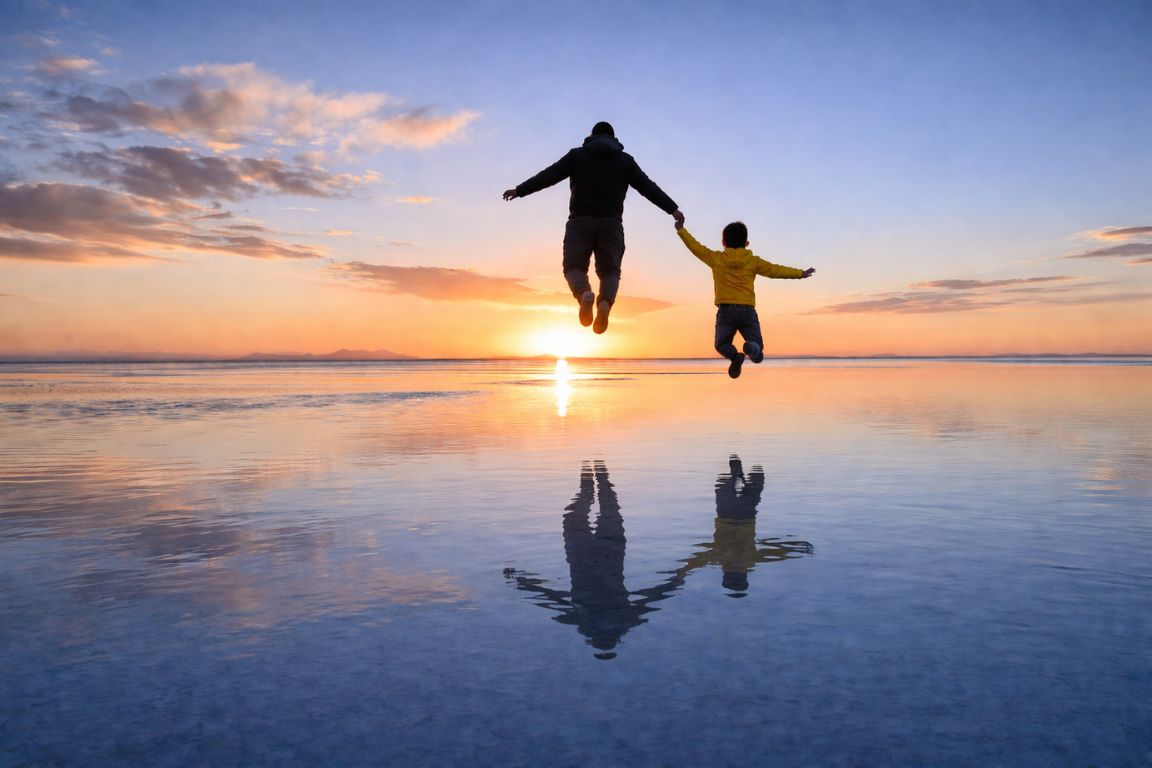 A private tour is the single most impactful upgrade for families with children at Uyuni. Private means your group occupies the entire jeep – no strangers whose pace doesn’t match yours, no pressure to move when a child needs a bathroom break or a longer rest, and the ability to stop for an extra 20 minutes when the kids are deeply engaged somewhere. The price premium for private is significant but frequently described by families as the best money they spent on the trip. For the 1-day tour, a shared group tour is workable for families with children over seven. For the 3-day circuit with any child under twelve, private is the strong recommendation.
The 1-day tour is the right format for most families with children under seven, or families unsure how their children will respond to altitude. It covers the essential salt flat experience – train cemetery, Colchani, the flat, perspective photos, Isla Incahuasi, sunset – without the basic accommodation, early mornings, or sustained extreme altitude of the 3-day circuit. Children are back in a proper bed in Uyuni town that night. If altitude symptoms appear, you’re not two hours of jeep travel from accommodation when they hit. The 1-day format also leaves open the option to do more if it goes well, or to rest and recover if altitude is more of a challenge than expected.
For families committed to the 3-day circuit, a few specific accommodations make the experience substantially better. Upgrading the second night to a private room with private bathroom (typically around $30 to $35 USD per person extra) is worth doing with children – the communal dorm room on night two at the basic refugios is fine for solo travelers and couples, but managing a child’s nighttime needs in a shared six-bed room at 4,300 meters in the cold is genuinely difficult. Requesting an early discussion of altitude symptoms with the guide before departure is also worth doing – a good guide will adapt the pace, know which stops can be shortened, and know the fastest descent route if needed.
Curious about the classic tour? Here’s our complete 3-Day Salar de Uyuni tours guide – what you see across three days, what the basic overnight accommodations involve, and whether the comprehensive experience justifies the physical demands.
What Should You Pack When Bringing Kids to the Salar de Uyuni?
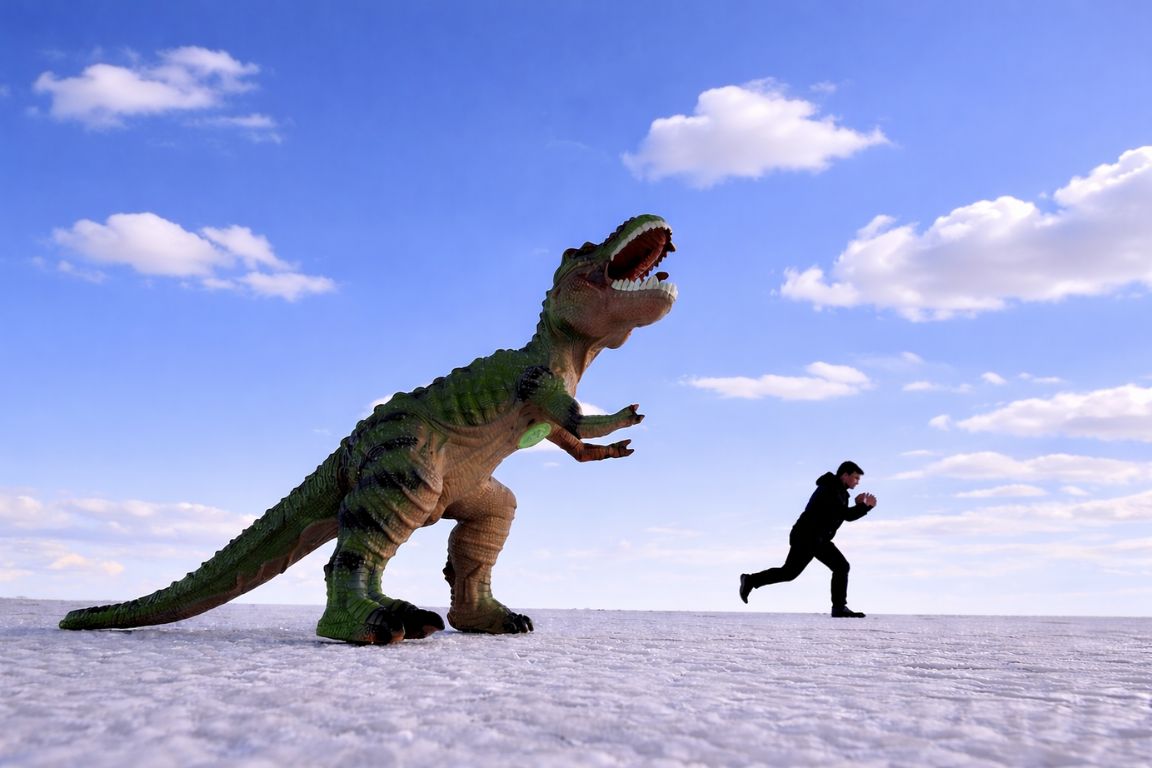 Everything you’d normally pack for high-altitude family travel, plus items specific to the Salar’s environment: UV-rated children’s sunglasses (not children’s fashion sunglasses – proper UV400 protection), children’s SPF 50+ sunscreen applied every two hours, lip balm with SPF, layers including thermal base layers and a windproof outer layer, waterproof boots for wet season, altitude medication (paracetamol, antiemetics – discuss Diamox with your pediatrician before travel), oral rehydration salts, props for perspective photos, and high-energy snacks for the long jeep days. Bring toilet paper everywhere – it is not reliably provided at stops along the circuit.
The UV issue is more severe than parents typically expect and deserves emphasis specific to children. Children’s skin is thinner and more sensitive than adult skin, and the double UV exposure from above and below at altitude makes the Salar one of the highest-risk sun environments families typically encounter. Factor 50 minimum, applied before getting into the jeep in the morning, and reapplied at every stop. Cover as much skin as possible during peak sun hours, particularly on the salt flat where shade is nonexistent. Children in short sleeves on the flat in dry season will have meaningful burns within 90 minutes without reapplication. Pack more sunscreen than you think you need.
| UV400 sunglasses (children’s) | Salt reflects UV upward – eye damage risk | Fashion glasses without UV rating are insufficient |
| SPF 50+ sunscreen | Children’s skin burns faster at altitude | Reapply every 2 hours; more than you think you need |
| Thermal base layers | 20°C temperature swings from midday to night | Merino wool or synthetic – cotton holds cold |
| Windproof outer layer | Wind on the flat intensifies cold dramatically | Even in dry season – essential for geyser stop on 3-day |
| Waterproof boots (wet season) | Salt water destroys regular shoes | Go up one size to fit over thick socks |
| Paracetamol (children’s dose) | First-line treatment for altitude headache | Bring enough for multiple days; not reliably available on circuit |
| Antiemetics | Nausea is common AMS symptom in children | Discuss with pediatrician before departure; prescription options exist |
| Oral rehydration salts | Altitude dehydration is faster in children | Use according to pediatric advice and packet instructions when indicated |
| High-energy snacks | Appetite decreases at altitude; energy is needed | Familiar foods from home are particularly useful for younger children |
| Toilet paper | Not reliably provided at stops on the circuit | Essential – this applies to the whole circuit, not just remote sections |
| Props for perspective photos | Kids engage much more when they have a role | Toy dinosaurs from Uyuni shops; small figures; bottles |
| Headlamp (each person) | Power outages are common at night on circuit | Night 2 refugio may have no electricity after 10pm |
Entertainment for jeep travel is worth planning specifically. The drive from the salt flat to the lagoon circuit on day two of the 3-day tour is long – several hours on rough tracks through high-altitude desert. Children who run out of engagement resources find this genuinely difficult. Downloaded content on a tablet or phone (charged fully the night before, since charging on the road isn’t available), audiobooks, small games, and age-appropriate questions about the landscape that make the drive an active rather than passive experience all help.
We’ve detailed what to wear in Salar de Uyuni tours because the altiplano is brutal – blinding sun reflecting off white salt, temperatures dropping to freezing at night, and UV exposure at 3,600m that burns through sunscreen.
What Are the Biggest Practical Challenges Families Face at Uyuni?
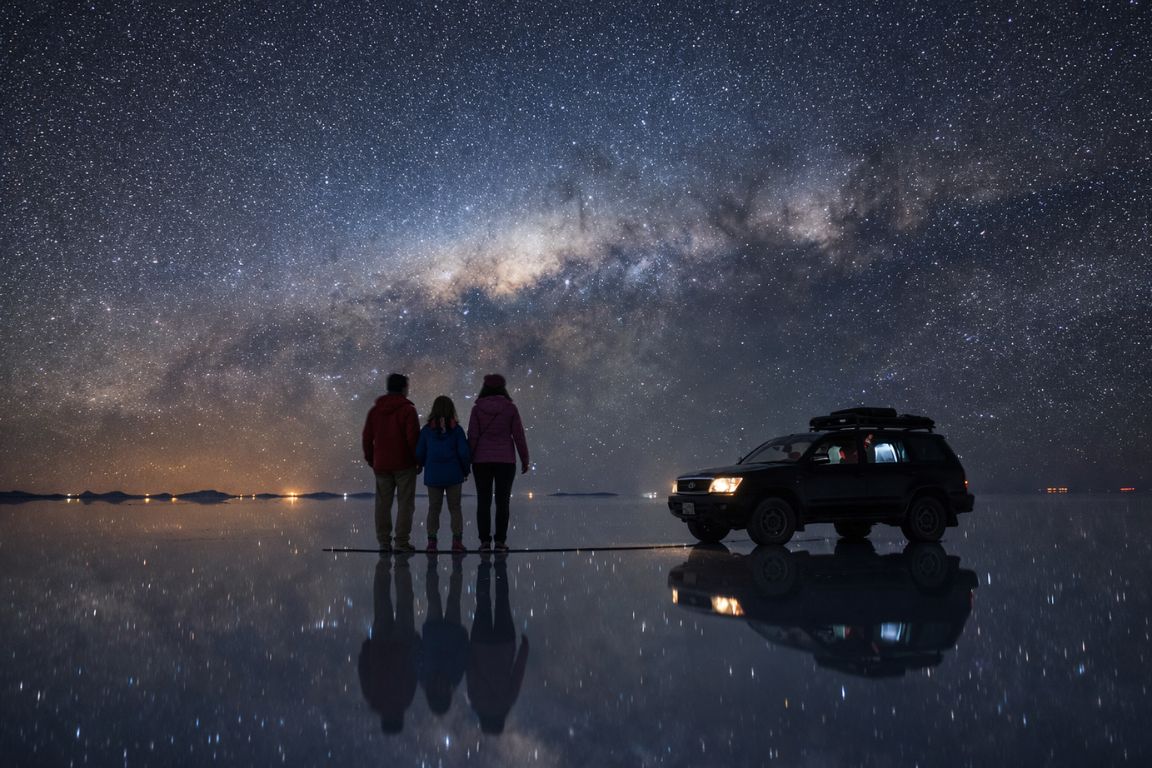 The three challenges that catch families off guard most consistently: toilet access on the circuit is primitive and infrequent (young children who need to go frequently find the long drives between stops genuinely stressful), the cold on night two of the 3-day tour in basic refugio accommodation is more severe than parents expect (temperatures can drop to -15°C with minimal heating), and altitude affecting a child mid-tour leaves families with difficult decisions about whether to continue or abort. Each of these is manageable with preparation. None of them is a surprise if you know to expect them.
Toilet access on the 3-day circuit deserves specific planning for families. On day one, toilets are available at most stops – the train cemetery, Colchani, Isla Incahuasi. From day two onward, stops may have a basic pit toilet (usually costing a few bolivianos) or nothing at all. On the flat and in the open desert, children who need to go use the ground. For many families, this is fine. For toilet-trained toddlers or children with anxiety about outdoor toilet situations, it can be a source of genuine distress. Packing small portable disposable bags, extra wet wipes, and having an honest conversation with children about what bathroom situations will look like is worth doing before departure rather than explaining it on the day.
Night two accommodation on the 3-day circuit is the moment many families with younger children find most challenging. The refugios near Laguna Colorada at around 4,300 meters elevation are basic: shared rooms, limited or no electricity from about 10pm onward, cold that penetrates the walls by midnight, and basic pit toilet facilities in a separate structure. A child who wakes in the night unwell, in the dark, in a very cold room, in a communal space with strangers, at extreme altitude, is a genuinely difficult parenting situation. Families who upgrade to the private room option available at most refugios (around $35 USD per person), pack a sleeping bag liner for each child, and bring a headlamp for every family member are far better positioned for this night than those who go with defaults.
If your child becomes unwell at altitude, tell the guide and stop ascending. Worsening symptoms or breathlessness at rest, confusion or poor coordination require urgent descent and medical care; do not wait for a fixed time threshold.
Planning Takeaways For Your Trip
Choose the itinerary around the experience you want, the time you have and the actual services included. Check the guide language, transport, overnight arrangements and extra costs on the selected listing.
Frequently Asked Questions
What is the minimum age for visiting the Salar de Uyuni with children?
There is no official minimum age. Practically, families with children from around four years old upward manage the 1-day salt flat tour without major difficulty. For the 3-day circuit, eight years old is a practical lower limit for most families – primarily because of night two’s basic accommodation, the day three 5am geyser start, and the 5,000-meter altitude at Sol de Mañana. Infants under twelve months should not be taken to sustained high altitude without specific pediatric guidance due to the risk of subacute infantile mountain sickness.
Do children need special altitude sickness medication for Uyuni?
This is a question for your pediatrician, not a travel guide. Children experience AMS at roughly the same rates as adults. The most important prevention is staged acclimatization – spending 2 to 3 days at moderate altitude (Sucre at 2,750 meters) before arriving in Uyuni. Paracetamol at appropriate pediatric doses is safe and effective for altitude headache. Acetazolamide (Diamox) use in children requires a prescription and pediatric dosing guidance. Discuss with your child’s doctor before departure.
Is the 1-day or 3-day Uyuni tour better for families with children?
For families with children under seven or eight, the 1-day tour is more reliable. For children eight and older with proper acclimatization, the 3-day circuit is excellent – the flamingos, geysers, and colored lagoons are genuinely extraordinary for older children. Private tour format is strongly recommended for the 3-day circuit with any child under twelve. The upgrade to private accommodation on night two is worth the cost.
What do children enjoy most at the Salar de Uyuni?
Consistently: the train cemetery (view the locomotives under close supervision), the perspective photography session on the salt flat (children are natural participants and often outperform adults), the mirror effect in wet season (the sensation of walking on reflected sky is immediately understood and loved by kids), and the flamingos at Laguna Colorada on the 3-day circuit. The geyser field is dramatic but also the coldest and most altitude-affected stop – mix of awe and physical discomfort for most children.
Are private tours much more expensive than shared for families?
The price of a private tour depends heavily on group size. For a family of four filling most of a jeep, the per-person price of a private 3-day tour is often 20 to 40% more than a shared tour. For a family of five or six, costs can approach parity with a shared tour.
What should I tell my children to expect before the trip?
Tell them they’ll be in a jeep for long periods (audiobooks and downloaded content help). Tell them the toilets are sometimes basic or outside. Tell them it will be very cold in the mornings and at night even if daytime is warm. Tell them their head might hurt a little when they arrive at altitude and that telling you immediately is important. And tell them they’ll walk on a surface that looks like the moon and take photos where they look giant. The second part usually gets a much better reaction than the first part.
Choose Your Uyuni Experience
Choose the itinerary that fits, then check your travel date before arranging onward transport or separate rooms.
Initial editorial recommendation. No preferences have been entered.
Salt Flats And Sunset Day Trip
A full salt-flat day with lunch, an English-speaking guide and sunset.
Rain boots included; Incahuasi entry costs extra. Colchani hotel pickup has a surcharge.Scheduled dates load automatically. Availability and final price are confirmed on Viator.
No verified tour meets all of these preferences. Adjust the choices below or reset.
Compare Options And Tailor Your Choice
- Private Salt-Flat Day With Sunset (8 hours): A private salt-flat day with an English-speaking guide, Uyuni pickup and a sunset finish. Booking ages 12–80. Non-refundable. Listed admission inclusions conflict with itinerary exclusions; confirm the full quote and vehicle access.
- Private Circuit With Hotel Lodging (3 days): A private salt-flat and lagoon circuit with an English guide, meals, park entries and hotel lodging. Palacio de Sal or Luna Salada and Tayka or similar hotels; confirm exact rooms. Chile transfer excluded. Prior acclimatization required.
- Salt-Flat Highlights With Lunch (8 hours): Tour the salt flats and Colchani by shared jeep, with lunch and Uyuni hotel pickup. Spanish-speaking driver. Island admission extra. Not suitable for mobility impairments or wheelchair users; ages not verified.
- Salt Flats And Colored Lagoons (3 days): Combine the salt flats with colored lagoons, meals and an English-speaking driver-guide. Lodging descriptions conflict on private bathrooms; confirm both nights. Park fees and the optional Chile transfer cost extra.
Compare Your Complete Quotes
Use the same currency for both totals, including transport, rooms, meals and fees for your whole party.
Affiliate links: we may earn a commission when you book, at no extra cost to you.