Salar de Uyuni for Seniors
Is Uyuni suitable for older travelers? Yes, but altitude is the key factor. Learn how to prepare, which upgrades matter most, and how to make the trip comfortable and safe.
Choose the altitude profile with your clinician, then compare the vehicle and room arrangements. A private tour does not remove altitude exposure.
Last updated: September 9, 2026
Older travelers visit the Salar de Uyuni regularly and many describe it as the most remarkable landscape of their lives. It is not a strenuous destination – the tour is jeep-based and walking distances at each stop are short and flat. The real variable is altitude. At 3,656 meters on the flat and up to 5,000 meters on the geyser field during the 3-day circuit, altitude demands honest preparation and a pre-trip medical conversation, particularly for anyone with cardiovascular or pulmonary conditions. The upgrades that matter most for senior travelers are private tour format, private accommodation with heating, and flying into Uyuni rather than taking an overnight bus. A healthy older traveler with 2 to 3 days of acclimatization beforehand and a good private operator has every reason to make this trip.
The private daytime circuit returns to Uyuni and has an English-speaking guide; the booking age range is 12–80, with access arrangements still to confirm. Check Private Uyuni Day-Trip Dates
Salar de Uyuni for Seniors: Key Facts at a Glance
| Max altitude reached | 3,656m (salt flat) | ~5,000m (Sol de Mañana geysers) | Medical consultation needed for 3-day if cardiovascular conditions present |
| Physical walking demands | Low – flat surface, short distances | Low to moderate – still jeep-based, short walks at each stop | No hiking required; Isla Incahuasi climb is optional |
| Jeep entry/exit | Multiple times per day | Multiple times per day over 3 days | High step into Land Cruiser – knee and hip flexibility matters; bring a step stool or request assistance |
| Accommodation | Return to Uyuni hotel | Night 1: salt hotel; Night 2: basic refugio at ~4,300m | Upgrade to private room with private bathroom is strongly recommended |
| Heating in accommodation | Uyuni town hotels – generally yes | Minimal or none – nights can reach -15°C | Essential for comfort; request heated rooms or sleeping bags when booking |
| Toilet facilities | Available at most day-1 stops | Very basic from day 2 onward; some outdoor only | Plan ahead; portable travel toilet options exist |
| Transport to Uyuni | Fly (1hr from La Paz) or overnight bus (10hrs) | Same | Flying strongly recommended for seniors – overnight bus is rough terrain |
Is the Salar de Uyuni Suitable for Older Travelers?
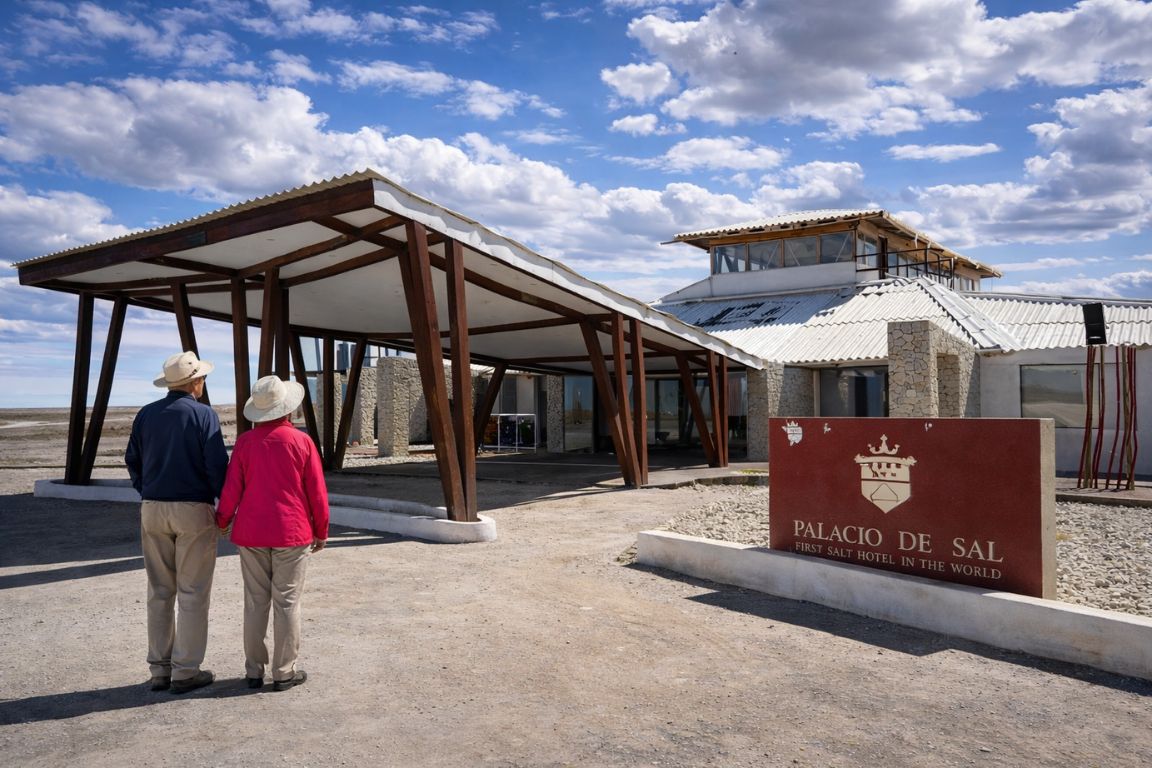 Yes, with honest preparation and the right tour format. The Salar de Uyuni is not a physically demanding destination in the conventional sense. It is a jeep tour. Most of the day is spent in a vehicle moving between stops; walking at each location is short, flat, and entirely at your own pace. Many travelers in their 60s, 70s, and even 80s complete the tour without significant difficulty. The barriers that do exist are altitude-related and logistical rather than physical – they are real, they require preparation, and they are manageable when addressed in advance.
The landscape itself is profoundly well-suited to the kind of travel older visitors tend to prefer: absorbing, visually extraordinary, and requiring no specialized equipment or training to experience fully. You sit in a jeep and the world outside is unlike anything most people have seen. You step out at the salt flat and stand on a white surface that stretches to the horizon in every direction. You watch flamingos in red mineral water against a backdrop of snow-capped volcanoes. None of this requires fitness. It requires getting there, which is what the preparation is about.
The guest reviews that resonate most with us as guides are often from older travelers – people who have seen much of the world and for whom the Salar de Uyuni still delivers something genuinely new. The scale, the silence, the visual impossibility of the place produces a consistent response that doesn’t diminish with travel experience. Those guests consistently confirm that description. The trip is accessible. It requires planning. It is worth doing.
How Does Altitude Affect Seniors at Uyuni?
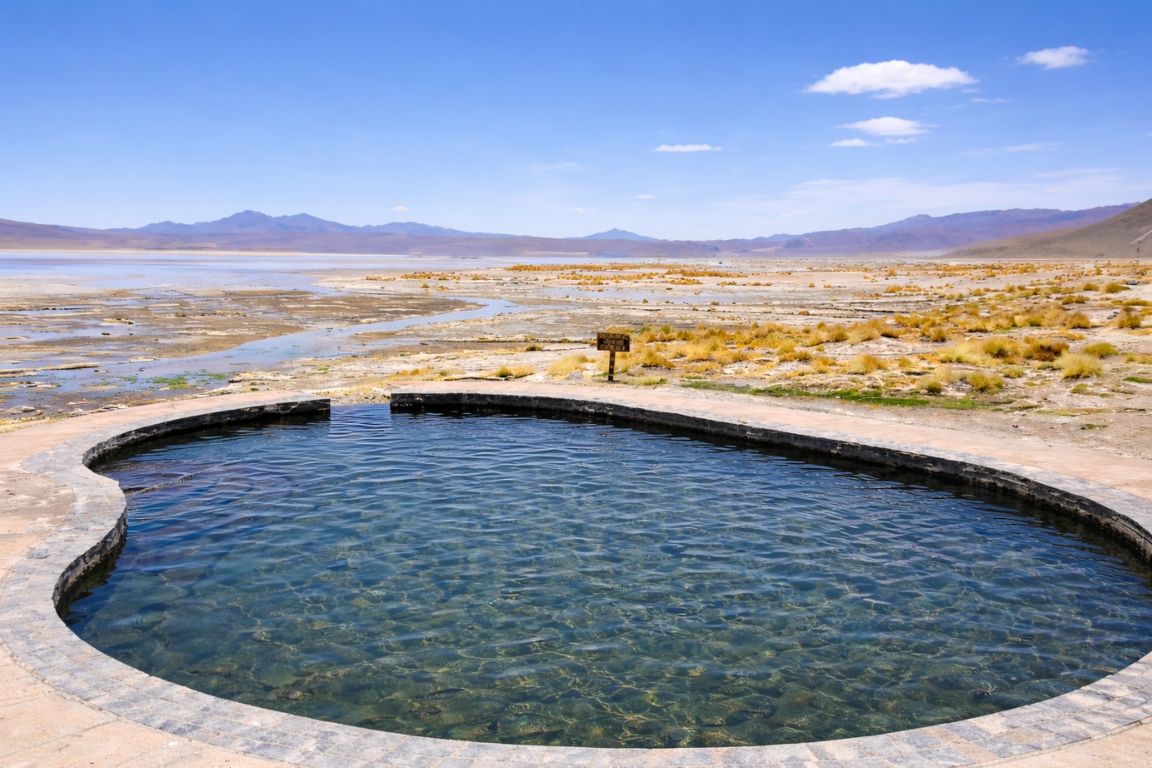 Altitude presents the most important and most individual variable for senior travelers at Uyuni. AMS affects visitors of all ages at roughly similar rates at these elevations – around 38% of unacclimatized adults experience symptoms arriving rapidly at 3,500 meters. What changes with age is not necessarily the likelihood of AMS, but the physiological reserves available to compensate for the added cardiovascular workload. At altitude, the heart rate increases, blood pressure rises transiently, and pulmonary artery pressure elevates – all normal adaptive responses that healthy older adults manage without incident but that deserve medical assessment for anyone with pre-existing cardiac or pulmonary disease.
Research published in Circulation found that older adults (average age 68) with cardiovascular risk factors generally tolerated moderate high altitude well after proper acclimatization, with 45% experiencing mild AMS symptoms in the first three days that resolved completely by day five. The key phrase is “after acclimatization.” The travelers who struggled were those who arrived without staged altitude exposure. The resolution was almost universal with time at the same elevation. The message for healthy older travelers is similar to the message for healthy younger ones: acclimatize properly and the altitude is manageable. The message for anyone with significant cardiovascular or pulmonary disease is different: get a specific medical assessment before booking.
Remaining in a vehicle at 5,000 meters does not reduce altitude exposure. Review the route with your clinician; a private vehicle does not remove this risk.
Medications matter at altitude and are often overlooked in pre-travel planning. Some common medications prescribed to older adults interact meaningfully with altitude physiology. Non-selective beta-blockers can reduce the ventilatory response to hypoxia, potentially worsening altitude adaptation. Some diuretics used for hypertension or heart failure may need dose adjustment at altitude due to additional fluid loss. Sedatives and sleeping pills suppress breathing during sleep – a particular problem at altitude, when the body already struggles with oxygen during rest. Review all current medications with your physician specifically in the context of high-altitude travel before departure.
Need altitude guidance? Our Salar de Uyuni tours altitude and preparation guide covers how to acclimatize properly, what symptoms to watch for, and what medications and gear actually help at extreme elevation.
What Are the Physical Demands of a Uyuni Tour?
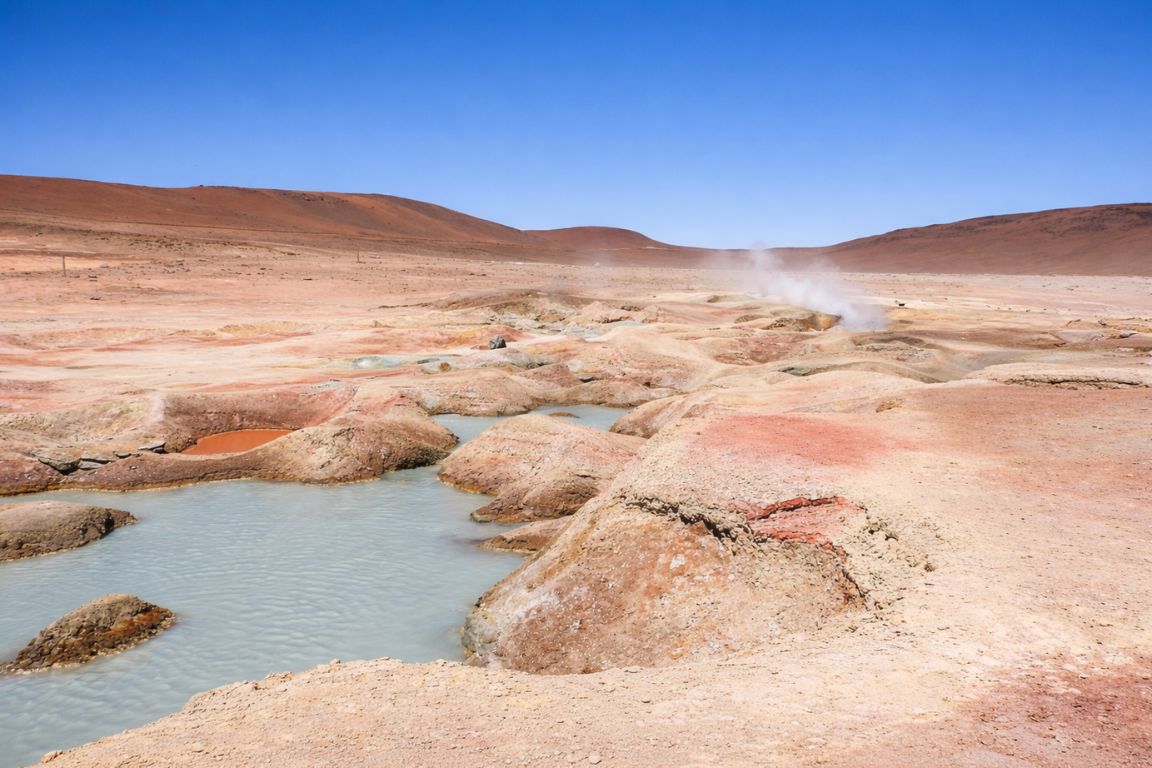 The physical demands of a Uyuni tour are lower than most destinations marketed to active travelers but they are not zero. The main physical elements are: entering and exiting a Land Cruiser multiple times per day (a significant step up from ground level that requires knee and hip flexibility), walking short distances on uneven salt crust or rocky desert terrain at each stop, and tolerating long periods of sitting in a vehicle on rough roads. The most physically demanding stop on the 3-day circuit is Sol de Mañana at 5,000 meters, where even walking from the jeep to the geyser vents – a distance of 50 to 100 meters – produces breathlessness in virtually everyone regardless of age or fitness.
The Land Cruiser entry and exit is a practical point worth planning around specifically. Standard tour 4x4s sit high off the ground. The step up from road level into the passenger cabin requires bending the knee to roughly 90 degrees and then pushing up from that position – a movement that is uncomfortable or impossible for people with severe knee arthritis, hip replacements without full range of motion recovery, or significant balance issues. A suitable step may help some travelers; confirm the actual vehicle and assistance available. Discuss the vehicle and the entry situation with the operator before booking and ask whether they can arrange a vehicle with a lower step, or whether a step stool can be included. Reputable private operators accommodate this without issue when asked.
Walking distances at the key tour stops are short and entirely flat or on gently sloping terrain. The salt flat requires no special footwear beyond closed-toe shoes. Isla Incahuasi has an uphill path to the viewpoint at the island’s summit – this is optional and skippable without missing the island’s primary appeal (the giant cacti and the 360-degree flat views are visible from the base). Laguna Colorada is walkable at the water’s edge for the flamingo viewing with no significant gradient. The geyser field involves walking on uneven rocky ground between thermal vents and mud pools, which requires some care with footing rather than stamina. None of these stops involve distances over 500 meters from the jeep, and pace is fully the traveler’s choice on a private tour.
Want to know what it feels like? Our guide on walking on the salt flats of Salar de Uyuni tours covers what the crust is like underfoot, when tours give you time to explore, and how wet season water changes the walking experience.
The long-drive days on the 3-day circuit are the endurance element that surprises some older travelers most. Day two in particular involves many hours of travel on rough unpaved roads through desert terrain. The Land Cruiser’s suspension handles the terrain but the ride is not smooth. Travelers with significant lower back problems find this the most difficult physical element of the tour. A lumbar support cushion, strategic stop breaks, and a well-maintained vehicle with good suspension reduce this considerably. Budget tours in older, poorly maintained vehicles make day two measurably harder – this is one reason why vehicle quality matters more for older travelers than for younger ones who can absorb rough conditions more easily.
How Do You Choose the Right Tour Format as a Senior Traveler?
 Private tour is the right choice for most senior travelers – not a luxury indulgence but a practical decision that resolves the majority of logistical challenges that make the Uyuni experience difficult for older visitors. Private means your group has the entire jeep, the driver responds to your pace rather than a group consensus, bathroom stops happen when needed, more time can be spent at stops that resonate and less at those that don’t, and altitude symptoms can be managed without the social pressure of an unfamiliar group watching. For the 1-day tour, a small private group is workable. For the 3-day circuit, private format is the strong recommendation.
The 1-day tour is the lower-risk format for senior travelers who want to assess their altitude response before committing to the full circuit, who have cardiovascular conditions that their physician has flagged for monitoring, or who simply prefer to keep the experience bounded. It covers the train cemetery, Colchani, the salt flat itself, perspective photography, Isla Incahuasi, and a sunset – a full and extraordinary day. It does not involve the extreme altitude of the geyser field or the basic night-two refugio accommodation. Travelers who complete the 1-day tour and feel comfortable with the altitude frequently ask whether they can extend or return for the full circuit. The answer is yes.
For the 3-day circuit, the accommodation upgrade matters significantly. The standard shared refugio accommodation on night two at approximately 4,300 meters is a six-person dormitory room with basic bedding, shared toilet facilities, limited or no electricity after 10pm, and very little heating. Managing night-time bathroom needs in the dark, cold, and communal conditions of the night-two refugio is uncomfortable for any traveler and more challenging for those with mobility considerations. The private room upgrade (around $30 to $35 USD per person) provides your own space and private bathroom. It is worth every peso for senior travelers and should be booked as a standard inclusion rather than an optional add-on.
Not sure about accommodation? I’ve broken down where to stay in Salar de Uyuni tours so you know what’s available in basic Uyuni town versus unique salt hotels on the flats and what’s included in multi-day tour packages.
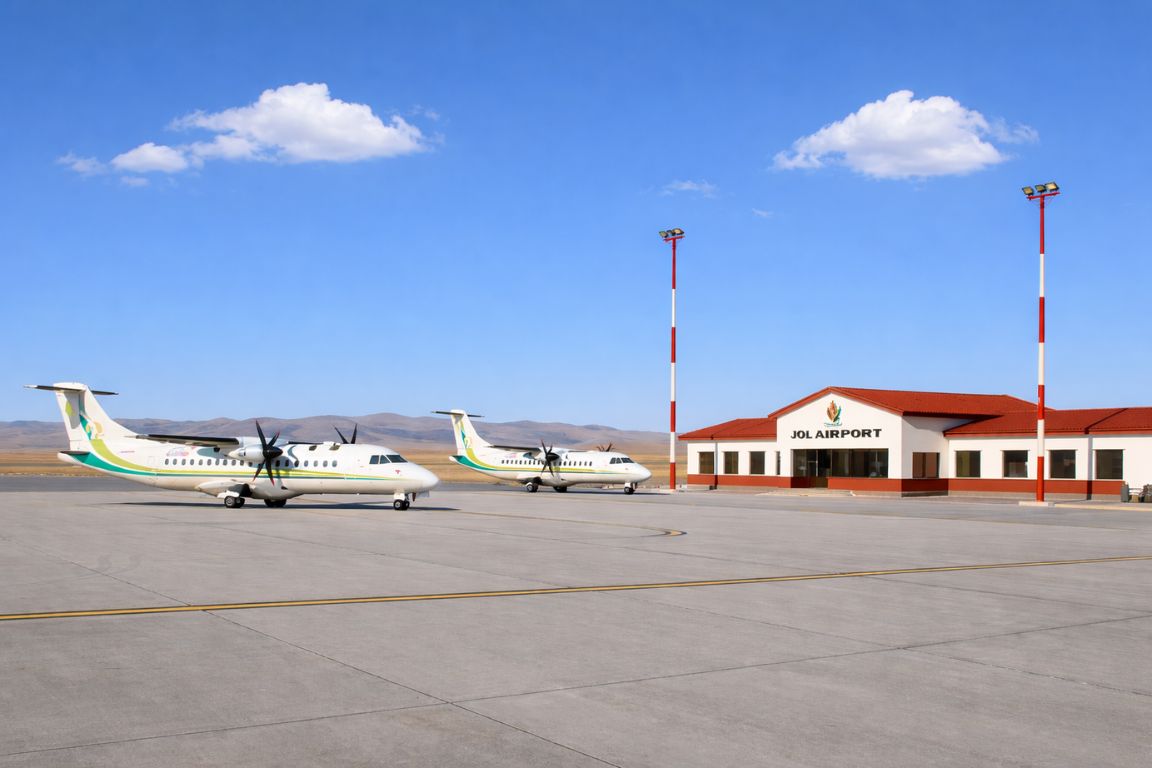
Getting to Uyuni deserves specific thought. The standard budget approach is an overnight bus from La Paz – roughly 10 hours on roads that include significant rough terrain. The overnight bus is hard on the spine even for younger travelers and includes no toilet facilities on the bus itself. The alternative is a one-hour flight from La Paz to Uyuni on Boliviana de Aviación or another currently operating carrier. The flight costs more but arrives fresh rather than exhausted, and saves the wear of overnight road travel before a demanding altitude experience. For older travelers, and particularly anyone with back conditions, flying is the right choice. Book flights early – the small Uyuni airport fills quickly during peak season.
Want help designing a senior-friendly Uyuni itinerary with the right pace, accommodation, and altitude preparation built in?
We’ve mapped out how to visit Salar de Uyuni tours based on what actually matters – choosing reliable operators, preparing for altitude, and deciding between 1-day, 3-day, or border-crossing tours.
What Medical Preparations Should Seniors Make Before Visiting Uyuni?
 Every senior traveler planning Uyuni should have a pre-trip medical conversation – not a general wellness check but a specific discussion about high-altitude travel with the altitude profile of the tour clearly described. Tell your doctor the elevations: 3,700 meters in Uyuni town, 3,656 meters on the salt flat, 4,300 meters at Laguna Colorada, and 5,000 meters at Sol de Mañana. Ask whether your current medications require adjustment at altitude. Ask about acetazolamide for AMS prevention if you have prior altitude experience that suggests susceptibility. Ask about the evacuation situation: Uyuni has a small clinic, the circuit route is remote, and medical support above the level of basic first aid is hours away.
Acclimatization is the most effective preparation and is available to every traveler who plans the itinerary correctly. Spending 2 to 3 days in Sucre (2,750 meters) before arriving in Uyuni gives the cardiovascular system meaningful time to begin adapting before the jump to 3,700 meters in town and the tour’s higher elevations. Sucre is one of Bolivia’s most pleasant cities, with colonial architecture, good accommodation, and excellent food – the acclimatization stop is not a sacrifice of travel time. Alternatively, spending 2 to 3 nights in La Paz’s lower southern districts (around 3,200 meters) serves a similar purpose. The critical instruction is not to arrive in Uyuni from sea level and begin the 3-day tour the following morning. That is the highest-risk sequence for altitude problems at any age.
Acetazolamide (Diamox) for AMS prevention is worth discussing with your physician specifically. The drug accelerates acclimatization and has solid clinical evidence. Standard adult preventive dose is 125mg twice daily starting the day before ascent. Side effects – increased urination, tingling in hands and feet – are more relevant for older adults who may already be managing fluid balance or have peripheral neuropathy. Some cardiovascular medications interact with acetazolamide. This is a prescription conversation, not a travel pharmacy impulse buy.
Travel insurance with medical evacuation coverage is essential for senior travelers in remote high-altitude Bolivia. Standard travel insurance frequently excludes pre-existing conditions or caps evacuation coverage below what a medical evacuation from the Uyuni circuit would actually cost. Confirm that your policy covers: medical evacuation from remote Bolivian terrain, treatment at altitude, and any pre-existing conditions you carry. This is not optional preparation at these elevations and in this remoteness.
| Pre-trip medical consultation | Cardiovascular workload increases at altitude; medications may need adjustment | Book specifically; describe altitude profile clearly to your physician |
| Acclimatization (2-3 days at ~2,750m) | Most effective prevention for AMS; reduces cardiovascular stress on arrival | Plan Sucre or La Paz stop before Uyuni; do not go direct from sea level |
| Medication review for altitude interactions | Beta-blockers, diuretics, sedatives, sleeping pills all interact with altitude physiology | Discuss every current medication with your doctor in altitude context |
| Acetazolamide (Diamox) | Accelerates acclimatization; evidence-backed | Prescription required; discuss suitability, dosing, and interactions |
| Travel insurance with medical evacuation | Evacuation from remote Bolivian terrain is expensive; standard policies often inadequate | Confirm pre-existing conditions are covered and evacuation limits are sufficient |
| Supplemental oxygen knowledge | Premium operators carry oxygen – it can relieve moderate AMS symptoms | Ask operator explicitly whether oxygen is carried on the vehicle |
What Do Seniors Need to Pack for the Salar de Uyuni?
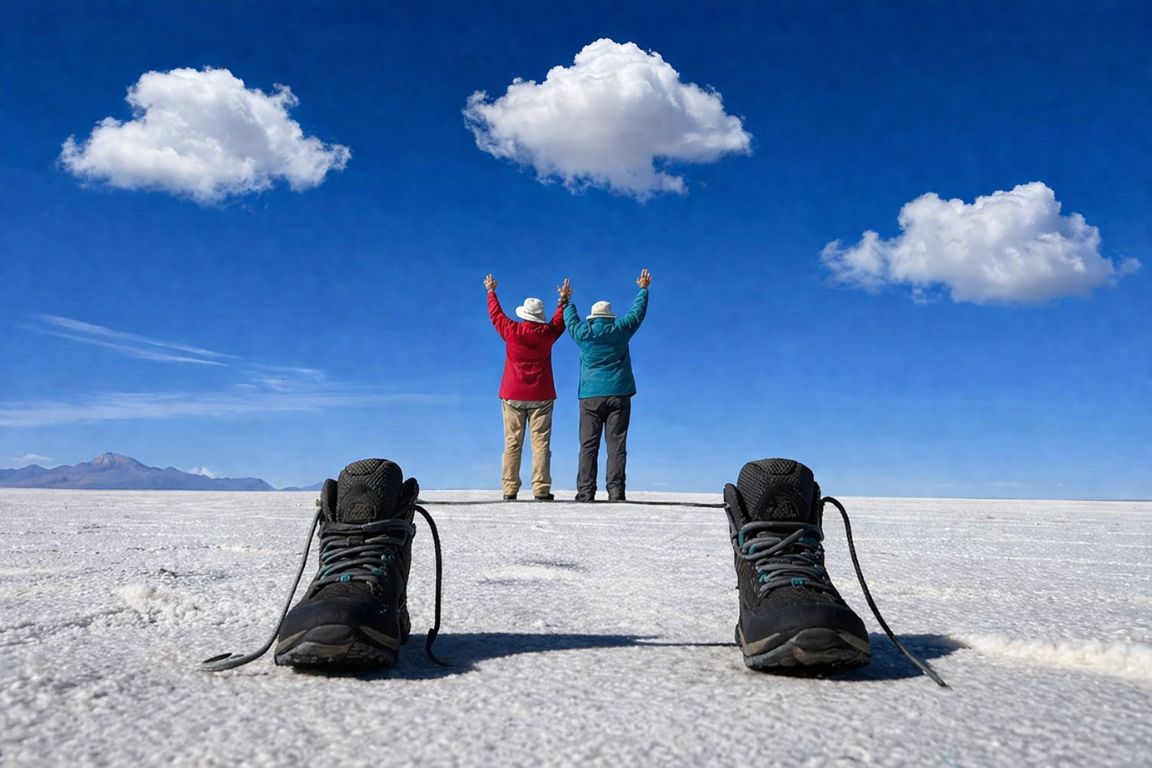 Senior travelers need everything younger visitors need – warm layers, UV-rated sunglasses, sunscreen, waterproof boots for wet season – plus several additions that matter more with age: a lumbar support cushion for the long jeep days, a folding step stool for Land Cruiser entry if knee flexibility is limited, a complete personal medication kit including altitude medication and at least a week’s extra supply of all regular prescriptions, a headlamp for the dark cold nights on the 3-day circuit, and a written medical summary in Spanish covering diagnoses and medications for any emergency in Bolivia’s healthcare system.
The cold is more consequential for older travelers than travel guides typically convey. Night temperatures on the 3-day circuit from June to August drop to -15°C. The accommodation has minimal heating. The body’s capacity to maintain core temperature decreases with age. Wool or synthetic thermal base layers (not cotton), a mid-layer fleece, and a windproof outer layer are necessary – not optional comfort items. A sleeping bag liner for the refugio nights adds meaningful warmth inside the bedding provided. Pack for the temperature as labeled on weather data, not as imagined from knowing Bolivia is a warm country. It is not warm here at night, at this altitude, in this season.
Hydration management is more important for older adults than it sometimes feels. The dry air at altitude causes significant fluid loss through breathing. Thirst is not a reliable signal – older adults are more likely to be dehydrated before feeling thirsty. Drink normally and follow any fluid limits set by your clinician; excessive water intake can also be harmful. If you take diuretics for blood pressure or heart conditions, discuss water and electrolyte management at altitude specifically with your physician before departure, as the combination of diuretic medication and altitude-induced dehydration requires specific attention.
A written medical summary in Spanish is a practical safety measure that few travelers think to prepare. In the event of a serious medical event in Bolivia’s remote south, a brief document describing your diagnoses, current medications, allergies, blood type, and emergency contacts in your home country gives local medical staff critical information that they cannot otherwise obtain quickly. Keep this in your daypack, not in luggage on the jeep’s roof.
Not sure what to pack? I’ve broken down what to wear in Salar de Uyuni tours so you’re prepared for blinding sun on white salt, freezing night temperatures, and brutal UV exposure at 3,600+ meters.
What Surprises Senior Travelers Most About the Uyuni Experience?
The Salar de Uyuni produces a specific experience of scale and silence that most people haven’t encountered – standing on a surface that stretches to the horizon in every direction, with no sound, no reference points, and sky both above and below in wet season. Travelers who have seen extraordinary places across decades of travel consistently describe the Salar as genuinely different. Not better than everything else in a ranking sense, but different in kind: a landscape that produces a specific quiet awe that stays with people long after they return home.
The second most common surprise is how little physical difficulty the tour actually involves for a well-prepared traveler. Many older visitors arrive with anxiety about whether they can manage the experience whether the altitude will floor them, whether the jeep travel will be too rough, whether the basic conditions will be too much. Travelers who have done the medical preparation and the acclimatization and who have booked a private tour with the accommodation upgrade almost universally describe the experience as less physically demanding than they feared. The anxiety beforehand is generally larger than the difficulty during.
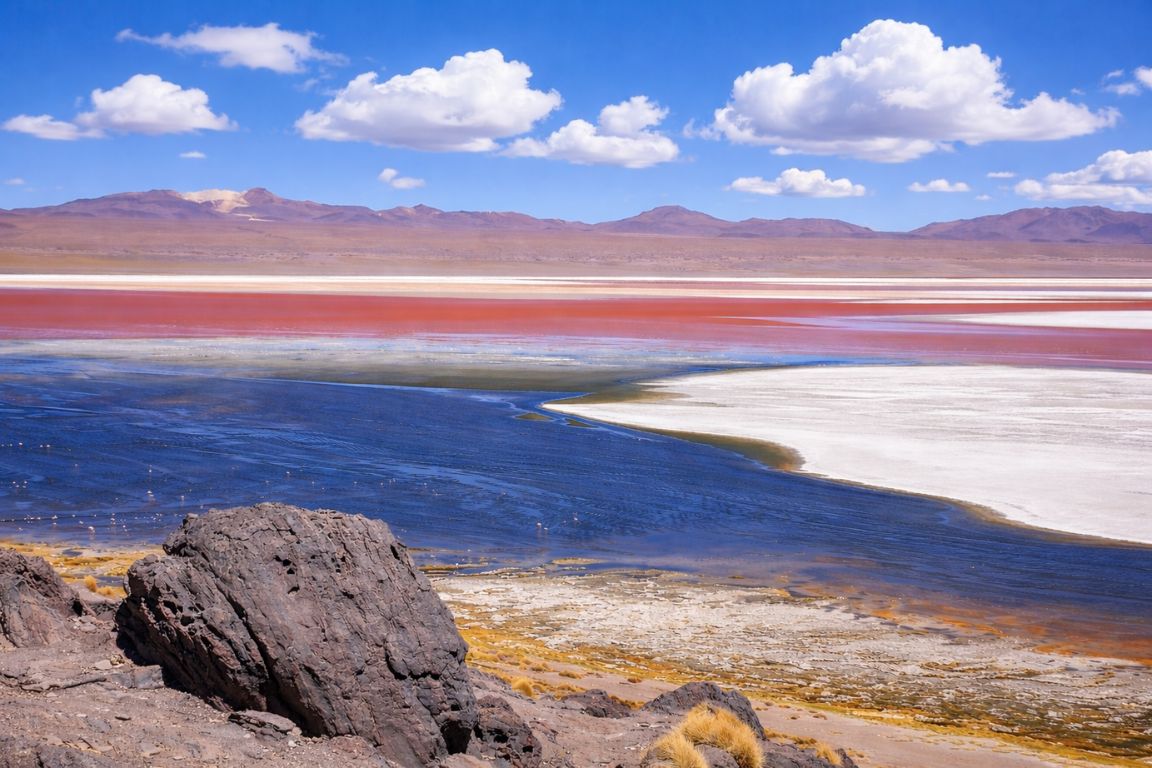
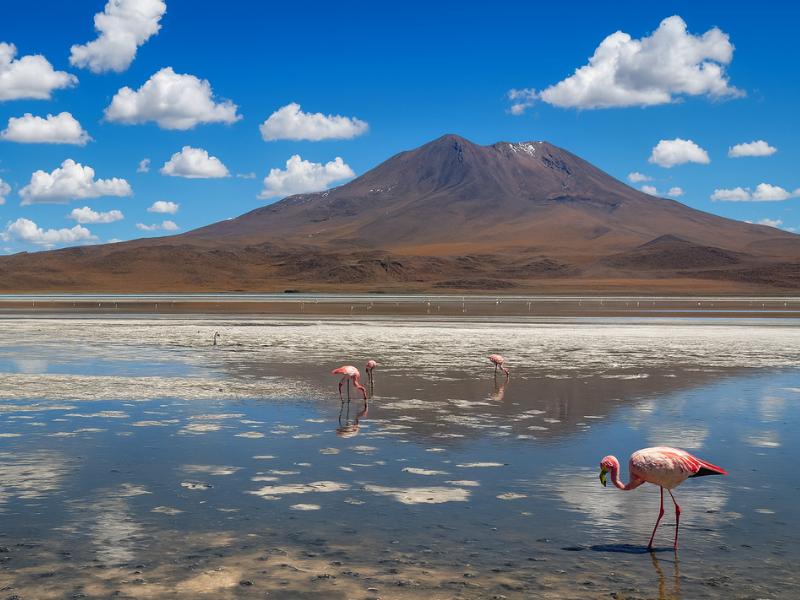
The flamingos at Laguna Colorada on day two of the 3-day circuit produce a response that no amount of wildlife experience quite prepares people for. Thousands of Andean and Chilean flamingos standing in mineral-red water against a backdrop of snow-streaked volcanoes, at 4,300 meters, in almost complete silence. Travelers who have been on safari, who have seen wildlife across Africa and Asia, who considered themselves sophisticated wildlife observers – they stop talking at Laguna Colorada. The visual impossibility of it lands differently than anything that a temperate or tropical landscape produces. Laguna Colorada alone justifies the extra days.
The silence is the third consistent surprise. Away from the jeeps, standing on the dry salt flat, older travelers who are accustomed to finding quieter corners of the world report that the Salar de Uyuni’s silence is categorically different. Not peaceful quiet but absolute silence – the complete absence of any ambient noise. No wind on calm days. No birds. No distant traffic. No low hum of civilization. Just the sound of your own breathing and footsteps, and then nothing when you stop. Whether that is something to be relished or merely noticed, the experience is unusual enough that it deserves mention for travelers deciding whether to make the journey.
Planning Takeaways For Your Trip
Choose the itinerary around the experience you want, the time you have and the actual services included. Check the guide language, transport, overnight arrangements and extra costs on the selected listing.
Frequently Asked Questions
Is there an age limit for Uyuni tours?
Age bands vary by operator and booking option. Check every traveler’s age against the actual listing. Travelers in their 70s and 80s complete both 1-day and 3-day tours regularly. The practical limits are health-related rather than age-related: cardiovascular conditions that require medical evaluation at altitude, mobility limitations that affect jeep entry and short walking distances, and the physical tolerance for rough road travel over multiple days. These are individual assessments, not age cutoffs.
Should I choose the 1-day or 3-day Uyuni tour as a senior?
If your health allows the 3-day circuit (discuss with your physician, particularly regarding the 5,000-meter geyser stop), and you acclimatize properly beforehand, the 3-day is the richer experience by a significant margin. Laguna Colorada, the flamingo lagoons, and the Siloli Desert are extraordinary additions that the 1-day tour cannot include. If your physician flags concern about the highest altitudes, the 1-day tour at 3,656 meters is fully accessible and extraordinary on its own terms. The right choice depends on your health, not your age.
What is the best way for seniors to get to Uyuni?
Fly. The one-hour flight from La Paz on Boliviana de Aviación or another currently operating carrier arrives fresh, avoids 10 hours of rough overnight bus travel, and allows you to begin acclimatization in Uyuni rested. Book early – the small airport sells out during peak season (June to August and December to February). If budget constrains you to the bus, book a premium “cama” seat on a reputable operator and confirm the bus is well-maintained before departure.
What is the biggest risk for senior travelers at Uyuni?
Altitude combined with pre-existing cardiovascular or pulmonary conditions that haven’t been medically assessed before the trip. Healthy older adults with proper acclimatization manage Uyuni’s altitude at broadly similar rates to younger travelers. The risk profile changes significantly for anyone with unstable heart conditions, recent cardiac events, significant COPD, or severe uncontrolled hypertension, and this is where the pre-trip medical consultation is genuinely important, not just routine advice.
Are there accessibility accommodations for seniors with mobility limitations?
Standard tours and the terrain itself are not wheelchair accessible. Travelers with significant mobility limitations – those who cannot step up into a Land Cruiser independently or walk 50 to 100 meters on uneven surface – will find the standard tour format inaccessible. A suitable step may help with vehicle entry, but does not establish accessible transport for travelers with limited knee bend. Walking at stops can be reduced to whatever distance is comfortable. The flat itself is even and firm in dry season.
Do premium Uyuni tours carry oxygen on the vehicle?
Better operators do, yes. This is worth asking explicitly when booking. Supplemental oxygen provides meaningful relief for moderate AMS symptoms – including the altitude breathlessness common at the 5,000-meter geyser stop – when descent is not immediately practical. A guide with medical training and an oxygen cylinder available in the vehicle is the safety configuration that matters most for senior travelers on the 3-day circuit. Confirm it is included before departure.
Choose Your Uyuni Experience
Choose the itinerary that fits, then check your travel date before arranging onward transport or separate rooms.
Initial editorial recommendation. No preferences have been entered.
Private Salt-Flat Day With Sunset
A private salt-flat day with an English-speaking guide, Uyuni pickup and a sunset finish.
Booking ages 12–80. Non-refundable. Listed admission inclusions conflict with itinerary exclusions; confirm the full quote and vehicle access.Scheduled dates load automatically. Availability and final price are confirmed on Viator.
No verified tour meets all of these preferences. Adjust the choices below or reset.
Compare Options And Tailor Your Choice
- Private Circuit With Hotel Lodging (3 days): A private salt-flat and lagoon circuit with an English guide, meals, park entries and hotel lodging. Palacio de Sal or Luna Salada and Tayka or similar hotels; confirm exact rooms. Chile transfer excluded. Prior acclimatization required.
- Salt Flats And Sunset Day Trip (9 hours): A full salt-flat day with lunch, an English-speaking guide and sunset. Rain boots included; Incahuasi entry costs extra. Colchani hotel pickup has a surcharge.
- Three-Day Circuit With Basic Lodging (3 days): Visit the salt flats, colored lagoons, geysers and hot springs with meals and basic lodging. Choose the English-guide option. Cold basic rooms; sleeping bag included in winter or on request. Entries, water and Chile transfer extra. Not suitable for pregnancy, mobility impairments or pre-existing conditions.
Compare Your Complete Quotes
Use the same currency for both totals, including transport, rooms, meals and fees for your whole party.
Affiliate links: we may earn a commission when you book, at no extra cost to you.